

The Poco F9 Pro is, at its real October 2026 price, one of the best buys in high-end Android: Snapdragon 8 Elite Gen 5, a 6.59-inch AMOLED display at 185 Hz, a 6,330 mAh battery and 50 W wireless charging in a size that is still reasonable. Launched on 1 September 2026 at €899.90 (around 590,000 FCFA), it already sells for between €650 and €740 at French retailers. It is aimed at gamers and heavy users who refuse to carry a 6.9-inch phone. Its limits are well known: an 8 MP ultra-wide camera, noticeable heat in games and shorter software support than Samsung or Google offer.
Introduction: the Poco F9 Pro, the little brother with almost everything the Ultra has
Poco, the Xiaomi brand built around performance, unveiled two phones on 1 September 2026. We covered the announcement in our article on the global launch of the Poco F9 Ultra and F9 Pro. The Pro model is the more affordable of the two, and probably the more interesting one for most buyers.
The reason fits in one sentence: it takes the chip, the refresh rate, the 200 MP main sensor and both fast-charging modes of the Poco F9 Ultra, for €200 less at the official price. It gives up the 5x periscope, the subwoofer and 1,720 mAh of battery, but weighs 29 g less.
At €899.90, the F series has nothing left of the €500 “flagship killer” of its early days, and the increase lands in the middle of the memory shortage that is pushing up the price of every phone in 2026. This guide relies on Xiaomi’s official specifications and on published reviews, notably those from GSMArena and BGR, to say at what price this model becomes a good buy.
Verdict: our Poco F9 Pro review in brief
Verdict in 30 seconds
The Poco F9 Pro delivers the power and endurance of a 1,000-euro phone in a 6.59-inch body. At the official price it is too expensive; at around 700 euros it is a very good deal.
For whom Gamers and heavy users who want a fast, long-lasting phone that is not too big, without paying the price of a high-end Galaxy or Pixel.
Avoid if You often shoot with the ultra-wide camera, you keep your phone for six or seven years, or you are looking for a light device.
We like
- Snapdragon 8 Elite Gen 5 and 185 Hz display
- Endurance among the best in its class
- 100 W wired and 50 W wireless charging
- Convincing 200 MP sensor and 2.5x telephoto
- IP68 and sound tuned by Bose
We like less
- Outdated 8 MP ultra-wide camera
- Heat and throttling in long gaming sessions
- No charger included
- Only four Android updates
Poco F9 Pro specs: the full spec sheet
| Écran | AMOLED 6,59 pouces, 2 510 x 1 156 px (environ 419 ppp), jusqu'à 185 Hz (non LTPO), 2 200 nits HBM, 4 500 nits sur 25 % et 10 000 nits sur 1 % de la surface, 12 bits, HDR10+ et Dolby Vision, Gorilla Glass 7i |
|---|---|
| Processeur | Qualcomm Snapdragon 8 Elite Gen 5 V Series (3 nm), 2 x 4,6 GHz + 6 x 3,62 GHz, GPU Adreno ; puce de jeu VisionBoost D8 |
| Mémoire | 12 Go LPDDR5X 9 600 Mbit/s |
| Stockage | 256 ou 512 Go UFS 4.1, pas de microSD |
| Appareil photo principal | 200 Mpx, f/1,68, pixels 16-en-1 de 2 µm, OIS ; vidéo 4K 60 i/s, Log 4K |
| Ultra grand-angle | 8 Mpx, f/2,25, 112°, mise au point fixe |
| Téléobjectif | 50 Mpx, f/2,0, 60 mm, zoom optique 2,5x, OIS |
| Caméra selfie | 32 Mpx, vidéo 4K 30 i/s |
| Batterie | 6 330 mAh (silicium-carbone) |
| Charge | 100 W filaire, 50 W sans fil, 27 W inversée filaire, 22,5 W inversée sans fil ; chargeur non fourni |
| Système | Android 16, Xiaomi HyperOS 3 ; 4 mises à jour Android et 6 ans de correctifs de sécurité |
| Réseau | 5G SA/NSA (dont n78), 4G (dont B1, B3, B7, B8, B20, B28), double SIM (nano + nano, nano + eSIM ou double eSIM), Wi-Fi 7, Bluetooth 6.0, NFC, infrarouge, pas de prise jack |
| Étanchéité | IP68 (eau douce, 1,5 m, 30 min) |
| Dimensions et poids | 157,49 x 75,25 x 8,79 mm, 206 g |
| Date de sortie | Lancement mondial le 1er septembre 2026, disponible en France depuis septembre 2026 |
| Launch price | 899,90 € (environ 590 000 FCFA) en 12 + 256 Go ; 999,90 € (environ 656 000 FCFA) en 12 + 512 Go ; offre de lancement jusqu'au 21 septembre 2026 : 739,90 € (environ 485 000 FCFA) et 799,90 € (environ 525 000 FCFA) ; prix constatés début octobre 2026 : de 654 € (environ 429 000 FCFA) à 739,90 € en 256 Go |
Three figures matter here. First, the 185 Hz of the display, rare outside gaming phones. Then the 6,330 mAh of the silicon-carbon battery, packed into a 206 g body. Finally, the 50 W of wireless charging, which the previous model did not have.
What really changes compared with the Poco F8 Pro
A side-by-side look at the two spec sheets, as compiled by Nanoreview, shows where Poco spent its money this year.
- Display: 185 Hz instead of 120 Hz, with a clear jump in peak brightness.
- Chip: Snapdragon 8 Elite Gen 5 in place of the Snapdragon 8 Elite, or around 12% better single-core performance according to Geekbench 6.
- Camera: a 200 MP main sensor versus 50 MP, a 32 MP front camera versus 20 MP, with 4K video for selfies.
- Charging: 50 W wireless charging arrives, along with 22.5 W reverse wireless charging.
- Battery: 6,330 mAh versus 6,210 mAh, a modest gain on paper but a visible one in measurements.
- Size: 206 g and 8.79 mm, versus 199 g and 8 mm. The phone has put on weight.
The 8 MP ultra-wide camera, for its part, has not changed. Coming from an F8 Pro, the upgrade only makes sense for the display and wireless charging.
Poco F9 Pro design: more sober, denser and at last IP68 with no caveats
The Poco F9 Pro measures 157.49 x 75.25 x 8.79 mm and weighs 206 g. It remains six millimetres shorter and almost three millimetres narrower than the Ultra.
BGR describes a flat-sided aluminium frame, a Corning Gorilla Glass 7i front and a back made of glass-fibre-reinforced plastic. That choice may disappoint at this price, but it survives drops better than a glass back. Three colours are available: black, white and aurora green.
Water, dust and protection
The Poco F9 Pro is IP68 certified. Xiaomi spells out the conditions: 1.5 m of fresh water for 30 minutes, in a laboratory. A tropical downpour or a fall into a puddle is therefore no problem at all. Seawater and chlorinated water are not covered. The ultrasonic fingerprint reader sits under the screen, and a case comes in the box.
Display: a very bright 185 Hz AMOLED panel, but not LTPO
The AMOLED panel of the Poco F9 Pro measures 6.59 inches and shows 2,510 x 1,156 pixels, or around 419 pixels per inch. It handles 68 billion colours at 12 bits, HDR10+ and Dolby Vision.
Brightness: the official figures and the measurements
Xiaomi quotes a 10,000-nit peak on 1% of the surface and 4,500 nits on 25%. These values apply to small areas in HDR. The useful figure is brightness in direct sunlight: the brand talks about 2,200 nits, and GSMArena measures close to 1,300 nits on a large white area, with around 4,100 nits on 10% of the screen.
The display therefore stays readable in full sun, even if Notebookcheck points to a glass that is prone to reflections.
185 Hz: useful, but not everywhere
This is the selling point of the series. According to GSMArena, the interface actually runs at 120 Hz in most apps, and drops to 60 Hz during video playback. The 185 Hz mode is reserved for a list of compatible games, handled by the secondary graphics chip, the VisionBoost D8.
The screen is not LTPO: it cannot drop to 1 Hz to save energy on a still image. Given the endurance measured, that cost saving does not hurt in use.
Performance: the chip of the 2026 flagships, with heat to keep an eye on
The Poco F9 Pro runs on Qualcomm’s Snapdragon 8 Elite Gen 5, built on a 3 nm process, in a variant that Xiaomi calls “V Series”. Two cores reach 4.6 GHz and the other six 3.62 GHz. It is backed by 12 GB of RAM and 256 or 512 GB of storage, with no microSD slot.
Published scores
BGR records 3,411 points in single-core and 10,347 points in multi-core with Geekbench 6. On AnTuTu 11, databases give between 3.2 million (Nanoreview) and 3.65 million points (Kimovil).
The new generation of chips, the one in the Xiaomi 18 Pro and the iQOO 16, does better, but those phones are not sold in France to date. No current mobile game puts the Poco F9 Pro in difficulty.
In games: 185 frames per second and thermal throttling
The VisionBoost D8 chip generates intermediate frames to reach 185 frames per second in some shooters and MOBAs, and 165 in others, according to the UnGeek review.
Opinions differ on temperature. UnGeek talks about a phone that is “slightly warm” after long sessions. BGR, on the contrary, mentions “fairly spectacular” heat in the heaviest games, and Nyongesa Sande notes strong processor throttling under sustained load. A compact body sheds heat less well than the 6.9 inches of the Ultra: at 35 °C in the shade, expect a drop in smoothness after half an hour of demanding play.
Camera: a solid 200 MP sensor and one weak link
This is the area where the Poco F9 Pro improves the most, and the one where it remains furthest from the benchmarks.

Poco F9 Pro camera: day and night shots with the 200 MP sensor
The main sensor has an f/1.68 aperture and optical stabilisation. It groups its pixels by sixteen to produce brighter 12.5 MP images, with a focal length equivalent to 24 mm according to GSMArena.
In daylight, GSMArena praises a wide dynamic range, pleasant colours and plenty of detail. The 2x zoom, obtained by cropping into the sensor, is judged excellent. At night, the same site calls the images “very good”. BGR is more reserved: noise creeps in and the processing smooths out textures.
2.5x telephoto and ultra-wide
The 50 MP telephoto (60 mm, f/2.0, stabilised) is the pleasant surprise. Both reviews cited credit it with a very good level of detail, ideal for portraits. At 5x, quality becomes average, especially indoors. If long-range zoom matters, the 5x periscope of the Ultra makes the difference.
The fixed-focus 8 MP ultra-wide is the unanimous weak point: soft edges, distortion and mediocre results as soon as the light drops. It only records in 1080p. A Pixel 11 does clearly better with this module, as it does with image processing in general.
Video and selfies
The main camera and the telephoto record in 4K at 60 frames per second, with a 4K Log mode for colour grading. 8K remains reserved for the Ultra. The 32 MP front camera records in 4K at 30 frames per second and renders skin tones well, without autofocus.
Battery and charging: Poco F9 Pro battery life of two days and 50 W wireless
The silicon-carbon battery of the Poco F9 Pro has a capacity of 6,330 mAh. GSMArena gives it an active use score of 19 h 06, a result the site ranks among the best in the category and a clear step up from the previous generation. BGR and UnGeek both report a day and a half to two days of mixed use.
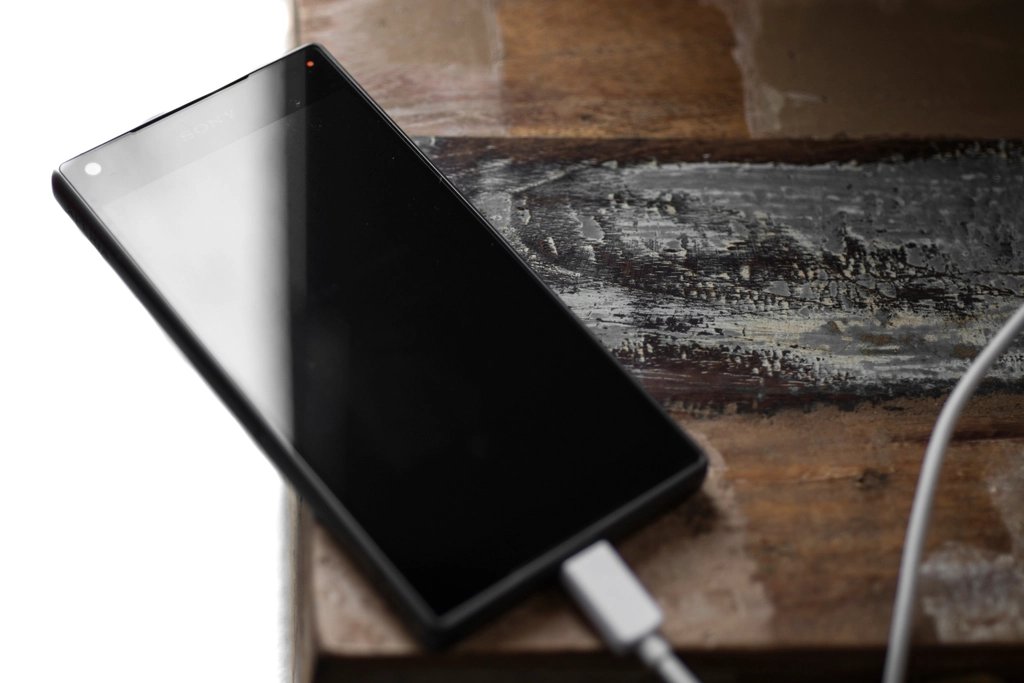
For a reader who has to live with power cuts, that carries real weight. The 27 W reverse charging can also get a second device out of trouble.
Charging: fast, but the charger is extra
The Poco F9 Pro accepts 100 W wired and 50 W wireless. BGR measures 75% in 30 minutes and a full charge in a little over an hour. Wirelessly, with a compatible stand, the same review gets 44% in 30 minutes.
The charger is not supplied: only a USB-C cable is in the box. Reaching 100 W takes a Xiaomi HyperCharge brick. A standard USB Power Delivery charger works, but more slowly.
Software: HyperOS 3, Android 16 and four major updates
The Poco F9 Pro runs Android 16 with the Xiaomi HyperOS 3 interface. BGR finds it easy to get to grips with and fairly clean. Some apps come preinstalled, such as Amazon Music, AliExpress or Netflix, but they can be uninstalled in a few seconds. Xiaomi’s AI features (photo editing, summaries, translation) are built into the interface, alongside Google’s Gemini assistant.
Support: the real weak point against Samsung and Google
Poco promises four major Android updates and six years of security patches, until the third quarter of 2032 according to AndroidPlanet. The phone should therefore receive Android 20. That is decent, but behind the leaders: the Galaxy S26 and the Pixel 11 promise seven years of full support.
Sound and connectivity: Bose, Wi-Fi 7 and dual eSIM
The two stereo speakers are tuned by Bose: GSMArena measures a “very good” volume and describes a sound rich in bass, with clear voices. On the network side, the Poco F9 Pro supports 5G, Wi-Fi 7, Bluetooth 6.0, NFC and infrared. It takes two nano-SIMs, a nano-SIM and an eSIM, or two eSIMs, but has no headphone jack.
Price and availability: Poco F9 Pro price in France and in Africa
The official prices of the Poco F9 Pro in France are €899.90 (around 590,000 FCFA) for 12 + 256 GB and €999.90 (around 656,000 FCFA) for 12 + 512 GB. Until 21 September 2026, a launch offer brought these prices down to €739.90 (around 485,000 FCFA) and €799.90 (around 525,000 FCFA).
The real price of the Poco F9 Pro in early October 2026
Almost nobody pays the official price. According to the price comparison sites Les Mobiles and Edcom, consulted on 3 October 2026, the 256 GB version is listed at €654 (around 429,000 FCFA) at Darty, around €671 on the Fnac marketplace, €675 at Cdiscount and €675.90 at Amazon. Xiaomi’s official store stays at €739.90.
Our benchmark: under €700, the value for money is excellent; above €800, it is better to wait for a promotion or look at the competition.

Where to buy the Poco F9 Pro at the best price
Smartphone Poco F9 Pro
- AmazonSee at Amazon
Some links on this page are affiliate links: Wanda-techs may earn a commission if you buy through them, at no extra cost to you. This does not influence our opinion.
Good to know — the charger is not included. Without a Xiaomi HyperCharge brick at home, add its price to the budget, or make do with an existing USB-C charger, which will be slower.
Cameroon, Ivory Coast, Senegal: imports and warranty
We found no official price in FCFA in Cameroon, Ivory Coast or Senegal at the date of this guide. The phone mostly reaches those markets through imports. Starting from the French price and adding shipping and customs duties, count on 500,000 to 600,000 FCFA depending on the channel.
The 4G bands of the global version cover those used by the major operators in the region, and 5G band n78 is the one used by the first African 5G networks. Two precautions are in order: the Xiaomi France warranty does not apply outside Europe, and it is worth checking that the unit really is the global version, and not a rebadged Chinese model. The detailed specifications are on the official Poco F9 Pro page (in French).
Poco F9 Pro vs Poco F9 Ultra: who is each one for?
- Take the Pro if you want a phone under 210 g, if you mostly shoot with the main camera and in portrait mode, and if a €200 gap matters.
- Take the Ultra if you play for several hours a day, if you want two full days of battery life, a 5x zoom and a fuller sound.
- Look elsewhere if photography comes first: a Pixel 11 or a Galaxy S26 is more consistent, with longer support.
For a tighter budget, the Redmi Note 15 Pro, from the same group, costs far less and is enough for everyday use.
Pros and cons
Pros
- Top-tier power with the Snapdragon 8 Elite Gen 5.
- Very bright AMOLED display, up to 185 Hz in games.
- Endurance of a day and a half to two days according to reviews.
- 100 W wired charging, 50 W wireless and reverse charging.
- IP68 certification, ultrasonic fingerprint reader, infrared.
Cons
- Fixed-focus 8 MP ultra-wide camera.
- Heat and throttling in the heaviest games.
- No charger in the box.
- Four Android updates, against seven at Samsung and Google.
- High official price, non-LTPO panel.
These ratings are based on the official specifications and on the reviews published by GSMArena (86%), Know Your Mobile (87%) and BGR, not on a trial by our own team. Our overall score of 8.2 out of 10 takes into account the price actually charged, which is lower than the official one.
Alternatives to the Poco F9 Pro
The Poco F9 Ultra adds an 8,050 mAh battery, a 6.9-inch display and a 5x periscope, for an official price of €1,099.90. The Galaxy S26, often seen between €650 and €700 since the summer, weighs 167 g and promises seven years of updates, but its 4,300 mAh battery and 25 W charging belong to another era.
The Nothing Phone (4a) Pro, launched at €499, targets a different audience: less powerful, but more than enough outside gaming.
Conclusion: should you buy the Poco F9 Pro?
Yes, provided you do not pay full price for it. At around €650 to €740, the Poco F9 Pro lines up a flagship chip, remarkable endurance, two kinds of fast charging and a superb display.
Its flaws are clear and have to be accepted: a sacrificed ultra-wide camera, real heat in intensive gaming and software support limited to four Android versions.
Our pick
Poco F9 Pro 12 + 256 GB — the best compromise in the F9 series for gaming and lasting two days in a 6.59-inch body, to be bought at around €650 to €740 (around 426,000 to 485,000 FCFA), not at the official price of €899.90.
Frequently asked questions about the Poco F9 Pro
What is the price of the Poco F9 Pro in France?
The official price is €899.90 (around 590,000 FCFA) for 12 + 256 GB and €999.90 (around 656,000 FCFA) for 12 + 512 GB. In practice, the 256 GB version was selling in early October 2026 for between €654 at Darty and €739.90 on Xiaomi’s store, according to price comparison sites. The €739.90 launch offer ended on 21 September 2026, but retailers have since brought their prices down to match.
Poco F9 Pro vs Poco F9 Ultra: which one should you choose?
The Pro model suits most people: same chip, same 185 Hz display, same main sensor, for €200 less at the official price and 29 g less on the scales. The Ultra earns its place with its 8,050 mAh battery, its 6.9-inch display, its 5x periscope, its 8K video and its subwoofer.
Is the Poco F9 Pro waterproof?
Yes, it is IP68 certified. Xiaomi states that it withstands immersion in fresh water down to 1.5 m for 30 minutes, under laboratory conditions. It therefore copes with rain, splashes and an accidental fall into water. The brand excludes seawater and pool water, and the warranty does not usually cover damage caused by liquid.
How many updates will the Poco F9 Pro get?
Poco promises four major Android updates and six years of security patches. Shipped with Android 16 and HyperOS 3, the phone should therefore go as far as Android 20 and receive patches until 2032. That is less than the seven years promised by Samsung and Google on their 2026 models, but enough for four to five years of use.
Is the charger included, and what is the real battery life?
The charger is not in the box in Europe: there is only a USB-C cable and a case. Getting the full 100 W requires a compatible Xiaomi HyperCharge brick. As for endurance, GSMArena measures an active use score of 19 h 06, and several reviews report up to two days of mixed use.
Still torn between the two models in the series? Tell us in the comments.
Share this content: