

Building a PC has never been this expensive, and the culprit is neither the processor nor the graphics card: it is system memory. According to a Nikkei Asia report relayed on 4 August 2026 by Tom’s Hardware, three of the world’s largest PC makers — HP, Asus and Acer — have started fitting DRAM chips from China’s CXMT into some of their laptops. An unprecedented move that says a great deal about the scale of the AI-driven shortage. Here is what is happening, and what it means for your next purchase.
Prices have quadrupled in twelve months
The numbers are staggering. Tom’s Hardware estimates RAM pricing has risen by 400% or more over the past twelve months. In a single quarter of 2026, consumer DRAM contract prices climbed by close to 89%.
In practice: a 32GB DDR5-6000 kit that used to trade under 90 dollars now sits around 529 dollars in some configurations. A more conventional 32GB DDR5 kit, sold between 100 and 200 dollars in October 2025, started at roughly 350 dollars in August 2026. Even DDR4, commercially near end of life, has roughly doubled.
The knock-on effect goes far beyond the desktop. Nintendo explicitly cited memory costs when moving the Switch 2 to 499.99 dollars. Microsoft pointed to storage and memory costs rising more than 2.5x ahead of its 1 August 2026 price increase: the Xbox Series X moved to 799.99 dollars, while the PlayStation 5 now sits at 649 dollars. The PC market as a whole is expected to decline by more than 11% this year.

The cause: AI is absorbing every available chip
To understand it, look at HBM (High Bandwidth Memory), the stacked high-throughput memory that sits next to AI accelerators such as Nvidia’s data-center GPUs. Demand for it is effectively unlimited today, and margins are far higher than on consumer memory.
Yet only three companies — Samsung, SK hynix and Micron — control more than 95% of global DRAM output. All three have shifted wafers toward HBM. Industry estimates suggest AI data centers will absorb roughly 70% of all memory chip production in 2026, a level of demand that has tripled DRAM costs in eighteen months.
Relief is not around the corner. The big three have reportedly sold out their output through 2027. Intel points to 2028 before conditions normalise, and Silicon Motion warns the shortage across DRAM, NAND and HBM will persist into that same year.

CXMT, the fourth player nobody expected
Against that backdrop, ChangXin Memory Technologies (CXMT) has broken into the global supply chain. According to Nikkei Asia, several major PC makers completed qualification of CXMT DRAM around the middle of the year and are now installing small quantities in a limited number of notebook models, aimed exclusively at non-US markets.
The caution is deliberate. CXMT appears on a Pentagon list of companies with ties to the Chinese military, and lawmakers in Washington are pushing to have it blacklisted outright. Manufacturers are also wary of upsetting Micron, Samsung and SK hynix, on whom they depend for the bulk of their volumes.
Asked for comment, Acer did not deny the report. The company said only that it does not disclose its suppliers, while noting it stays “in close contact with multiple global manufacturers and suppliers” to adjust operations to component price changes.
Financially, CXMT is soaring: its share price jumped 466% following its Shanghai IPO, and the company expects net profit of 52 to 58 billion yuan for the first half of 2026, an increase of as much as 2,530% year on year. On the DIY side, Gigabyte has announced support for CXMT chips, and a Corsair Vengeance DDR5 kit using this memory has already reached the market.

The bad news: it is not cheaper
Do not count on CXMT to bring the bill down in the short term. A source cited by Nikkei is blunt: the Chinese maker’s DRAM is “definitely no cheaper than the likes of Samsung”. The arrival of a fourth player is therefore about securing volume rather than chasing savings.
As a sign of how tight things are, Apple has reportedly lobbied the US government for permission to buy CXMT chips. When Cupertino knocks on that door, the shortage is sparing no one.
What it means for you
If you are planning a purchase, a few markers are worth keeping in mind:
- Waiting is not automatically a win. With capacity sold through 2027 and normalisation floated for 2028, holding off six months guarantees nothing.
- Buy the capacity you actually use. Going from 32GB to 64GB costs far more than it did: assess your real needs before oversizing.
- A prebuilt laptop can become competitive again. Assemblers buy memory in volume and absorb part of the increase, unlike the single-component market.
- Watch for bundles. CPU, motherboard and memory combos sometimes offset the RAM premium.
If you do need to buy now, a 32GB DDR5 6000 MHz kit remains the most sensible balance for a gaming or creation machine in 2026.
Check the Corsair Vengeance DDR5 32GB kit price on Amazon
An industry changing nature
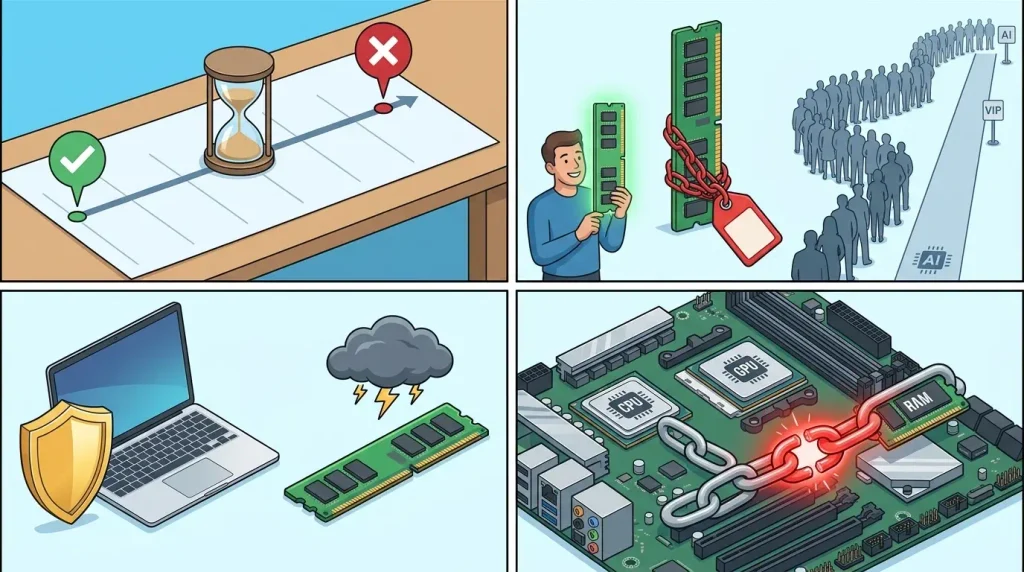
Beyond pricing, this RAM crisis tells a deeper story. For thirty years, system memory was a commodity: abundant, cheap, and mechanically falling in price. Artificial intelligence has pushed the market into allocation logic, where output flows to the most profitable use and consumers now stand at the back of the queue.
The other side of the coin deserves a mention. Very cheap RAM cycles — 2023 above all — cost manufacturers billions and helped shrink the market to three players. Today’s restored profitability could, paradoxically, be the precondition for durable capacity investment. Consumers just have to survive the transition.
Have you shelved a build because of memory prices? Tell us in the comments, and browse our other hardware analysis on Wanda-techs.com.
As an Amazon Associate, Wanda-techs earns from qualifying purchases. This affects neither our independent analysis nor the price you pay.
Where to buy at the best price
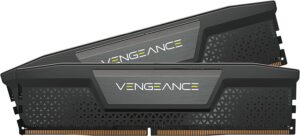
Corsair Vengeance DDR5 32 Go (2 x 16 Go) 6000 MHz
Kit de mémoire DDR5 CL30 pour PC de bureau, compatible Intel XMP 3.0 et AMD.
- AmazonSee at Amazon
- CdiscountSee at Cdiscount
- FnacSee at Fnac
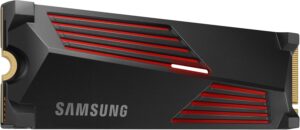
Samsung 990 PRO 2 To (avec dissipateur)
SSD NVMe M.2 PCIe 4.0, jusqu’à 7 450 Mo/s en lecture, dissipateur adapté à la PS5.
- AmazonSee at Amazon
- CdiscountSee at Cdiscount
- FnacSee at Fnac
Share this content: