

The Poco F9 Ultra is one of the most complete smartphones of autumn 2026: a Snapdragon 8 Elite Gen 5, a 6.9-inch AMOLED screen at 185 Hz, a huge 8,050 mAh battery and Bose-tuned speakers with a proper subwoofer. Launched worldwide on September 1, 2026, it targets gamers and heavy users who want to go two days without hunting for a socket. Its weak spot is the price: €1,099.90 at full price, which puts it up against the big brands. Found at around €830, as during the launch offer, it becomes an excellent deal.
Introduction: the Poco F9 Ultra, a gamer’s flagship that has gained weight and price
Poco, the Xiaomi brand built for performance fans, unveiled two phones on September 1, 2026: the F9 Ultra and the F9 Pro. We covered the event in our article on the global launch of the Poco F9 Ultra and F9 Pro. This page goes further and brings together everything you need to know about the high-end model.
The F9 Ultra replaces the F8 Ultra and keeps its spirit. The battery grows from 6,500 to 8,050 mAh, a 200 MP camera arrives, and a small subwoofer finds its way into the chassis. The chip follows Qualcomm’s calendar: it is the Snapdragon 8 Elite Gen 5, the processor inside most high-end Android phones of 2026.
The problem is the price tag. For years, Poco sold “flagship killers” at €500 or €600. At €1,099.90, the F9 Ultra now plays in the same league as the phones it was meant to beat. This page draws on Xiaomi’s official specifications, the first published reviews and user feedback to answer one simple question: at what price does it become a good buy?
Verdict at a glance: our take on the Poco F9 Ultra
Verdict in 30 seconds
The Poco F9 Ultra offers some of the best battery life on the market, surprisingly good sound and top-tier power. At its official price it is still expensive: wait for a deal under 900 euros.
For whom Gamers and heavy video watchers who want two days of battery life, a very bright screen and good sound without headphones.
Avoid if You want a light phone, the best camera of the moment or seven years of software support.
We like
- Two days of battery life with heavy use
- 2.1 sound with a Bose subwoofer
- Very bright 6.9-inch 185 Hz screen
- 100 W wired and 50 W wireless charging
- IP68 rating
We like less
- Official price too high
- 235 g and a bulky footprint
- Heats up in long gaming sessions
- Average ultra-wide, no charger included
Poco F9 Ultra: full specifications
| Écran | AMOLED 6,9 pouces, 2 608 x 1 200 px (1,5K), jusqu'à 185 Hz, 2 200 nits HBM, 4 500 nits sur 25 % et 10 000 nits sur 1 % de la surface, 12 bits, HDR10+ et Dolby Vision, Gorilla Glass 7i |
|---|---|
| Processeur | Qualcomm Snapdragon 8 Elite Gen 5 (3 nm), 2 x 4,6 GHz + 6 x 3,62 GHz, GPU Adreno 840 ; puce de jeu VisionBoost D8 |
| Mémoire | 12 ou 16 Go LPDDR5X 9 600 Mbit/s |
| Stockage | 256 Go, 512 Go ou 1 To UFS 4.1, pas de microSD |
| Appareil photo principal | 200 Mpx, f/1,68, pixels 16-en-1 de 2 µm, OIS ; vidéo 8K 30 i/s, 4K 60 i/s, Log 4K |
| Ultra grand-angle | 50 Mpx, f/2,4, 102° |
| Téléobjectif | 50 Mpx périscopique, f/3,0, 120 mm, zoom optique 5x, OIS |
| Caméra selfie | 32 Mpx, vidéo 4K 30 i/s |
| Batterie | 8 050 mAh (silicium-carbone) |
| Charge | 100 W filaire, 50 W sans fil, 27 W inversée filaire, 22,5 W inversée sans fil ; chargeur non fourni en France |
| Système | Android 16, Xiaomi HyperOS 3 ; 4 mises à jour Android et 6 ans de correctifs de sécurité |
| Réseau | 5G SA/NSA (dont n78), 4G (dont B3, B7, B20), double SIM (nano + nano, nano + eSIM ou double eSIM), Wi-Fi 7, Bluetooth 6.0, NFC, infrarouge, USB-C 3.2 Gen 1, pas de prise jack |
| Étanchéité | IP68 (eau douce, 1,5 m, 30 min) |
| Dimensions et poids | 163,49 x 77,94 x 8,74 mm, 235 g |
| Date de sortie | Lancement mondial le 1er septembre 2026, disponible en France dès septembre 2026 |
| Launch price | 1 099,90 € (environ 721 000 FCFA) en 12 + 256 Go ; 1 199,90 € (environ 787 000 FCFA) en 16 + 512 Go ; 1 399,90 € (environ 918 000 FCFA) en 16 Go + 1 To ; offre de lancement jusqu'au 21 septembre 2026 : 829,90 € (environ 544 000 FCFA) et 999,90 € (environ 656 000 FCFA) |
Three numbers sum up this phone. First, the 8,050 mAh of its silicon-carbon battery, a capacity you mostly saw on Chinese devices not sold in Europe. Then the screen’s 185 Hz, rare outside gaming phones. Finally, the 235 g on the scale: that is the price of this stamina.
Also worth noting are the LPDDR5X RAM at 9,600 Mbit/s and the UFS 4.1 storage, the fastest you can get in 2026. There is no microSD slot and no headphone jack, as on almost every high-end phone.
Poco F9 Ultra design: solid, understated and heavy
The Poco F9 Ultra measures 163.49 x 77.94 x 8.74 mm. It is a big phone, wider than average, and you feel its 235 g in a jeans pocket. Several published reviews still praise the weight distribution, which keeps it from tipping over in the hand. The matte back has been well received.
Two colours are available in France: black and cherry red. The design stays classic, and PhoneArena even finds it a little too tame. Poco adds a small nostalgic touch: a notification LED, which disappeared from almost every phone years ago.
Durability and protection
The phone is IP68 rated. Xiaomi spells out the conditions: immersion in still fresh water down to 1.5 m for 30 minutes. The brand advises against the beach and the pool, because salt and chlorine damage the seals. The front is protected by Corning Gorilla Glass 7i.
For use in West and Central Africa, this protection matters. Road dust and rainy-season humidity are the enemies of USB ports and speakers. A case comes in the box.
Unlocking and ergonomics
The fingerprint reader is ultrasonic and sits under the screen. This technology copes better with wet or dirty fingers than optical readers. An infrared blaster also lets you control a TV or an air conditioner. PhoneArena regrets the lack of a customisable button.
Display: 6.9 inches, 185 Hz and very high brightness
The AMOLED panel measures 6.9 inches with a resolution of 2,608 x 1,200 pixels, about 416 pixels per inch. This 1.5K resolution is a good balance between sharpness and power draw.
The refresh rate goes up to 185 Hz. It only really matters in compatible games, with help from the VisionBoost D8 chip described below. In the interface, the screen adapts to the content to save battery. Touch sampling reaches 480 Hz continuously and 4,800 Hz at peak, which cuts the delay between your finger and the action on screen.
Brightness: figures to take with a pinch of salt
Xiaomi claims 850 nits in typical use, 2,200 nits in sunlight mode, 4,500 nits on a quarter of the screen and 10,000 nits on 1% of the surface. That last figure only applies to small HDR highlights. PhoneArena measured 2,849 nits on 20% of the screen, which is already excellent. Reading it in direct sunlight, in Lagos as in Marseille, should not be a problem.
The panel supports HDR10, HDR10+ and Dolby Vision, and displays 12-bit colour. TÜV Rheinland certifications will reassure people with sensitive eyes. The brand does not disclose the exact PWM frequency.
Poco F9 Ultra performance: plenty of power, plenty of heat
The Snapdragon 8 Elite Gen 5 is built on a 3 nm process. Its CPU combines two cores at 4.6 GHz and six cores at 3.62 GHz, backed by an Adreno 840 GPU. According to PhoneArena, the F9 Ultra scores 2,370 points single-core and 8,477 multi-core on Geekbench 6. Those results put it level with the best Android phones of the year.
In practice, no current app or mobile game gives the Poco F9 Ultra any trouble. The 12 or 16 GB of RAM keep plenty of apps open in the background.
VisionBoost D8: the dedicated gaming chip
Poco adds an in-house graphics chip, the VisionBoost D8, built on 12 nm. It does three things:
- frame generation, to display up to 185 frames per second in compatible games;
- super-resolution, which sharpens games rendered at a lower resolution;
- game HDR, which boosts contrast in titles that do not support it natively.
How useful it is depends on the supported games, and Xiaomi does not publish a detailed list. In compatible titles, smoothness improves clearly. In the others, the chip stays idle.
Heat and stability
Poco relies on a cooling system called 3D IceLoop. Opinions differ on how well it works. PhoneArena reports good stability in 3DMark Wild Life Extreme, with 6,906 points on the best run and 5,303 on the worst. BGR, for its part, measured a drop to 70.9% of peak performance and a chip at 54 °C after the endurance test.
Android Central also notes that the phone gets hot during long sessions, even if it does better than the F8 Ultra. Our reading: for 30-minute sessions, nothing to worry about. For hours of gaming in a 32 °C room, expect a very hot back and a drop in performance. A gaming phone with a fan, such as the RedMagic 11S Pro, handles that scenario better.
Camera: a convincing 200 MP sensor, a weaker ultra-wide
The camera module of the Poco F9 Ultra brings together three cameras. The 200 MP main sensor has an f/1.68 aperture, is stabilised and groups its pixels by 16 to form 2 µm pixels. Xiaomi does not give its exact model.

The 50 MP periscope telephoto offers 5x optical zoom (120 mm equivalent) and optical stabilisation. The 50 MP ultra-wide has an f/2.4 aperture and a 102° field of view.
Day, night and zoom
According to the first published reviews, the main sensor delivers good photos in most conditions. PhoneArena describes a realistic, contrasty look with a slight tendency to overexpose. BGR and Android Central find the telephoto sharp at 5x and still usable at 10x. Poco promises optical-quality zoom at 10x and AI-assisted zoom up to 20x.
The ultra-wide is the weak link. Several reviewers note colours that differ from the main sensor and a clear drop in quality in low light. For group shots in the evening or dark interiors, stick with the main sensor and take a step back.
Video and selfies
The F9 Ultra shoots 8K at 30 frames per second and 4K at up to 60 frames per second, with a 4K Log mode for colour grading. Android Central finds the video average for a high-end phone: decent, nothing more. The 32 MP front camera records 4K at 30 frames per second, a plus for creators who film themselves.
Good to know — The Poco F9 Ultra is not designed first and foremost for photography. If that is your priority, Xiaomi’s camera-focused models or the high-end phones from Samsung and Google will do better, especially on the ultra-wide and video.
Battery and charging: the Poco F9 Ultra’s biggest strength
With 8,050 mAh, the Poco F9 Ultra has one of the biggest batteries among phones officially sold in Europe. Silicon-carbon technology increases capacity without adding thickness, which stays under 9 mm.
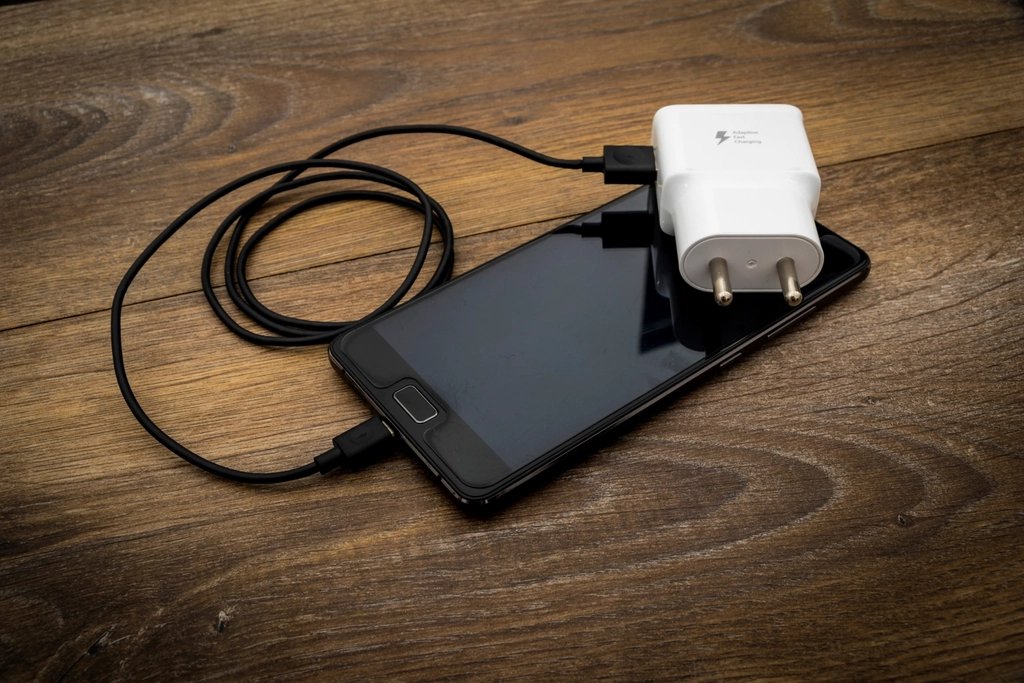
Published reviews confirm the potential. PhoneArena recorded nearly 30 hours of web browsing and 13 h 27 min of gaming, BGR nearly 43 hours of video playback at 200 nits. Android Central talks about two full days for the Poco F9 Ultra, even with heavy use.
This stamina really pays off where power is unreliable. During power cuts in Yaoundé, Abidjan or Lagos, a phone that lasts 48 hours takes the stress out of the end of the day. It can even top up another device thanks to 27 W wired reverse charging.
Fast wired and wireless charging
Wired charging goes up to 100 W and wireless charging to 50 W. BGR measured 61% in 30 minutes and a full charge in about 68 minutes when wired, against nearly 100 minutes wirelessly. The phone also supports USB PD PPS, so good-quality generic chargers will work.
Be aware that the charger is not included in France, only the USB-C cable. Xiaomi recommends a brick of at least 100 W to reach the advertised speed. So budget for an extra purchase if you do not already own a compatible charger.
Software: HyperOS 3, four Android versions and six years of security
The Poco F9 Ultra ships with Android 16 and Xiaomi’s HyperOS 3 skin. Android Central regrets this choice at a time when Android 17 is starting to reach some rivals. Xiaomi promises four major Android updates and six years of security patches. That is decent, but behind Samsung and Google, which offer seven years.
HyperOS 3 divides opinion. PhoneArena finds it polished and reliable, while BGR calls it cluttered and a little dated. The AI features are grouped under the HyperAI name: writing help, summaries, real-time conversation translation, video subtitles, and photo editing by erasing or extending. Google’s Gemini assistant is built in.
As often with Xiaomi, a few third-party apps are preinstalled at first boot; the exact list for the French version has not been disclosed. Most of them can be uninstalled in a few seconds.
Sound: the real surprise
The F9 Ultra is Poco’s first phone with a 2.1 system: two stereo speakers and a separate subwoofer, tuned with Bose and compatible with Dolby Atmos. Android Central calls it the best built-in sound on a phone, and PhoneArena also praises the overall quality. For watching a match without headphones, it is a real plus.
Poco F9 Ultra price and availability in Europe and Africa
In France, the Poco F9 Ultra is sold on Xiaomi’s official store and on Amazon. The official French prices are:
- 12 + 256 GB: €1,099.90 (about 721,000 FCFA);
- 16 + 512 GB: €1,199.90 (about 787,000 FCFA);
- 16 GB + 1 TB: €1,399.90 (about 918,000 FCFA).
Until September 21, 2026, a launch offer brought the 12 + 256 GB version down to €829.90 (about 544,000 FCFA) and the 512 GB version to €999.90 (about 656,000 FCFA). Deals should come back, and we suggest waiting for a price under €900 (about 590,000 FCFA). Check the day’s price with the retailer before buying.
Poco F9 Pro: the cheaper alternative
The Poco F9 Pro costs €899.90 for 12 + 256 GB (about 590,000 FCFA) and €999.90 for 512 GB, with launch offers at €739.90 and €799.90. It keeps the 185 Hz screen, 100 W and 50 W charging, IP68 and the 200 MP sensor.
In return, the screen shrinks to 6.59 inches, the battery to 6,330 mAh, the zoom to 2.5x and the ultra-wide to 8 MP. Its chip is a variant of the Snapdragon 8 Elite Gen 5 known as the “V Series”. At 206 g, it will suit anyone who finds the Poco F9 Ultra too bulky.
In West and Central Africa
As far as we know, Xiaomi has not announced an official launch of the Poco F9 Ultra in Cameroon, Côte d’Ivoire or Senegal. You will need to go through imports or specialist resellers, with a warranty often limited to the seller. On the network side, the European version covers the most common 4G bands (B3, B7, B20) and 5G n78, used by operators rolling out 5G in the region. Dual SIM and eSIM are supported.

Where to buy the Poco F9 Ultra at the best price
Smartphone Poco F9 Ultra
- AmazonSee at Amazon
- AmazonSee at Amazon
Some links on this page are affiliate links: Wanda-techs may earn a commission if you buy through them, at no extra cost to you. This does not influence our opinion.
Pros and cons
Pros
- 8,050 mAh battery, two days of battery life with sustained use
- 2.1 sound with a Bose-tuned subwoofer
- Very bright 6.9-inch AMOLED screen at 185 Hz
- Top-tier power with the Snapdragon 8 Elite Gen 5
- 100 W charging, 50 W wireless, IP68 and a 5x telephoto
Cons
- Official price of €1,099.90 hard to justify
- 235 g and a wide body
- Heat and throttling in long gaming sessions
- Ultra-wide and video lag behind
- No charger, shorter software support than Samsung or Google
Alternatives to the Poco F9 Ultra
Infinix GT 50 Pro 5G
RedMagic 11S Pro
Asus ROG Phone 9 Pro
If your budget is tight, the Infinix GT 50 Pro offers a decent gaming experience for a third of the price, at the cost of a less powerful chip. The RedMagic 11S Pro, at €799, uses the same chip family, adds an internal fan and holds up better in long sessions. The ROG Phone 9 Pro keeps its touch triggers and headphone jack, but Asus has quit the smartphone business. And if you can wait, keep an eye on the RedMagic 12 Pro+.
Conclusion: should you buy the Poco F9 Ultra?
Yes, as long as you do not pay full price. The Poco F9 Ultra ticks almost every box of a high-end phone: power, screen, sound, battery life, water resistance. Its stamina and audio system even set it apart from most rivals, including more expensive ones.
At €1,099.90, it does not justify its compromises: weight, heat while gaming, an average ultra-wide, no charger. At around €830 to €900, the maths changes and it becomes one of the best-value phones of autumn 2026. If you care more about a lighter phone, the F9 Pro is the more sensible choice.
Our pick
Poco F9 Ultra 12 + 256 GB — the best choice if you want two days of battery life, powerful sound and a 185 Hz screen, bought on sale under €900 (about 590,000 FCFA).
Frequently asked questions
What is the Poco F9 Ultra price in Europe?
The official French price of the Poco F9 Ultra is €1,099.90 for 12 + 256 GB, €1,199.90 for 16 + 512 GB and €1,399.90 for 16 GB + 1 TB. At launch, until September 21, 2026, the entry version was offered at €829.90 on Xiaomi’s store. Deals are frequent at Xiaomi and Amazon, and we suggest aiming for a price under €900. In West and Central Africa, expect the import equivalent, or more than 600,000 FCFA depending on fees.
Poco F9 Ultra battery life: how long does it last?
With its 8,050 mAh battery, the Poco F9 Ultra lasts about two days with heavy use according to published reviews, and longer with moderate use. PhoneArena recorded nearly 30 hours of web browsing and more than 13 hours of gaming. A full charge takes just over an hour with a 100 W charger, which is not included in the box in France. 50 W wireless charging is also supported.
Poco F9 Ultra or Poco F9 Pro: which one should you choose?
The F9 Ultra stands out with its 6.9-inch screen, 8,050 mAh battery, 5x telephoto, 50 MP ultra-wide and subwoofer. The F9 Pro, from €899.90, is more compact and lighter (206 g), with a 6,330 mAh battery, 2.5x zoom and an 8 MP ultra-wide. Choose the Ultra for battery life and sound, the Pro for size and price.
Is the Poco F9 Ultra waterproof?
Yes, the Poco F9 Ultra is IP68 rated. Xiaomi guarantees resistance to dust and to immersion in still fresh water down to 1.5 metres for 30 minutes. The brand still advises against swimming in the sea or a pool, as salt water and chlorine damage the seals. A downpour or a drop in the sink will not cause it any trouble.
Poco F9 Ultra updates: how many Android versions?
The phone ships with Android 16 and HyperOS 3. Xiaomi promises four major Android updates, which takes it to Android 20, and six years of security patches, until around 2032. That is decent support, but less than the seven years Samsung and Google offer on their high-end phones. The Android 17 schedule has not been announced yet.
To go further, the full specifications are listed on Xiaomi’s official Poco F9 Ultra page (in French). And if you are torn between this and a pure gaming phone, our comparison of the ROG Phone 9 Pro and the RedMagic 11 Pro (in French) will help you decide.
Share this content: