
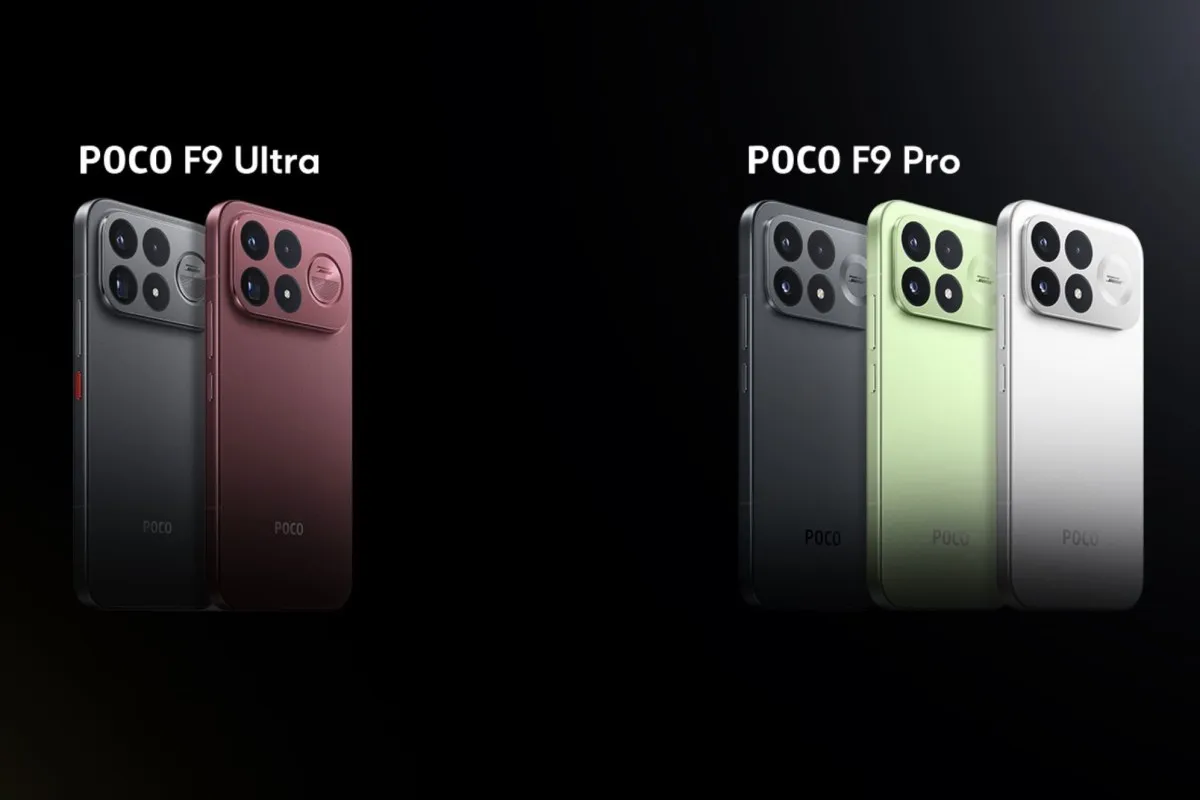
Poco is finally lifting the veil on its new flagships. The Poco F9 Ultra and the Poco F9 Pro are being officially unveiled on Tuesday, 1 September 2026 at 8 pm GMT during a global online event. On the menu: a Snapdragon 8 Elite Gen 5, a battery rated at 8,050 mAh on the top model, a 185 Hz display and audio tuned by Bose. Notably, the brand is dropping the standard “F9” model and narrowing its line-up to just two devices. Here is everything we know ahead of the launch.
A global launch set for 1 September, with no standard model
Poco has confirmed on its official site that the F9 series will be unveiled on 1 September at 8 pm GMT, which is 1.30 am on 2 September in India. The range is limited to the Poco F9 Pro and the Poco F9 Ultra. No information has surfaced about a possible entry-level “F9” model: the brand has neither announced it nor formally ruled it out.
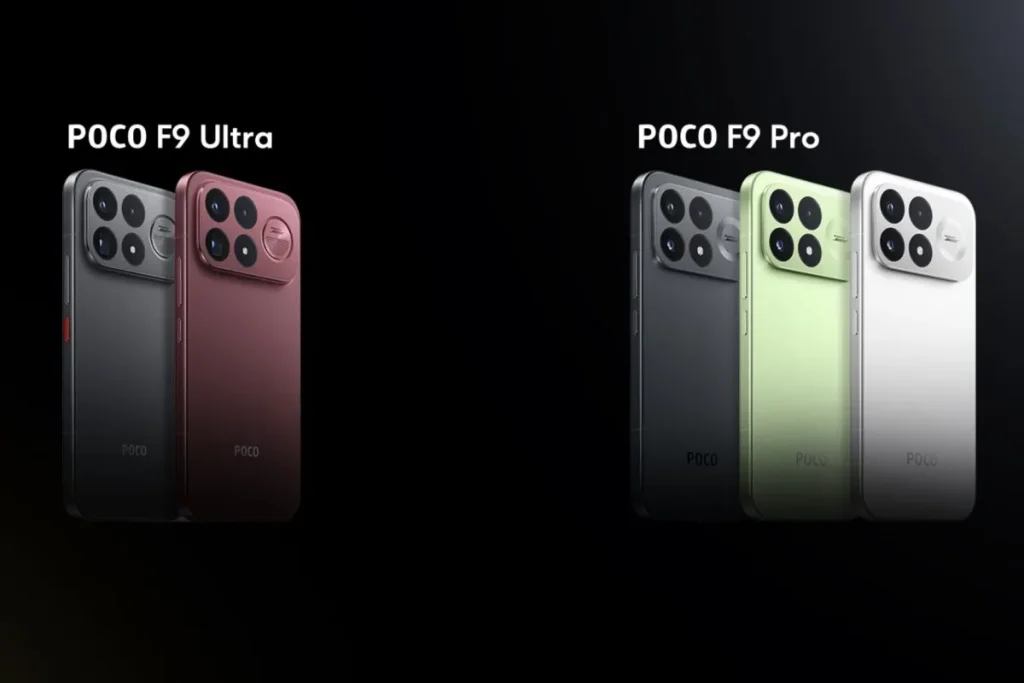
This strategy is no accident. For several generations, Poco flagships have been international versions of the high-end Redmi phones sold in China. The F9 Pro and F9 Ultra are believed to be based on the Redmi K100 Pro and K100 Pro Max respectively, launched in China in early August 2026. The official teaser shows two finishes, a white and a dark red, that closely echo the “Cabernet Sauvignon” colour offered on the K100 series.
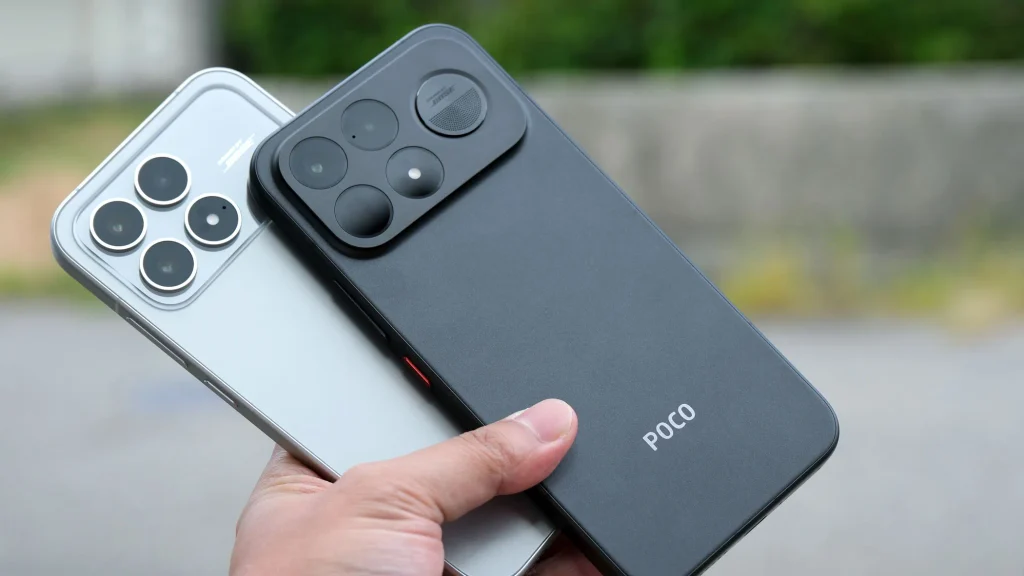
Another clue pointing to that lineage: the Sound by Bose branding printed on the back of the devices, exactly as on the Redmi K100. The audio partnership between Xiaomi and Bose, introduced with the previous generation, therefore continues and is now filtering down into the Poco range.
Poco F9 Ultra and F9 Pro: the expected spec sheet
Display: 185 Hz on both models
This is one of the most eye-catching claims of this generation. The Poco F9 Pro is said to carry a 6.59-inch plastic OLED panel at QHD+ resolution, with a refresh rate of 185 Hz. The Poco F9 Ultra reportedly moves up to 6.85 inches, at a stated resolution of 2608 x 1200 pixels.
As a reminder, the refresh rate is the number of images a screen can display each second. A 185 Hz panel refreshes its image 185 times per second, against 60 times on a conventional screen: scrolling feels smoother, and some compatible games can take advantage of that responsiveness. In practice, the gap perceived between 120 and 185 Hz remains subtle for most uses, but the marketing argument is effective.
Chip: Snapdragon 8 Elite Gen 5 for both
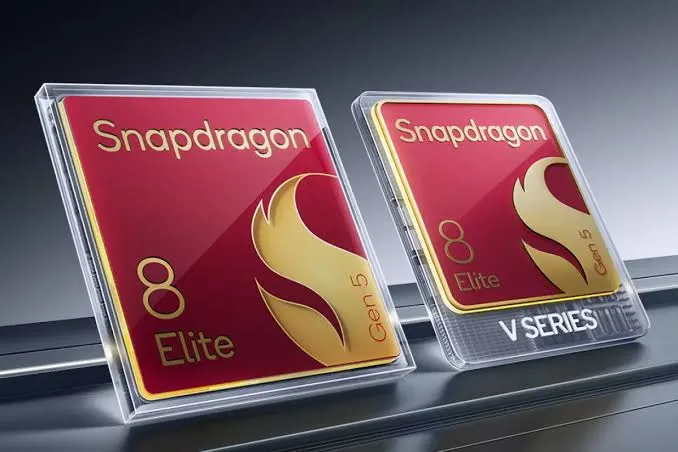
Poco has confirmed that both models will rely on Qualcomm’s Snapdragon 8 Elite Gen 5 platform. Leaks do point to an important nuance, however: the F9 Pro could inherit a “V” variant, meaning a slightly lower-binned version of the same chip with reduced clock speeds. This is a common practice that lets manufacturers segment a line-up without changing architecture.
Battery: up to 8,050 mAh on the F9 Ultra
This is probably the most concrete leap of this generation. The Poco F9 Ultra is said to pack an 8,050 mAh battery, against 6,500 mAh on the F8 Ultra released in November 2025. The F9 Pro would climb to 6,330 mAh, against 6,210 mAh for the F8 Pro. Both devices would support 100 W wired charging, and the Ultra would add 50 W wireless charging.
These capacities, far above what most Western flagships offer, are explained by the spread of silicon-carbon batteries. This chemistry allows more energy to be packed into the same volume as a conventional lithium-ion cell, an advantage Chinese manufacturers have been exploiting heavily for two years.
Cameras: the leaks disagree
This is the point on which caution is required. Several sources describe a 50-megapixel optically stabilised main sensor for the F9 Pro, paired with an 8 MP ultra-wide and a 50 MP telephoto at 3x optical zoom; the F9 Ultra would add a 50 MP periscope at 5x zoom and a 50 MP ultra-wide. Other outlets instead report a 200 MP main sensor shared by both devices.
With no official confirmation at the time of writing, it is better to wait for the presentation to settle the matter. It is also worth remembering that a high megapixel count guarantees nothing: sensor size, lens aperture and software processing weigh far more heavily on the final quality of a photo.

The rest of the spec sheet
- IP69 certification, meaning resistance to dust, immersion and high-pressure, high-temperature water jets
- Stereo speakers tuned by Bose
- 185 Hz AMOLED displays on both models
- 100 W wired charging
Higher prices, blamed on the memory crunch
European pricing leaks place the Poco F9 Pro at around 799 euros in a 12 GB + 256 GB configuration, and the Poco F9 Ultra at roughly 999 euros in 16 GB + 512 GB. These figures are not official and should be treated with caution, but they line up from one source to another.
If those prices are confirmed, they would mark a break with the brand’s historically aggressive pricing. The reason is well known across the industry: the shortage of RAM and flash storage, which pushed component costs up throughout 2026. Every manufacturer is affected, and Poco, whose model rests precisely on generous memory configurations, is mechanically more exposed than most.
At that price level, the F9 series is no longer fighting only premium mid-rangers: it goes head to head with the OnePlus, Samsung and Xiaomi devices sitting above 800 euros. The proposition still looks appealing on paper, since few rivals match 8,050 mAh and a Snapdragon 8 Elite Gen 5 for 999 euros, but the margin for error is narrowing.
What it changes for you
If you are after a powerful smartphone without crossing the 1,300-euro mark, the F9 series deserves your attention. Performance per euro remains Poco’s home turf, and the battery life claimed for the Ultra puts the device in a category of its own.
Three caveats, though. The first is availability. Poco simply skipped India with the F8 series, and the brand has not confirmed whether the F9 phones will be sold there. For Europe, distribution is usually assured, but timing can vary from one retailer to another.
The second is software support. Poco does not have Samsung’s or Google’s reputation when it comes to update longevity. Check the commitment announced during the presentation, because it is a decisive criterion on a device you will keep for three or four years.
The third: wait for independent reviews. A flattering spec sheet says nothing about thermal behaviour during long gaming sessions, real low-light photo quality, or system stability. Those things can only be measured in daily use.
Wait for the F9, or go for the F8 Ultra?
It is a fair question, especially since the Poco F8 Ultra remains an excellent device: a 6.9-inch AMOLED display at 120 Hz, a stabilised 50 MP Light Fusion 950 main sensor, a 6,500 mAh battery and Bose audio. Above all it has one decisive short-term advantage: its price has already fallen well below launch level, whereas the F9 series will arrive at full tariff.
If maximum battery life and the latest Qualcomm chip are your priorities, wait for the F9 Ultra and its first reviews. If you want the best value for money right now, the F8 Ultra is hard to fault.
Check the Poco F8 Ultra price on Amazon
As an Amazon Associate, Wanda-techs earns from qualifying purchases. This affects neither our independent analysis nor the price you pay.
See you tonight
The launch conference for the Poco F9 Ultra and the F9 Pro is being streamed on 1 September at 8 pm GMT. We will update this article as soon as the official specifications and European prices are confirmed, particularly on the point that is currently disputed: the real resolution of the main sensor.
Does 8,050 mAh tempt you, or do you feel Poco has definitively left behind its unbeatable value-for-money territory? Tell us in the comments, and find all our smartphone reviews on Wanda-techs.com.
Read also:
- Redmi 17: Xiaomi officially unveils two models with 7,500 mAh batteries
- Galaxy S26 FE: full specs leak ahead of announcement
Where to buy at the best price
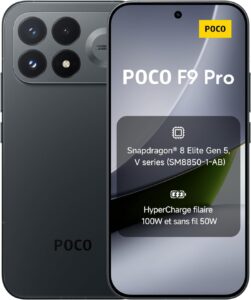
Xiaomi POCO F9 Pro 12/256 Go
Snapdragon 8 Elite Gen 5, écran AMOLED 6,59 pouces, charge 100 W, capteur photo 200 Mpx.
- AmazonSee at Amazon
- CdiscountSee at Cdiscount
- FnacSee at Fnac
- AliExpressSee at AliExpress
Share this content: