
Washington has closed the door a little further on foreign drones and robots. In July and August, US authorities tightened restrictions on foreign-made advanced robotic systems and imposed steep tariffs on imported drones and their components, both on national-security grounds. The drone tariffs take effect in September, with additional component tariffs following in 2027. The problem, as industry analysts point out, is that these barriers do not address China’s real strength: a manufacturing scale nobody else can match.
A blacklist born in telecoms, extended to robotics
The American framework is not new; it is widening. The Covered List, maintained by the US telecommunications regulator, has existed since 2021. It catalogues equipment considered to pose an unacceptable national-security risk, whose products can no longer obtain certain authorisations on the American market.
Originally the list targeted telecommunications and video-surveillance gear from manufacturers such as Huawei, ZTE and Hikvision. It was then extended to foreign-made drones and, most recently, to advanced robotic devices. In other words, the logic applied to 5G antennas five years ago now applies to humanoid robots.
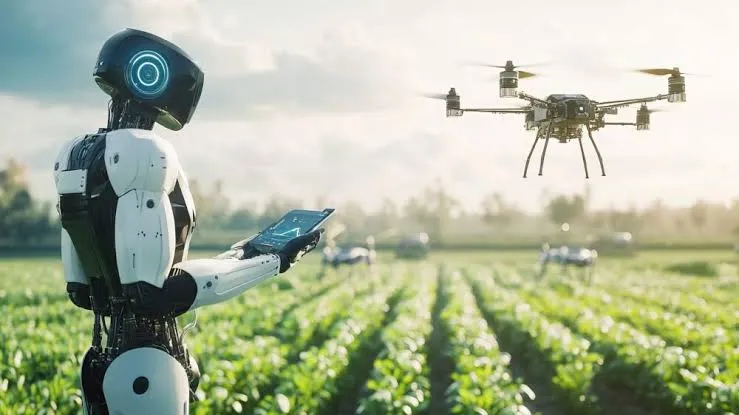
The timing is not incidental. It comes precisely as Chinese manufacturers hold commanding positions in both drones and humanoids, often at prices their American and European rivals struggle to approach.
The scale gap, in numbers
Data from Counterpoint measures the imbalance. Global humanoid robot shipments reached 22,000 units in the first half of 2026, up nearly 300% year on year. The vast majority of those machines come from Chinese factories.
More telling still: the world’s five largest humanoid makers by volume — AgiBot, Unitree, Galbot, UBTECH and Leju Robotics — are all Chinese, and together account for 86% of global shipments over the period. American companies operate at a far smaller scale.
That advantage tends to compound. Lower prices allow more machines to be deployed in the field, generating real-world usage data that improves the algorithms. Higher volumes then push unit costs down, and the cycle repeats. It is the classic experience curve, applied to robotics.
Soumen Mandal, principal analyst at Counterpoint, adds a second factor: Chinese manufacturers are bringing a growing share of the technology stack in-house. Unitree is developing more components internally, while carmakers such as XPeng are redeploying their expertise in chips and vehicle manufacturing into robotics.
“You cannot sanction your way around a cost curve”
Ankur Saxena, an investment director at TDK Ventures, sums up the balance of forces bluntly: “The United States leads in frontier AI, software and semiconductor innovation. China leads in manufacturing scale, supply-chain depth and cost.”
He also highlights a key difference with the semiconductor file. Robotics does not rest on a single technology one country can lock down, as with lithography equipment. It assembles thousands of ordinary parts — motors, gearboxes, sensors, batteries — whose mass production is precisely China’s strong suit.
His line has become the most quoted in the debate: “You cannot sanction your way around a cost curve. You can only out-build it, and America has yet to begin making the decade-long investment that will require.”
Towards a regional market rather than a world cut in two
If the American market closes, where do Chinese manufacturers go? According to Saxena, they retain an enormous domestic market and plenty of room to expand elsewhere, particularly where demand for affordable automation is growing.
Mandal notes that Chinese makers are already targeting price-sensitive markets facing severe labour shortages across Europe, Southeast Asia, Latin America and the Middle East. He expects a path similar to that of Chinese electric-vehicle firms: build scale at home, export, then set up local production. Countries facing demographic decline could become early markets for humanoids, particularly in manufacturing.
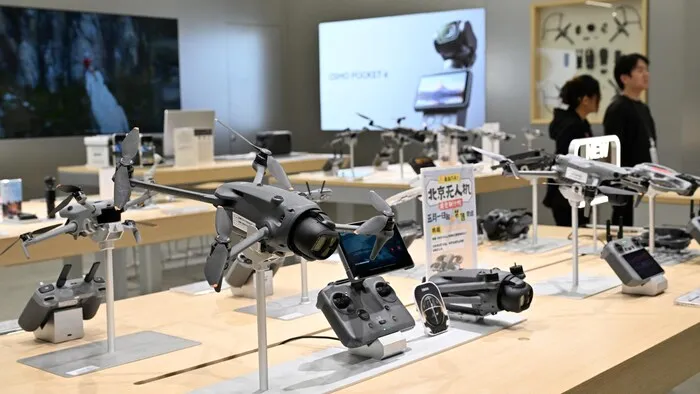
The drone market already offers a preview of that fragmented landscape. It is splitting into two ecosystems: a US-led market built around systems compliant with American defence requirements, and a China-led market focused on volume and low cost, explains Bentzion Levinson, founder and chief executive of Virginia-based drone maker Heven AeroTech.
In his view, Western manufacturers are unlikely to win in the entry-level consumer drone segment, where cost remains decisive. They should instead position themselves in long-range autonomous systems for defence and critical infrastructure, where security requirements carry more weight than purchase price.
The next battle will be fought over energy
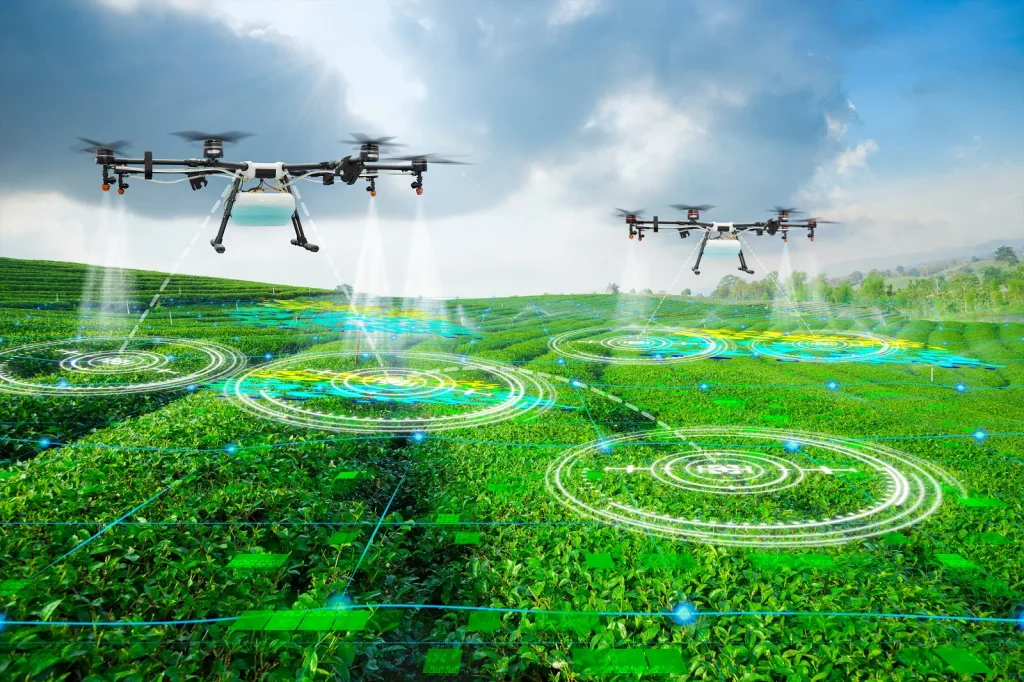
Levinson identifies the next front: “The next battleground is over who owns the next-gen energy and payload architecture.” In plain terms: the battery, and what the aircraft can actually carry.
The logic is simple. The more capable a drone becomes — multiple cameras, onboard compute, decision autonomy — the more power it draws. At a certain point it is no longer software that limits the machine but the energy density of its battery. Whoever solves that equation will build a lead that is hard to close.
On the American side, some players welcome the new rules. Agility Robotics responded favourably to the regulator’s July decision, arguing it could address security concerns around foreign-made advanced robots before they become deeply embedded in the US market, as happened in the drone industry. The company, which designs and assembles its Digit humanoid in the United States, nevertheless argues for continued access to the tools and technologies research requires.
Japan, Korea and Taiwan as the middle ground
“The alternative to China isn’t a purely domestic U.S. supply chain; it’s a diversified allied one,” says Saxena. Japan brings decades of experience in industrial robotics and precision manufacturing, South Korea its strengths in electronics, batteries and automobiles, Taiwan its command of semiconductors.
None of these countries can replace China on its own, however, given how deeply Chinese components remain embedded across the global robotics industry. Mandal sees an intermediate positioning emerging instead: Asian machines sitting between low-cost Chinese robots and pricier American offerings. Hyundai, which owns Boston Dynamics, and Toyota are among the carmakers investing in the segment.
Yang Fang, who runs the California agtech startup Beagle Technology, specialising in automating farm equipment, offers another hypothesis: robotics could become structurally regional, with each player designing machines for the labour needs, working conditions and customers of its home market.
The most likely outcome, then, is not a robotics planet cut into two sealed blocs. It is a mosaic: Chinese firms winning on cost and volume across much of the world, American and allied manufacturers gaining ground where security matters most, and Japanese, Taiwanese and Korean makers trying to settle in between. For European buyers, that fragmentation means one thing above all: the price of a drone or a robot will increasingly depend on where you live.
Does this regionalisation worry you for your future purchases? Share your view in the comments and follow our robotics coverage on Wanda-techs.com.
Share this content: