

The Xiaomi 18 Pro is Xiaomi’s new compact flagship, unveiled in Beijing on 23 September 2026 with the Snapdragon 8 Elite Gen 6 chip, two 200 MP Leica sensors, a second screen on the back and a 7,000 mAh battery in a 6.4-inch body. It has been on sale in China since launch night, from 5,999 yuan, or roughly €750 (about 492,000 FCFA) at the current exchange rate. Xiaomi promises a global release before the end of the year, a first for a Pro model since 2023. Neither the date nor the euro price is known, and the international version is said to get a smaller battery.
Introduction: the Xiaomi 18 Pro, a small flagship that finally leaves China
Xiaomi showed two phones on 23 September: the 6.4-inch model covered here and the 6.9-inch Xiaomi 18 Pro Max. The family also includes a foldable, the Xiaomi 18 Fold.
The launch matters for where the phone will be sold, too. Since the Xiaomi 13 Pro in 2023, no Pro from the numbered series had left China. On launch day, Xiaomi’s global account announced on X that the series would go international this year.
Who is the Xiaomi 18 Pro for? Anyone after a high-end phone that fits in a jeans pocket without giving up zoom or stamina. Our editorial team has not handled the device. This page draws on Xiaomi’s own data, on the hands-on reports published since launch and on our analysis.
Verdict at a glance: a very complete compact, a European price still unknown
Verdict in 30 seconds
The Xiaomi 18 Pro packs a 2 nm chip, two 200 MP Leica sensors and 7,000 mAh into a 6.4-inch, 203 g body. The score is provisional: our team has not tested it, the European date and price have not been announced, and the global version is said to carry a 6,000 mAh battery.
For whom Buyers looking for a compact flagship with a strong telephoto camera and long battery life, who can wait for the global release.
Avoid if You want a big screen, a guaranteed purchase in Europe today or a thin, light phone.
We like
- 6.4-inch format, 72 mm wide
- 200 MP main sensor and 200 MP telephoto
- 7,000 mAh in China, 100 W wired and 50 W wireless
- Rear screen that is handy for selfies
- IP66, IP68 and IP69
We like less
- Battery cut to 6,000 mAh outside China, according to a leak
- Chinese price up by 1,000 yuan
- European date and price not announced
- 8.46 mm thick
- Rear-screen AI features still slow
Xiaomi 18 Pro specs
| Écran | OLED LTPO plat de 6,4 pouces, 2 436 x 1 120 px (environ 419 ppp), 1 à 120 Hz, 4 000 nits en pic annoncés, mode anti-regards ; écran arrière OLED de 2,7 pouces, 912 x 596 px, 120 Hz |
|---|---|
| Processeur | Qualcomm Snapdragon 8 Elite Gen 6 (2 nm, cœurs Oryon jusqu'à 5 GHz) |
| Mémoire | 12 ou 16 Go LPDDR5X |
| Stockage | 256 Go, 512 Go ou 1 To UFS 4.1 |
| Appareil photo principal | 200 Mpx Light Fusion 960L, 1/1,28 pouce, LOFIC, 23 mm, f/1,67, stabilisation optique, optique Leica Summilux |
| Ultra grand-angle | 50 Mpx OV51D, 1/2,88 pouce, 17 mm, f/2,4, 102 degrés |
| Téléobjectif | Périscope 200 Mpx Samsung HP5, 1/1,56 pouce, 75 mm (3,2x), f/2,4, stabilisation optique, macro à 12 cm |
| Caméra selfie | 50 Mpx |
| Batterie | 7 000 mAh silicium-carbone en Chine ; 6 000 mAh pour la version mondiale selon une fuite (code HyperOS) |
| Charge | 100 W filaire, 50 W sans fil, 27 W inversée filaire (Chine) ; 90 W évoqués pour la version mondiale |
| Système | HyperOS 4 (Android 17) |
| Réseau | 5G, double nano-SIM, Wi-Fi 7, Bluetooth 6.0, NFC, UWB, infrarouge (bandes de la version mondiale non publiées) |
| Étanchéité | IP66, IP68 et IP69 |
| Dimensions et poids | 151,8 x 72 x 8,46 mm, 203 g |
| Date de sortie | 23 septembre 2026 en Chine ; sortie mondiale annoncée pour 2026, date non communiquée |
| Launch price | Chine : 5 999 yuans en 12 + 256 Go, soit environ 750 € (environ 492 000 FCFA) ; 6 999 yuans en 12 + 512 Go, environ 875 € (environ 574 000 FCFA) ; 7 999 yuans en 16 + 512 Go, environ 1 000 € (environ 656 000 FCFA) ; 8 999 yuans en 16 Go + 1 To, environ 1 125 € (environ 738 000 FCFA) ; édition transparente 16 Go + 1 To à 9 999 yuans, environ 1 250 € (environ 820 000 FCFA). Conversions approximatives, hors taxes et frais d'import. Europe : prix non annoncé. |
Three figures sum up the Xiaomi 18 Pro specs. The two 200 MP sensors replace the 50 MP sensors of the previous generation, on the main camera and the telephoto alike. The battery reaches 7,000 mAh in a phone 72 mm wide, thanks to silicon-carbon chemistry with 32% silicon. And the starting price climbs to 5,999 yuan, against 4,999 yuan for the 17 Pro a year earlier.
Xiaomi 18 Pro design: compact, thick and fitted with a screen on the back
The Xiaomi 18 Pro measures 151.8 x 72 x 8.46 mm and weighs 203 g, according to spec sheets published in China and by Nanoreview. It is no featherweight, but the 72 mm width makes one-handed use possible.
Android Central, which handled both models, describes a silhouette very close to the 17 Pro phones: a thick body that feels lighter in the hand than it looks. The back is flat and the secondary screen sits inside the camera area. The ultra-wide lens has in fact been moved out of the main block for lack of room, notes French site Journal du Geek.
A 2.7-inch rear screen: what is it for?
This second OLED screen measures 2.7 inches, shows 912 x 596 pixels, runs at up to 120 Hz and peaks at 4,000 nits, according to the Chinese press.
Its most practical use is photography. The screen works as a viewfinder for filming or photographing yourself with the 200 MP rear sensors, which are far better than the front camera. A review published on Zhihu adds a caveat: generating AI cards takes three to five minutes and still feels like a beta.
IP68 and IP69 water resistance, toughened glass
The chassis carries IP66, IP68 and IP69 ratings: immersion in fresh water and hot high-pressure jets. In a tropical downpour or in harmattan dust, that is real peace of mind. The display is protected by Dragon Crystal 3.0 glass.
Four colours are offered in China: black, white, peach pink and galaxy blue, plus a transparent edition. The ultrasonic fingerprint reader sits under the panel.
Display: a flat 6.4-inch OLED panel that hides from prying eyes
The main panel of the Xiaomi 18 Pro is a flat 6.4-inch LTPO OLED at 2,436 x 1,120 pixels, or around 419 pixels per inch. The refresh rate varies from 1 to 120 Hz. Xiaomi quotes a 4,000-nit peak and 0.99 mm bezels on all four sides.
The Super Pixel 2.0 technology relies on a full RGB matrix, with three subpixels per pixel. At the same resolution, text looks sharper than on a conventional OLED panel. No independent brightness measurement has been published yet.
Privacy mode, the smart idea of the year
The new feature is called a privacy display. On demand, the panel narrows its viewing angles so that the person next to you in a taxi or on the metro cannot read your messages.
Opinions differ on how well it works. Android Central rates it above the Galaxy S26 Ultra’s, because it can hide a single app in split screen or a floating window without degrading the picture. Journal du Geek, on the contrary, finds the effect less pronounced than on Samsung’s phone.
Performance: the Snapdragon 8 Elite Gen 6 makes its world debut
The Xiaomi 18 Pro and the Pro Max are the first phones fitted with Qualcomm’s new platform, revealed at the Snapdragon Summit the same week. The chip is built on a 2 nm process. Its two prime cores reach 5 GHz.
Qualcomm and Xiaomi claim 35% more graphics power for 40% less energy use, and a neural engine that is 80% faster. The Xiaomi 18 Pro pairs it with 12 or 16 GB of LPDDR5X memory and 256 GB, 512 GB or 1 TB of UFS 4.1 storage.
Snapdragon 8 Elite Gen 6 or the Extreme version: what is the difference?
The Pro Max gets a faster variant, the Snapdragon 8 Elite Extreme Gen 6, and a larger vapour chamber: 5,513 mm² against 4,355 mm² for the 6.4-inch model. The gap will matter mostly in long gaming sessions.
Published scores and heat
Nanoreview lists around 3,870 points single-core and 11,140 points multi-core in Geekbench 6. These values have not been cross-checked. The detailed measurements published in China so far concern the Pro Max: 60 frames per second held in Genshin Impact, with the front of the phone at about 37 °C.
A smaller body sheds heat less well: expect performance to drop off sooner than on the larger model. Heavy gamers will also want to look at the OnePlus 16.
Camera: the Xiaomi 18 Pro moves to two 200 MP Leica sensors
This is the biggest change of the generation. This year both models share exactly the same cameras, DPReview points out. The partnership with Leica, which began in 2022, continues, with Summilux lenses.

Main sensor: 200 MP, LOFIC and f/1.67
The main camera is built around a 200 MP, 1/1.28-inch sensor that Xiaomi calls Light Fusion 960L. It sits behind a 23 mm equivalent lens with an f/1.67 aperture. Optical stabilisation compensates for up to seven stops, according to DPReview.
The sensor uses LOFIC technology. Each pixel stores excess light instead of clipping. The expected result: a sky that does not blow out to white, a neon sign that stays readable at night.
75 mm periscope telephoto: zoom and macro
The second 200 MP sensor, a 1/1.56-inch Samsung HP5, goes into the periscope. The focal length is equivalent to 75 mm, a 3.2x optical zoom, with an f/2.4 aperture and optical stabilisation. The 17 Pro made do with 50 MP and f/3.0 on this camera.
Xiaomi talks about lossless zoom up to 12.8x, achieved by cropping into the sensor. Treat that figure as a marketing promise. The telephoto also focuses down to 12 cm, which makes it a good macro tool.
Ultra-wide, selfie and video
The 50 MP ultra-wide (1/2.88-inch OV51D sensor, 17 mm, f/2.4) is more modest: a small sensor and a 102-degree field of view. The front camera is rated at 50 MP. Thanks to the rear screen, you can also frame your selfies with the main camera.
For video, Xiaomi quotes 4K at 60 frames per second in Dolby Vision at every focal length, and open-gate recording across the whole sensor, which is handy for reframing afterwards.
No full camera review of the Xiaomi 18 Pro has been published yet. So it is impossible to say how it stacks up against the Vivo X500 or the Oppo Find X10 Pro Max.
Battery and charging: 7,000 mAh in China, 6,000 mAh expected elsewhere
The Chinese version of the Xiaomi 18 Pro carries 7,000 mAh in a 6.4-inch phone. Xiaomi promises 80% of capacity retained after 2,000 charge cycles.
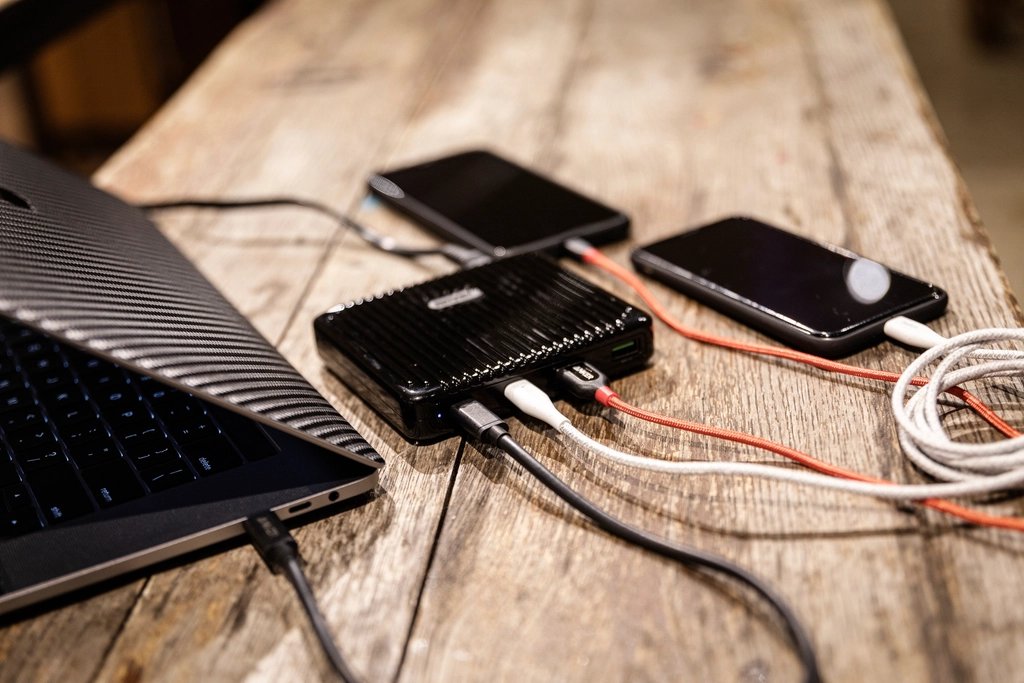
No independent battery test exists yet. Two days of everyday use look within reach. Where power cuts are part of life, that counts for a lot.
A smaller battery for the global version
Developer Kacper Skrzypek found the specifications of the international model, reference 2609BPN61G, in HyperOS code: 6,000 mAh and 90 W charging. The loss would be 1,000 mAh, or 14%. Xiaomi has not commented on the information, which was relayed by Notebookcheck.
Good to know — This is no surprise. The Xiaomi 17 went from 7,000 mAh in China to 6,330 mAh in Europe. The press puts that down to European rules on battery transport, without confirmation from the brand. Even cut to 6,000 mAh, the Xiaomi 18 Pro would keep a larger capacity than most compact phones sold in Europe.
100 W wired charging, 50 W wireless
In China, wired charging goes up to 100 W and wireless charging to 50 W. The phone can also power another device over a cable at 27 W. Wireless charging and a charger in the box remain to be confirmed for Europe.
Software: HyperOS 4, Android 17 and a home-grown AI
The Xiaomi 18 Pro runs HyperOS 4, based on Android 17. The Super XiaoAI 2.0 assistant relies on MiMo, the language model developed by Xiaomi. These features are aimed at China. The global version should be built on Gemini and Google services, like the Xiaomi phones already sold in Europe.
Updates: nothing official for Europe
Some spec sheets mention six years of updates. Xiaomi has confirmed nothing for the global version. In any case, European regulation requires five years of updates after the end of sales for phones sold in the Union.
A word on the imported Chinese version. According to Notebookcheck, it accepts the Play Store and Google Pay, but goes without eSIM, Android Auto, Quick Share and compatibility with Wear OS watches.
Xiaomi 18 Pro price and availability: China, Europe, Africa
In China, five versions of the Xiaomi 18 Pro have been on sale since 23 September 2026:
- 12 + 256 GB: 5,999 yuan, or roughly €750 (about 492,000 FCFA);
- 12 + 512 GB: 6,999 yuan, or roughly €875 (about 574,000 FCFA);
- 16 + 512 GB: 7,999 yuan, or roughly €1,000 (about 656,000 FCFA);
- 16 GB + 1 TB: 8,999 yuan, or roughly €1,125 (about 738,000 FCFA);
- transparent edition, 16 GB + 1 TB: 9,999 yuan, or roughly €1,250 (about 820,000 FCFA).
These conversions are indicative, before VAT and import costs. The entry price has risen by 1,000 yuan in a year. Lu Weibing, Xiaomi’s president, puts it down to the cost of memory. We explain what is going on in our article on the RAM shortage.
Xiaomi 18 Pro release date in Europe
Only one thing is official: the series will leave China in 2026. Xiaomi said so on 23 September on its official X account. No date, no European country and no price have been given.
Several sites, including 4gnews and XimiTime, report that Lu Weibing mentioned on Weibo an international release before the end of November. Journal du Geek speaks of November 2026 for France. The United States would not be included.
On price, the only solid reference is the Xiaomi 17, launched in France at €999 (about 655,000 FCFA) in February 2026, with the Ultra starting at €1,499 (about 983,000 FCFA). The Xiaomi 18 Pro would logically sit between the two. We found no product listing at the French retailers Amazon.fr, Fnac, Darty or Cdiscount as of 3 October 2026.
Import shops already offer the Chinese version. Notebookcheck noted €857 (about 562,000 FCFA) for the 12 + 256 GB model at TradingShenzhen, with a one-year warranty handled by the seller and support for 4G band 20.
What about Africa?
Xiaomi has announced nothing for Cameroon, Côte d’Ivoire or Senegal. The Xiaomi 18 Pro will get there through imports, from a local reseller or a specialist site. Wait for the global version if you can, since it ships with Google services, and have the seller confirm the 4G and 5G bands of your operator. The manufacturer’s warranty does not apply outside the country of purchase.
Pros and cons
Pros
- Compact 6.4-inch format, 72 mm wide, rare at this level of equipment.
- Two 200 MP sensors, including a 75 mm telephoto capable of macro at 12 cm.
- 7,000 mAh battery in China, 100 W wired and 50 W wireless charging.
- Rear screen that is handy for selfies and notifications, main display with privacy mode.
- IP66, IP68 and IP69 certification.
Cons
- Only 6,000 mAh on the global version, if the leak proves right.
- 1,000 yuan more than the 17 Pro.
- Release date and price in Europe not announced.
- 8.46 mm and 203 g body, thick for a compact.
- Ultra-wide camera a step behind, rear-screen AI features still slow.
These scores are provisional. They rest on the spec sheet and on the first published reviews, not on a test by our team. We will revise them once Xiaomi has announced the global version and its price.
Xiaomi 18 Pro vs Xiaomi 18 Pro Max and other alternatives
Xiaomi 18 Pro Max
Vivo X500
Honor Magic 9
The Pro Max costs 1,000 yuan more for the same memory. It brings a 6.9-inch display and 8,500 mAh, but weighs 235 g. The cameras are identical: the choice comes down to size. The Vivo X500 starts at 5,499 yuan in China, or roughly €687 (about 451,000 FCFA), and the Honor Magic 9 targets the same buyers. If you do not want to wait, the Oppo Find X9 Pro and the Galaxy S26 Ultra are two models already on sale.
Conclusion: should you buy the Xiaomi 18 Pro?
On paper, the Xiaomi 18 Pro is the most complete compact phone of this autumn. Two 200 MP sensors, 7,000 mAh, a privacy display and a useful rear screen: no rival of this size lines all of that up.
Two reservations stop us from recommending a purchase right away. The global version would lose 1,000 mAh, which dents the Chinese model’s main selling point. And the euro price is still unknown, at a time when prices are rising across the board.
Good to know — Our advice: wait for the global announcement, expected before the end of the year. If Xiaomi prices the Xiaomi 18 Pro clearly below the Ultra and confirms European markets, it will become one of the best choices for anyone who refuses very large screens. Importing the Chinese version is best left to enthusiasts ready to live without eSIM and a local warranty.
Frequently asked questions
What is the Xiaomi 18 Pro price?
In China, the Xiaomi 18 Pro starts at 5,999 yuan for 12 + 256 GB, or roughly €750 (about 492,000 FCFA) at the exchange rate, before taxes. The European price has not been announced. It will be higher: as a benchmark, the Xiaomi 17 launched at €999 in France, and importers already sell the Chinese version from €857.
What is the Xiaomi 18 Pro release date in Europe?
Xiaomi has only confirmed a global release in 2026, with no date and no list of countries. Several outlets report that Lu Weibing, the brand’s president, is aiming for an international launch before the end of November, and Journal du Geek mentions November for France. That timing still has to be confirmed by Xiaomi. The phone has been on sale in China since 23 September 2026.
What are the Xiaomi 18 Pro specs?
The phone combines a 6.4-inch 120 Hz LTPO OLED display, the Snapdragon 8 Elite Gen 6 chip built on a 2 nm process, 12 or 16 GB of memory and up to 1 TB of storage. For photos: a 200 MP main sensor and a 200 MP telephoto, plus a 50 MP ultra-wide, all Leica-branded. The battery reaches 7,000 mAh in China, with 100 W wired and 50 W wireless charging.
What battery does the global Xiaomi 18 Pro have?
According to HyperOS code analysed by Kacper Skrzypek, the international Xiaomi 18 Pro would carry 6,000 mAh with 90 W charging, against 7,000 mAh and 100 W in China. Xiaomi has not confirmed these figures. The brand has done this before: the European Xiaomi 17 has 6,330 mAh, against 7,000 mAh for the Chinese version.
Xiaomi 18 Pro or Pro Max: which one should you choose?
Both share the same camera block, the same rear screen and the same charging. The Pro Max adds a 6.9-inch display, an 8,500 mAh battery and a slightly faster chip, for 1,000 yuan more and 235 g. Take the small model if one-handed use matters to you, the large one if you watch a lot of video or play for long stretches.
Share this content: