

The Light Phone III is a high-end minimalist phone: a 3.92-inch black-and-white AMOLED screen, 5G, a camera, GPS, and no browser, no social media, no email and no WhatsApp. Shipping since 27 March 2025 from the small New York company Light, it has cost $899 since 21 July 2026, or roughly €827 (about 542,000 FCFA) before import taxes. It suits people who truly want to step away from their smartphone and can live with calls, texts and around fifteen tools. At that price, and without instant messaging, it remains a purchase made out of conviction rather than a sensible buy.
Introduction: the Light Phone III, a minimalist phone at a flagship price
Light has been making “dumb” phones since 2017. The first one fitted in a card holder and could do nothing but make calls. The Light Phone II, in 2019, added texting, an e-ink screen and a handful of tools. The Light Phone III, announced on 11 June 2024, moves up a league: an OLED touchscreen, a 5G-capable Qualcomm chip, a fingerprint reader, a 50 MP camera and a battery you can lift out with a fingernail.
The price has climbed just as steeply. The earliest buyers reserved it for $399 (around €367, or 241,000 FCFA) in the summer of 2024. It went up to $599 when the first units shipped on 27 March 2025, then to $699 during the first half of 2026. Since 21 July 2026, Light has been asking $899, and the company blames the memory shortage caused by AI data centres, according to ServicesMobiles. It is the same RAM shortage that is pushing up the cost of consoles and PCs this year.
This page draws on the specifications published by Light, on the LightOS changelog and on the reviews by Engadget, Vice, Field Mag and Dumbphone France. Our newsroom has not had the device in hand: every observation about real-world use is credited to its author.
Verdict in brief: our view of the Light Phone III
Verdict in 30 seconds
The best-built minimalist phone on the market, with a fast OLED screen, 5G and a replaceable battery. Its 899-dollar price and the lack of instant messaging keep it for a committed audience.
For whom Anyone who wants a distraction-free second phone, or a main phone limited to calls, texts, GPS and music.
Avoid if Your social or working life runs through WhatsApp, you pay with your phone, or you need an interface in a language other than English.
We like
- Aluminium build, compact 124 g format
- Matte AMOLED screen, smooth and easy to read
- User-replaceable 1,800 mAh battery
- New tools added regularly in 2026
We like less
- Price raised to 899 dollars in July 2026
- No WhatsApp, no Signal, no email
- Keyboard without autocorrect
- Import only, English-only interface
Light Phone III specs
| Écran | AMOLED monochrome de 3,92 pouces, 1 080 x 1 240 px (environ 419 ppp), 60 Hz, verre mat |
|---|---|
| Processeur | Qualcomm SM4450 (Snapdragon 4 Gen 2) |
| Mémoire | 6 Go |
| Stockage | 128 Go, sans microSD |
| Appareil photo principal | 50 Mpx (photos de 12 Mpx par défaut), flash LED, déclencheur physique à deux crans, vidéo 1080p |
| Ultra grand-angle | — |
| Téléobjectif | — |
| Caméra selfie | 8 Mpx |
| Batterie | 1 800 mAh, amovible et remplaçable par l'utilisateur |
| Charge | USB-C (USB 2.0), pas de charge sans fil annoncée |
| Système | LightOS (base Android, sans services Google ni boutique d'applications) |
| Réseau | 5G et 4G LTE, nano-SIM + eSIM (bêta), Bluetooth 5.0, GPS, NFC (paiement non activé) |
| Étanchéité | IP54 (poussière et éclaboussures) |
| Dimensions et poids | 106 x 71,5 x 12 mm, 124 g, aluminium, verre et plastique recyclé |
| Date de sortie | Annoncé le 11 juin 2024, livré depuis le 27 mars 2025 |
| Launch price | 899 $ depuis le 21 juillet 2026, soit environ 827 € (environ 542 000 FCFA) hors TVA et frais d'import ; 699 $ au premier semestre 2026, 599 $ au lancement en mars 2025, 399 $ pour les premières précommandes de 2024. Pas de prix officiel en euros. |
Three figures sum up the Light Phone III. The 3.92 inches of its almost square screen make it a phone that vanishes into a shirt pocket. The 1,800 mAh battery looks tiny next to the 5,000 mAh of a smartphone, but it powers a system that does almost nothing in the background. Finally, 6 GB of memory and 128 GB of storage are very generous for a device with no apps: they are mostly there to hold music, podcasts and photos, and they are what drives the bill up in 2026.
Design of the Light Phone III: an aluminium slab that sits in the palm
The Light Phone III measures 106 x 71.5 x 12 mm and weighs 124 g. It is as wide as a recent iPhone but far shorter, so the whole screen is within reach of your thumb. At 12 mm thick, it calls to mind a small music player. The body combines aluminium, glass and recycled plastic, in a very understated matte black finish.
Physical buttons everywhere
Light has piled on the mechanical controls, against the current fashion. There is a power button that reads your fingerprint, two volume keys, a two-stage camera shutter (focus, then shoot) and a notched wheel on the side. The wheel adjusts brightness, and pressing it switches on the torch. Published reviews praise the precision of these buttons, Engadget first among them.
Toughness, water resistance and repairability
The IP54 rating protects against dust and splashes, not against being dropped in water. That is the cost of a removable back: the cover comes off so the battery can be swapped, and Light says the screen and the USB-C port can be replaced too. There is no headphone jack.
One detail Dumbphone France enjoyed: the Light Phone III arrives in a metal toolbox made by Toyo Steel, designed to be reused.
Display: a black-and-white AMOLED instead of e-ink
This is the clean break with the previous model. On the Light Phone III, e-ink, slow and prone to ghosting, gives way to a 3.92-inch AMOLED panel at 1,080 x 1,240 pixels, or about 419 pixels per inch. It refreshes at 60 Hz and its glass is frosted, which cuts down reflections and gives text a paper-like look.
The interface shows nothing but white on a black background, with shades of grey for photos and maps. On an OLED screen, a black pixel is a pixel that is switched off: this aesthetic choice also helps battery life. Typing and scrolling become instant.
One basic question remains. An OLED screen emits light, unlike the e-ink of the Mudita Kompakt, which is easier on the eyes in the evening and effortlessly readable in full sun. Light lowered the minimum brightness level with the v566 update in June 2026, which helps in the dark.
Performance: what the Light Phone III can do, and what it refuses to do
The chip inside the Light Phone III is a Qualcomm SM4450, better known as the Snapdragon 4 Gen 2. In a €150 Android smartphone, it struggles. Here it only has to drive lists of text, an audio player and GPS: it is more than enough. Reviews describe a snappy system with no loading times.
Calls, texts and keyboard
Everyone agrees on call quality. Engadget reports clear sound at both ends and a usable loudspeaker, while Dumbphone France describes a crisp voice on a Free SIM card in a French city. Messaging handles SMS, MMS, group conversations, voice messages since February 2026 and animated GIFs since the summer.
The keyboard is the real sore point. It has neither autocorrect nor swipe typing, and Engadget’s Nathan Ingraham summed up the experience in a single unflattering word. Reviews from 2026 still level the same complaint at the Light Phone III.
The tools available in October 2026
Light talks about tools, not apps. Here is what the Light Phone III offers to date:
- Phone, messages, contacts, alarm, timer, calculator, calendar, notes and voice memos;
- Directions: turn-by-turn voice guidance by car, on foot, by public transport and by bike, using Here maps;
- Music and podcasts, loaded from a computer, played over Bluetooth 5.0 or through the USB-C port;
- Camera and album;
- Hotspot over 4G and 5G;
- Weather and a two-factor authenticator, both added on 15 July 2026;
- Ride-hailing: booking an Uber or Lyft ride through the Tremp service, since 15 September 2026.
The list of what is missing is longer: no browser, no email, no app store, no banking. The NFC chip is there, but the payment wallet promised at launch still has no date. The same goes for video calls, even though the front camera is in place.
Camera: a backup shooter, nothing more
The 50 MP rear sensor of the Light Phone III produces 12 MP images by default, through pixel binning. An LED serves as the flash. The 8 MP front camera was disabled at launch. According to Vice, video tops out at 1080p and 30 frames per second.

Opinions are divided. Field Mag, which took the phone hiking and cycling in Baja California for three months, published perfectly decent landscapes. Engadget, on the other hand, notes a shutter lag of one to three seconds, which gets in the way as soon as the subject moves. Think of it as a visual notebook, not a replacement for a camera phone.
Battery life and charging: two days, and a battery you change yourself
The 1,800 mAh battery of the Light Phone III is removable. Light gives no official endurance figure, so measurements vary with use. Field Mag mentions one to two days. Other 2026 reviews speak of two to three days of light use. Engadget notes that GPS remains the biggest drain.
That is less than e-ink phones, which often last a week. The replaceable battery makes up for part of it: you can slip a spare cell into a bag and, above all, extend the life of the device once the first one has worn out, in three or four years. Where power cuts are common, two days away from the socket is a real comfort.
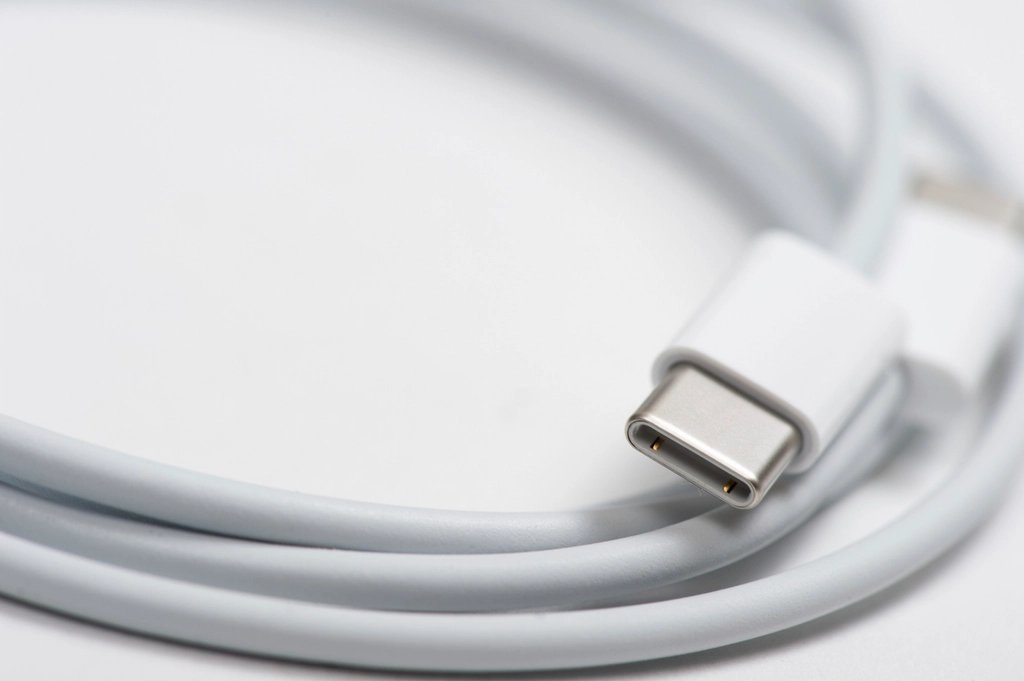
Charging goes through a USB-C port on the USB 2.0 standard. Light promotes neither fast charging nor wireless charging.
Software: LightOS, a stripped-back Android finally opening up to developers
LightOS is based on Android, but without Google services and without a conventional home screen. Everything fits in a list of words. Contacts, music and settings are managed from a web dashboard, on a computer.
A brisk pace of updates in 2026
The official changelog of the Light Phone III lists several versions between January and September 2026. February’s v556 brought voice messages and gesture navigation. June’s v566 added alarm snooze, and the summer releases introduced weather, the authenticator and then the ride-hailing tool. eSIM, alongside the nano-SIM, has been available in beta since December 2025.
A development kit and a tool library
In April 2026, Light announced a developer programme. A community library is due to open in October 2026, with tools vetted by Light and respectful of privacy. A Signal tool is in the works, according to Wikipedia, with no date given.
Two reservations. The Light Phone III interface is in English, and the French version mentioned by Dumbphone France has no timetable. Nor does Light commit to a number of years of support. The Light Phone II has not received an update since 15 September 2025, according to the manufacturer’s changelog: a precedent worth keeping in mind.
Digital detox: what this minimalist phone changes day to day
The promise of the Light Phone III fits in one sentence: you will stop pulling out your phone by reflex, because there is nothing to do on it. The reviews point the same way. Field Mag describes regaining its attention on outings. Engadget concedes that the austere interface really does put an end to mindless scrolling.
What to reorganise before taking the plunge
The flip side takes preparation. With no offline maps and no live traffic, a journey has to be planned before setting off. Tickets and QR codes must be printed. Online banking often requires an app: the authenticator that arrived in July takes care of one-time codes, not of proprietary banking apps.
The WhatsApp question
This is the point that will settle it for many readers. In France, it is still possible to get by on SMS. In Douala, Abidjan or Dakar, family groups, customers and suppliers all go through WhatsApp. The Light Phone III then makes sense as a second phone, for evenings and weekends, alongside a smartphone left at home or at the office.
Good to know — Before spending more than €800, try the free method for two weeks: greyscale screen, notifications off, social apps deleted. If that is not enough, a phone like this one comes into its own.
Light Phone III price and availability in France, Europe and Africa
Light Phone III price: $899 since July 2026
The Light Phone III is ordered from the official Light website, still as a pre-order. The price is $899, or roughly €827 (about 542,000 FCFA). Deliveries for new orders are announced for the end of 2026.
Another point worth knowing: according to several readings of the terms of sale, Light does not accept returns for a simple change of mind, only for defects. On the American second-hand market, Swappa recorded an average selling price of $670 (around €616, or 404,000 FCFA) in early October 2026.
In France and Europe: importing, with VAT on top
There is no official euro price and no French distributor. Our searches turned up no product listing at Amazon.fr, Fnac, Darty or Cdiscount. Light ships internationally by courier, and taxes are the buyer’s responsibility. Phones pay no customs duty on entering the European Union, but VAT applies, at 20% in France: allow close to €1,000 (about 656,000 FCFA) once handling fees are added.
On the network side, Dumbphone France reports compatibility with Orange, SFR, Bouygues Telecom and Free, thanks to 4G bands 1, 3, 7, 20 and 28 and to voice over 4G (VoLTE). That last point matters, because France’s 2G and 3G networks are gradually being shut down.
In West and Central Africa
Light does not officially sell the Light Phone III in Cameroon, Côte d’Ivoire or Senegal. You have to go through a relative in Europe or the United States, or through a freight forwarder, and in practice give up the warranty: any return goes to the United States, at your own expense. Bands 3, 7 and 20 cover a good share of local 4G, but check with your operator that VoLTE is enabled for an imported phone. Support for USSD codes, essential for Orange Money and MTN MoMo, is not documented by Light. That is a lot of unknowns for a device costing more than 540,000 FCFA.
Pros and cons
Pros
- Careful build, compact and light format (124 g)
- Matte, fast AMOLED screen, far more pleasant than e-ink for typing
- Removable battery, replaceable screen and USB-C port
- 5G, hotspot, turn-by-turn GPS and fingerprint reader
- Frequent updates and new tools in 2026
Cons
- A price of $899, up $200 in a year
- No instant messaging, no browser, no email
- Keyboard without autocorrect
- NFC payment and video calls promised but missing
- No sales in Europe or Africa, English-only interface, limited returns
Alternatives to the Light Phone III
Mudita Kompakt
The Minimal Phone (MP01)
Three roads lead to a simpler phone life. The Mudita Kompakt, designed in Poland, keeps an e-ink screen and costs markedly less, with a European store and an interface available in French. The Minimal Phone pairs an e-ink screen with a physical keyboard and lets you install Android apps, WhatsApp included: it is the compromise for anyone who cannot do without them. The Fairphone 6, lastly, is a full, repairable smartphone.
The Light Phone 3 also has a rival from its own maker. The Light Flip, announced on 21 July 2026, puts LightOS into a plastic flip phone sold for $299 (around €275, or 180,000 FCFA). Its first deliveries are planned for April 2027.
Conclusion: should you buy the Light Phone III?
The Light Phone III is the most accomplished of the minimalist phones: well finished, fast, repairable, and better and better equipped thanks to serious software support. It makes the basic functions pleasant to use, which is where e-ink fell short.
The Light Phone III fails on two counts. Its price has gone up by $200 in a year, for an entry-level chip. And it ignores the messaging apps that much of the world depends on, West and Central Africa first of all. If you live by SMS and the budget allows, it is a fine tool. Otherwise, wait for the Light Flip or look at the e-ink alternatives.
Good to know
Light Phone III — best kept as a second phone, or for people who communicate mostly through calls and texts. At $899 (around €827, or 542,000 FCFA) before taxes, it is better to be sure of your approach before ordering, all the more so because returns for a change of mind are not accepted.
Frequently asked questions
How much does the Light Phone III cost in France and Europe?
There is no official euro price. Light has sold the phone for $899 since 21 July 2026, or roughly €827 (about 542,000 FCFA). On delivery in France, you also pay 20% VAT and the courier’s fees, which brings the bill to nearly €1,000. To our knowledge, no French retailer lists it.
Can you install WhatsApp on the Light Phone III?
No. The Light Phone III has no app store, and Light offers neither WhatsApp, nor Messenger, nor Telegram. Messaging is limited to SMS and MMS, with groups, voice messages and GIFs. A Signal tool is said to be in development, with no date. If WhatsApp is essential to you, look at The Minimal Phone instead.
Light Phone 3: does it work with French and African operators?
According to Dumbphone France, the Light Phone III works on Orange, SFR, Bouygues Telecom and Free, on 4G bands 1, 3, 7, 20 and 28, with voice over 4G. It takes a nano-SIM and an eSIM, the latter still in beta. In West and Central Africa, bands 3, 7 and 20 are the most widespread, but no local operator certifies the device: have VoLTE and USSD codes checked before making it your main phone.
What is the battery life of this minimalist phone?
Light publishes no official figure for the Light Phone III. Independent reviews put endurance at between one and three days depending on use: about two days in everyday use, less if you rely heavily on GPS or the hotspot. The 1,800 mAh battery comes out by hand, so it can be replaced once it has aged.
Does the Light Phone III have GPS and music?
Yes. The Directions tool offers turn-by-turn voice guidance by car, on foot, by public transport and by bike, using Here maps. It does not show live traffic and does not download offline maps. For music and podcasts, you load your files from a computer, within the 128 GB limit, then listen over Bluetooth or through a USB-C adapter.
Share this content: