
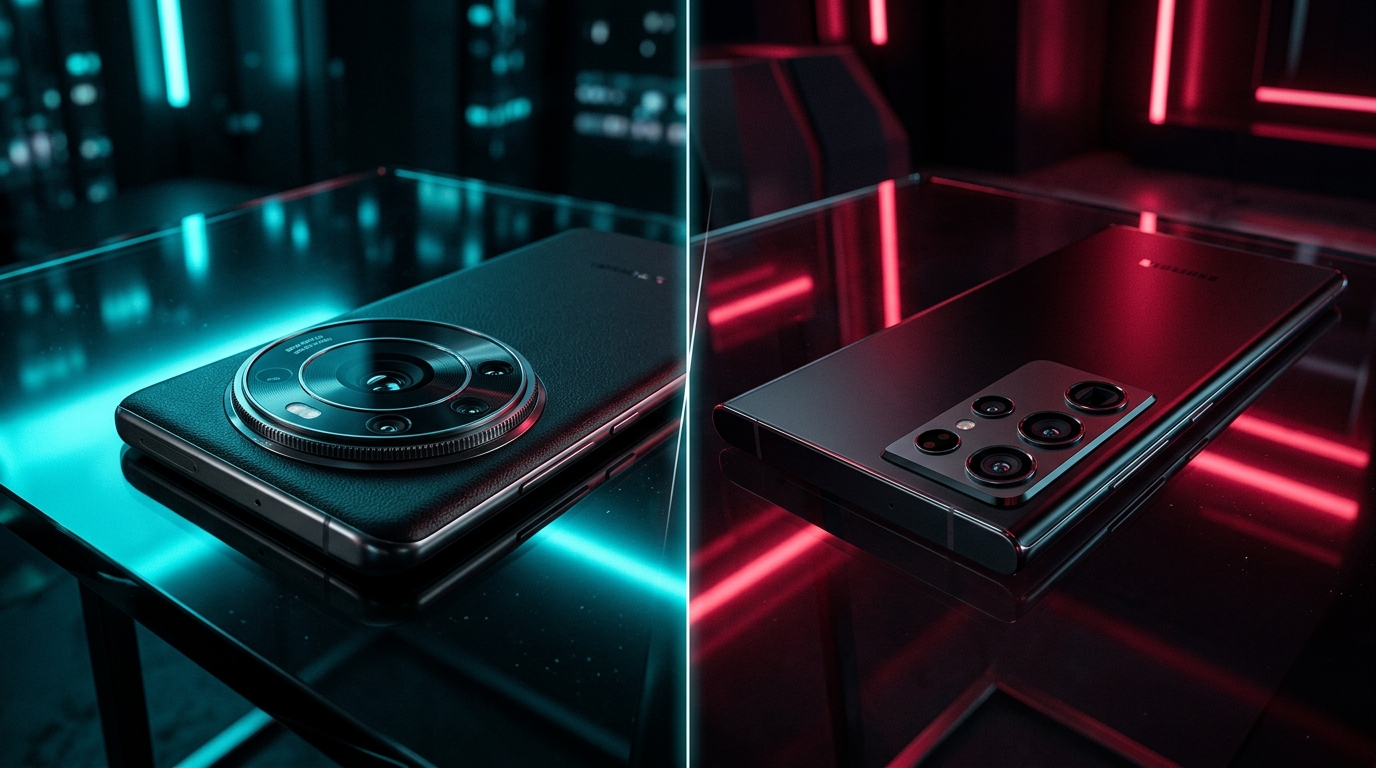
If you’re after the best camera phone right now, two names keep coming up: the Xiaomi 17 Ultra, built for photography with its 1-inch sensor and 200 MP Leica-tuned periscope, and the Samsung Galaxy S26 Ultra, the ultimate all-rounder with its S Pen and the longest software support on the market. Both share the same top-tier Snapdragon chip and fight for the title of most complete Android phone. Here, criterion by criterion and use case by use case, is what truly separates them — to help you decide.
At a glance: the match in one table
| Criterion | Xiaomi 17 Ultra | Samsung Galaxy S26 Ultra |
|---|---|---|
| Launch price | around €1,499 (16/512 GB) | from around €1,469 (12/256 GB) |
| Display | 6.9” LTPO AMOLED 1-120 Hz, Dolby Vision | 6.9” Dynamic AMOLED 2X 120 Hz, QHD+, privacy mode |
| Chip / RAM | Snapdragon 8 Elite Gen 5, 16 GB | Snapdragon 8 Elite Gen 5 for Galaxy, 12 GB |
| Camera | 50 MP 1-inch (Light Fusion 1050L) + 200 MP periscope + UW, Leica | 200 MP main + 50 MP UW + 10 MP tele 3x + 50 MP tele 5x |
| Battery / charging | 6,000 mAh, 90 W wired, 50 W wireless | 5,000 mAh, 60 W wired, Qi2 wireless |
| Software & support | Android 16 (HyperOS 3), ~4 years | Android 16 (One UI 8.5), 7 years of updates |
| Key strength | 1-inch sensor + 200 MP Leica zoom | Built-in S Pen + versatility + long support |
Design, display and handling
Both giants sport a 6.9-inch LTPO panel that drops to 1 Hz to save battery and climbs to 120 Hz for smoothness. The Xiaomi 17 Ultra leans on Dolby Vision support and reinforced Shield Glass, with one of the toughest IP68/IP69 ratings. The S26 Ultra keeps its built-in S Pen — a unique asset for note-taking and sketching — and adds a privacy display mode that hides the screen from prying eyes.
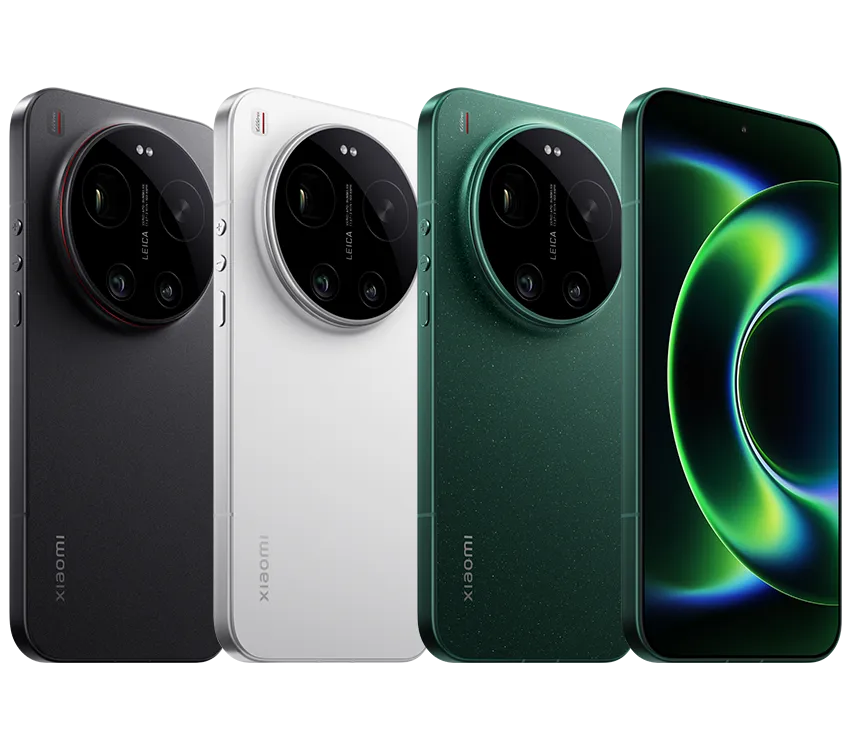
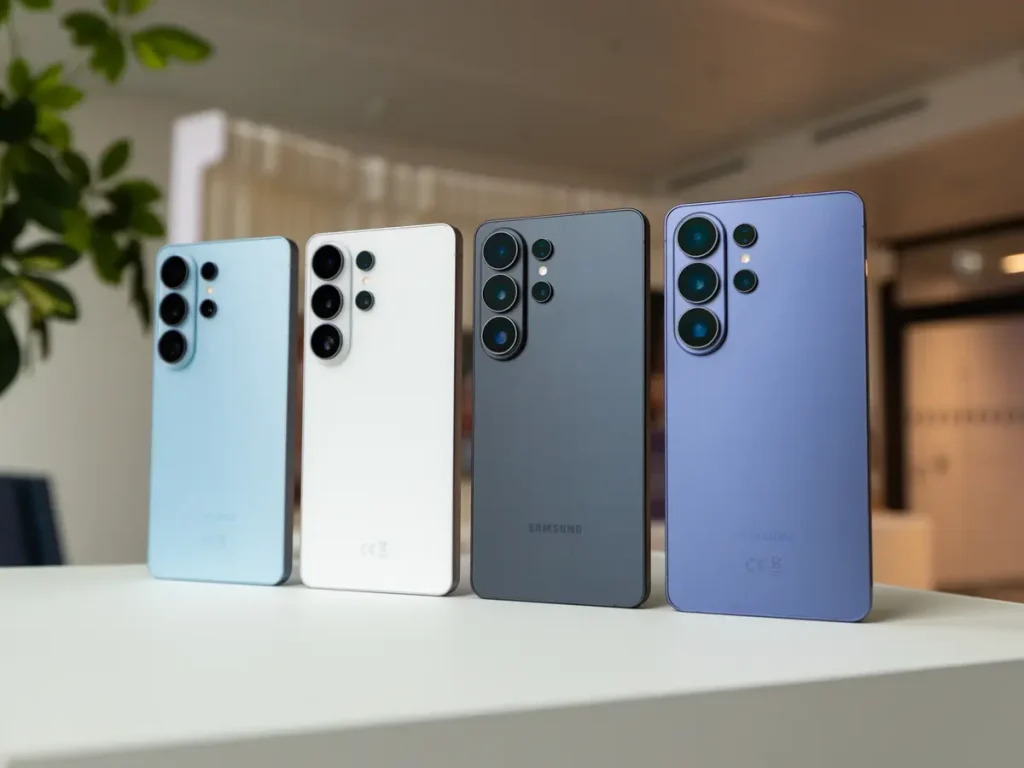
In hand, the Xiaomi carries a bulky camera bump, a sign of its photographic ambitions; the Samsung stays more understated and versatile. It’s a draw on screen quality; the ergonomic edge goes to Samsung for the stylus and privacy, to Xiaomi for durability.
Performance and everyday use
Both pack the Snapdragon 8 Elite Gen 5, the fastest chip around. Xiaomi adds 16 GB of RAM (versus 12 GB on the Samsung base version), a plus for heavy multitasking and on-device AI. In practice, browsing, apps and social media are identically and flawlessly smooth.
For gaming, both handle the most demanding 3D titles at high detail. Samsung benefits from proven cooling and very mature software optimization; Xiaomi, with HyperOS 3, is just as fast but its software ships with more pre-installed apps. If you game a lot and for long sessions, both suit you; if you want maximum RAM to juggle apps, Xiaomi takes the edge.
Camera and video
This is THE decisive battleground. The Xiaomi 17 Ultra lines up a 1-inch main sensor (Light Fusion 1050L), a guarantee of superior light capture, and a 200 MP periscope tuned by Leica delivering remarkably sharp zoom at long focal lengths. For street photography, portraits, distant zoom and the Leica “film” rendering, it’s a benchmark, able to rival an enthusiast compact camera.
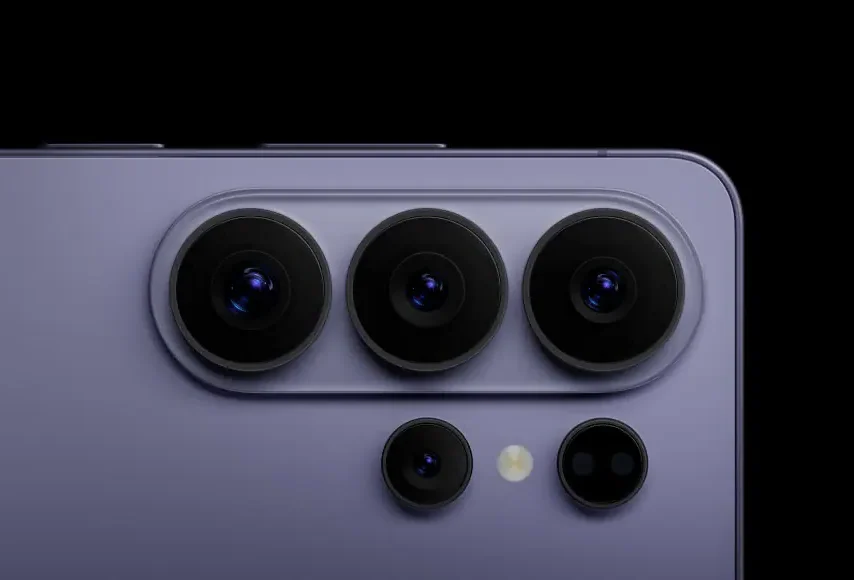
The S26 Ultra answers with a 200 MP main sensor and above all two telephoto lenses (3x and 5x) covering the entire zoom range with exemplary consistency, plus ultra-stable 8K video loved by creators. Verdict: for pure photography, dynamic range and artistic zoom, the Xiaomi wins by a hair; for video versatility and reliability in all situations, Samsung remains unbeatable.
Battery and charging
Xiaomi takes the endurance edge: 6,000 mAh versus 5,000 mAh, and above all 90 W wired charging (plus 50 W wireless) that refills the phone far faster than the Samsung’s 60 W. In practice, the 17 Ultra lasts longer and recharges in less time. The S26 Ultra still comfortably lasts a full day, but if battery and charging speed matter to you, Xiaomi wins.
Software, ecosystem and support
This is Samsung’s trump card: seven years of Android and security updates, one of the longest on the market, with the Galaxy ecosystem (watches, tablets, PCs) and the very polished One UI 8.5. Xiaomi offers HyperOS 3, smooth and feature-rich, but with shorter support and more pre-loaded apps. For longevity, resale value and multi-device integration, Samsung clearly leads.
Price and availability
The Xiaomi 17 Ultra is offered at around €1,499 in 16/512 GB, while the Galaxy S26 Ultra starts at around €1,469 in 256 GB and climbs with storage. At this price level, Xiaomi offers more RAM and base storage plus a bigger battery, while Samsung bets on versatility and longevity.
Xiaomi 17 Ultra — Pros / Cons
Pros:
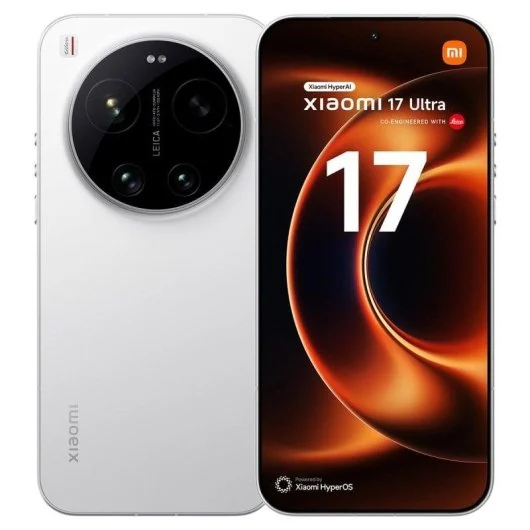
- 1-inch main sensor and 200 MP Leica periscope: exceptional photography
- 16 GB of RAM, up to 1 TB of storage
- 6,000 mAh battery, 90 W wired + 50 W wireless charging
- Dolby Vision display, IP68/IP69 water resistance
Cons:
- Shorter software support than Samsung
- HyperOS ships with pre-installed apps
- Bulky camera bump
Samsung Galaxy S26 Ultra — Pros / Cons
Pros:
- Built-in S Pen, unique on the market
- Dual telephoto and benchmark 8K video
- 7 years of updates, complete Galaxy ecosystem
- Privacy display mode
Cons:
- Battery and charging behind the Xiaomi
- 12 GB of RAM on the base version
- More expensive at higher storage
Verdict: which one should you choose?
- Choose the Xiaomi 17 Ultra if photography and video are your absolute priority, if you want the best sensor and zoom, more battery life and ultra-fast charging, with maximum RAM and storage.
- Go for the Samsung Galaxy S26 Ultra if you want total versatility, the S Pen, the most reliable video and above all longevity with seven years of updates and a connected ecosystem.
In short, the Xiaomi 17 Ultra is the better camera, the Samsung Galaxy S26 Ultra the better all-terrain companion over time. Your choice depends on what matters most: immediate photographic excellence, or lasting versatility.
Conclusion
Two flagships at the summit, two priorities: imaging at Xiaomi, longevity and versatility at Samsung. Which one gets your vote? Tell us in the comments and browse our other smartphone comparisons on Wanda-techs.
As an Amazon Associate, Wanda-techs earns from qualifying purchases. This affects neither our independent analysis nor the price you pay.
Share this content: