

Samsung is reportedly about to bring Exynos back into its most prestigious smartphone. According to industry sources cited by Korean outlet MoneyToday, the Galaxy S27 Ultra will ship with two different processors depending on the region: Snapdragon in the United States, Exynos 2700 in Korea and Europe. That would close a parenthesis opened in 2022, when the Galaxy S22 Ultra was the last Ultra model to get an Exynos variant. Here is what it means for European buyers.

An eleventh-hour reversal
The most surprising part of this report is not the decision itself, but its timing. Development of the Galaxy S27 Ultra is described as nearly complete. The original plan was to fit the device with the Snapdragon 8 Elite Gen 6, Qualcomm’s top chip, in every market without exception.
According to the cited sources, Samsung’s MX (mobile) and LSI (semiconductor) divisions coordinated to develop an Exynos-specific motherboard and to secure sufficient production volume of the in-house chip. One person familiar with the matter sums up the anomaly: it is unusual to add an Exynos version when the main Snapdragon development process was nearly finished, and it signals high expectations for the proprietary application processor.
In other words, Samsung appears to have changed its mind mid-course, which does not happen without a solid reason on a product of this importance.
Why Exynos is returning to the Ultra model
The trigger is said to be internal test results. Earlier reports indicated that the Exynos 2700 outperformed the Snapdragon 8 Elite Gen 6 Pro in measurements conducted internally at Samsung. Those figures have never been published or independently verified, and they should be handled with caution. But if they reflect reality, they explain the reversal.

The manufacturing process backs up the story. The Exynos 2700 is built on Samsung’s enhanced SF2P node, a variant of its 2-nanometre process. The foundry claims a 26 percent power reduction and a 15 percent clock speed increase for this node compared with the previous generation. On a smartphone, those two parameters translate directly into battery life and sustained performance.
The economic context also matters. Designing and producing your own chip is expensive, but buying high-end Snapdragons from Qualcomm is expensive too, and the price of those components has risen sharply in recent years. For Samsung, which owns its fabs, bringing Exynos back on a volume as large as the Galaxy S line is a substantial financial lever.
How the Galaxy S27 range will be split
According to these reports, the Galaxy S27 Ultra will follow the same regional division as the rest of the series. Units bound for the American market would keep a Snapdragon chip, while those sold in Korea and Europe would receive the Exynos 2700.
The Galaxy S27, S27+ and the new S27 Pro would also mix Snapdragon and Exynos by geography. The S27 Pro is itself new to the line-up: Samsung is expanding its flagship series to four models, up from the usual three.
For European buyers, the consequence is direct. If these reports hold, the Galaxy S27 Ultra sold in Europe will carry an Exynos 2700 rather than a Snapdragon. That is a notable change after several generations of uniformity.

What else we know about the Galaxy S27 Ultra
Leaks accumulated in recent weeks describe an evolution rather than a break.
- Form factor. Renders based on computer-aided design files show a new camera island. Overall dimensions would stay very close to the Galaxy S26 Ultra.
- Battery. An increase is expected, but a modest one. Samsung reportedly abandoned a 7,000 mAh capacity.
- Cameras. The 10-megapixel 3x telephoto would disappear from the spec sheet. The 50-megapixel 5x telephoto would be strengthened.
This simplification of the camera array follows a broader trend: rather than stacking sensors, manufacturers now prefer fewer but better optics, backed by digital cropping and software processing.
Should you worry? What this changes for you

Exynos still carries the reputation of several disappointing generations, with performance and thermal gaps against equivalent Snapdragons. European scepticism is understandable.
Three caveats are worth adding, however.
- Internal tests are not independent tests. No public result currently confirms the claimed superiority of the Exynos 2700. Wait for measurements from specialist labs before making up your mind.
- The process node has changed. Samsung’s past difficulties came largely from its manufacturing processes. Moving to 2-nanometre SF2P changes the terms of the problem.
- Nothing is official. These are reports from anonymous industry sources. Samsung has confirmed nothing, and the Galaxy S27 series will not launch for several months.
If you want a high-end Galaxy today, without waiting for the next generation or gambling on an unfamiliar processor, the Galaxy S26 Ultra remains the safe pick in Samsung’s catalogue.
Check the Galaxy S26 Ultra price on Amazon
As an Amazon Associate, Wanda-techs earns from qualifying purchases. This affects neither our independent analysis nor the price you pay.
In short
The Galaxy S27 Ultra would ultimately come in two versions: Snapdragon in the United States, Exynos 2700 in Korea and Europe. A first since the Galaxy S22 Ultra of 2022, driven by encouraging internal results and a new 2-nanometre process node. The report remains unofficial, and only independent testing will show whether Exynos has genuinely closed the gap.
Does the return of Exynos on the Galaxy S27 Ultra reassure you or worry you? Let us know in the comments.
Where to buy at the best price
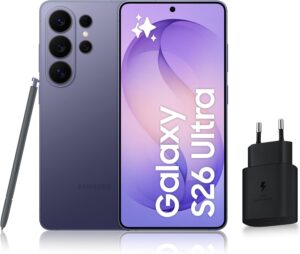
Samsung Galaxy S26 Ultra 256 Go
Smartphone 5G haut de gamme de Samsung avec Galaxy AI, 256 Go, version française.
- AmazonSee at Amazon
- CdiscountSee at Cdiscount
- FnacSee at Fnac
- DartySee at Darty
Share this content: