
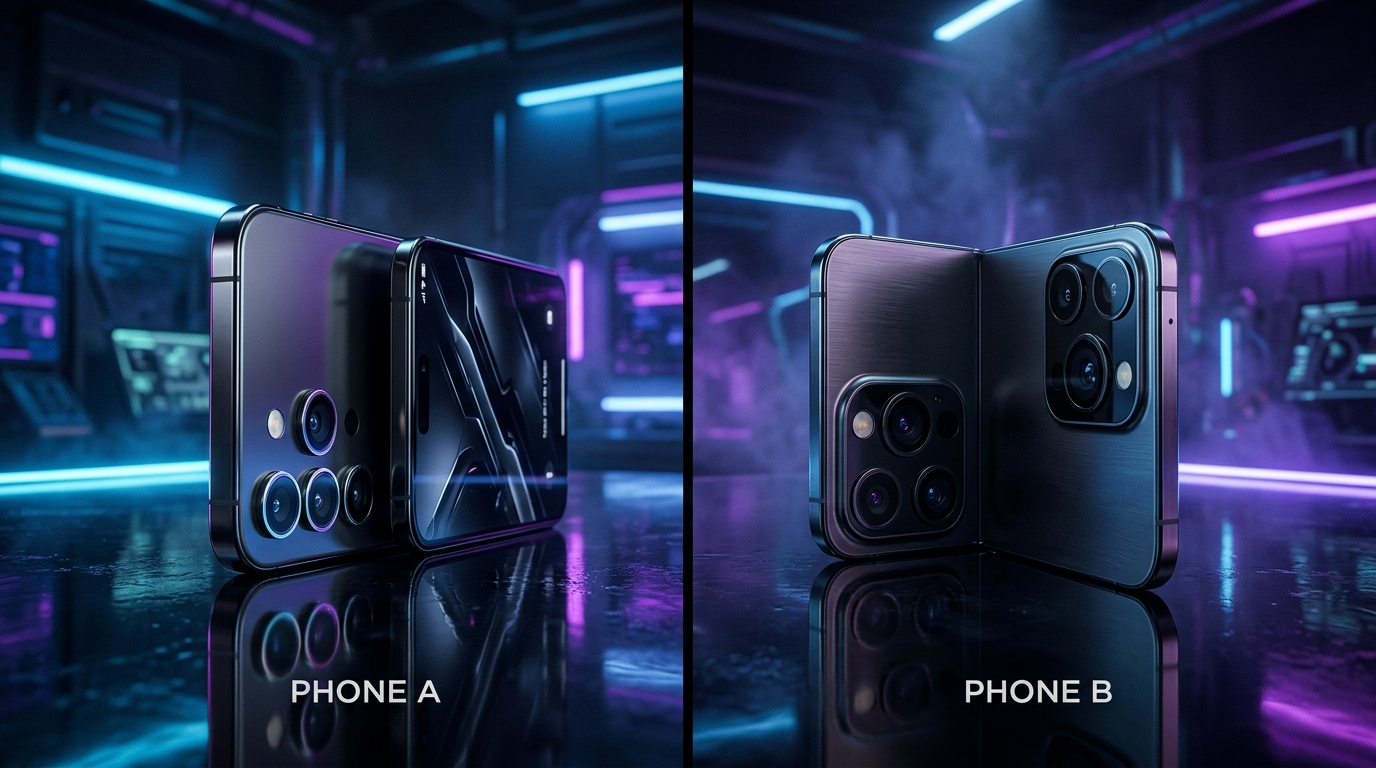
It’s the top-tier duel everyone’s waiting for: on one side the iPhone 17 Pro Max, Apple’s flagship with its A19 Pro chip, aluminum unibody frame and the best battery life ever seen on an iPhone; on the other the Samsung Galaxy S26 Ultra, the most complete Android phone, with its S Pen, 200 MP zoom and seven years of updates. Beyond the iOS-versus-Android war, everything sets them apart in the details. Here, criterion by criterion and use case by use case, is how to tell them apart based on your real needs.
At a glance: the match in one table
| Criterion | iPhone 17 Pro Max | Samsung Galaxy S26 Ultra |
|---|---|---|
| Launch price | from around €1,479 (256 GB) | from around €1,469 (256 GB) |
| System | iOS (latest) | Android 16 (One UI 8.5) |
| Display | 6.9” Super Retina XDR 120 Hz, anti-reflective coating | 6.9” Dynamic AMOLED 2X 120 Hz, QHD+, privacy mode |
| Chip / RAM | Apple A19 Pro, 12 GB | Snapdragon 8 Elite Gen 5 for Galaxy, 12 GB |
| Camera | Triple 48 MP (main, UW, tele) + 8x optical-quality zoom | 200 MP main + 50 MP UW + 10 MP tele 3x + 50 MP tele 5x |
| Battery / charging | ~5,088 mAh, best-ever iPhone battery | 5,000 mAh, 60 W wired, Qi2 wireless |
| Key strength | Apple ecosystem + A19 Pro + longevity | Built-in S Pen + 200 MP zoom + versatility |
System and ecosystem: the real tipping point
Even before the spec sheets, it’s often the operating system that decides. The iPhone 17 Pro Max runs iOS, known for its simplicity, lasting smoothness and perfect integration with the Apple ecosystem (Mac, iPad, Apple Watch, AirPods, AirDrop, iMessage). If you already own Apple products, the iPhone will feel almost natural.
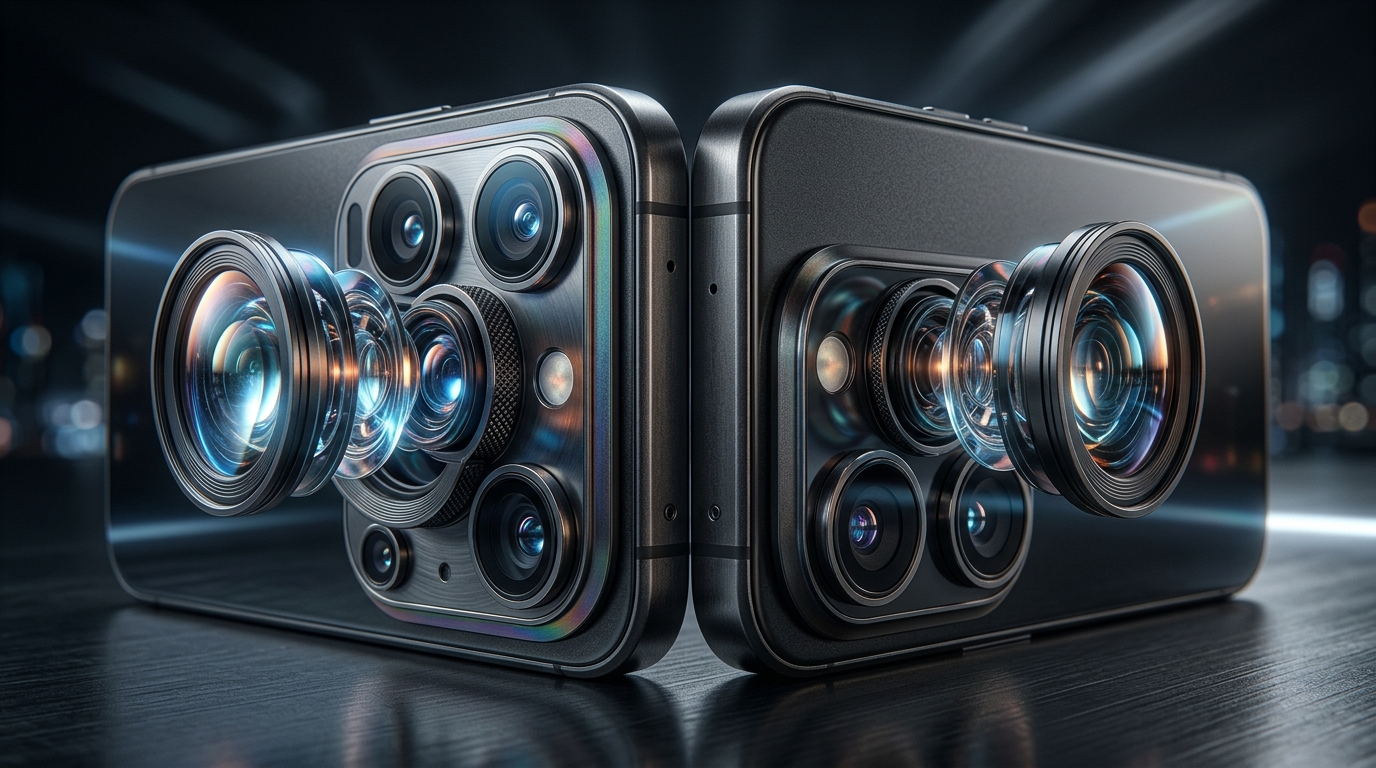
The S26 Ultra on Android 16 and One UI 8.5 bets on customization, advanced multitasking, freedom to choose default apps and its own Galaxy ecosystem (watches, tablets, PCs). For anyone who likes to tweak their phone down to the last detail, Android stays more flexible. This ecosystem choice is structural: it often weighs more than any spec-sheet gap.
Design, display and handling
Both sport an excellent 6.9-inch 120 Hz panel. The iPhone 17 Pro Max introduces a forged aluminum unibody frame that dissipates heat better and Ceramic Shield 2 glass three times more scratch-resistant, with a new anti-reflective coating that’s welcome outdoors. The S26 Ultra keeps its built-in S Pen, unbeatable for notes and annotation, and adds a unique privacy display mode.
In short, Apple bets on durability and thermal dissipation, Samsung on versatility and the stylus. The edge depends on your use: creator/note-taker, the S Pen makes the difference; on-the-go user in bright sun, the iPhone’s anti-reflective screen appeals.
Performance and everyday use
Under the hood, Apple’s A19 Pro chip remains a benchmark for raw power and above all optimization, notably for video editing, 3D and creative apps, where iOS benefits from a very mature catalog of professional apps. The Snapdragon 8 Elite Gen 5 for Galaxy has nothing to envy in raw power and shines in Android gaming and multitasking thanks to a more open system.
For gaming, both handle the heaviest titles; the iPhone often offers the best thermal consistency in long sessions, while the Samsung provides a more detailed QHD+ display. For video creation, the iPhone keeps an edge on apps and workflow smoothness; for mobile productivity and windowed multitasking, Samsung wins.
Camera and video
The iPhone 17 Pro Max adopts a three 48 MP sensor system (main, ultrawide and telephoto) offering the equivalent of several focal lengths and an 8x optical-quality zoom, the longest ever on an iPhone. Its strong point remains video: natural color science, stabilization and consistency between sensors make it a benchmark for filming.
The S26 Ultra hits back with a 200 MP main sensor and two telephoto lenses (3x and 5x) covering a wider zoom range, up to very distant Space Zoom, plus great flexibility in stills. Verdict: for extreme zoom and versatility, Samsung leads; for video and natural rendering, the iPhone keeps the edge.
Battery and charging
The iPhone 17 Pro Max delivers the best battery life ever achieved on an iPhone, thanks to a new internal layout freeing up room for the battery. The S26 Ultra, with its 5,000 mAh, also comfortably lasts the day. On charging, Samsung offers 60 W wired and Qi2 wireless; Apple relies on fast wired charging and MagSafe. Both charge quickly; the everyday endurance gap is now minimal.
Longevity and updates
This is a shared strength. Apple traditionally provides very long iOS updates, and Samsung promises seven years of Android and security updates for the S26 Ultra. In both cases, you keep an up-to-date, secure phone for several years, with good resale value. A draw, to the benefit of peace of mind.
Price and availability
Prices are very close: the iPhone 17 Pro Max starts at around €1,479 in 256 GB (and climbs to an unprecedented 2 TB option), the Galaxy S26 Ultra at around €1,469 in 256 GB. At an almost identical budget, the choice therefore comes down to ecosystem and use, not price.
iPhone 17 Pro Max — Pros / Cons
Pros:
- Very powerful, optimized A19 Pro chip, ideal for video and creation
- Best battery life ever seen on an iPhone
- Apple ecosystem and software longevity
- Aluminum unibody frame, Ceramic Shield 2, anti-reflective screen
Cons:
- iOS less customizable than Android
- No built-in stylus
- Less versatile zoom than Samsung’s dual telephoto
Samsung Galaxy S26 Ultra — Pros / Cons
Pros:
- Built-in S Pen, unique on the market
- Very versatile 200 MP zoom and dual telephoto
- Open Android and advanced multitasking
- 7 years of updates, Galaxy ecosystem
Cons:
- Busier One UI interface
- Charging and video rendering slightly behind the iPhone in some creative uses
- Base version with 12 GB of RAM
Verdict: which one should you choose?
- Choose the iPhone 17 Pro Max if you’re already in the Apple ecosystem, if you film a lot, if you want the best iPhone battery life and a simple, smooth experience over time.
- Go for the Samsung Galaxy S26 Ultra if you prefer the freedom of Android, if the S Pen or extreme zoom are useful to you, and if you like to customize and multitask without limits.
There’s no loser here: these are the two best smartphones on the market. The real deciding factor remains your current ecosystem and your dominant use — video creation and simplicity on the Apple side, versatility and customization on the Samsung side.
Conclusion
iOS versus Android, simplicity versus versatility: two philosophies, two excellent choices. Which one do you prefer? Tell us in the comments and find our other smartphone comparisons on Wanda-techs.
As an Amazon Associate, Wanda-techs earns from qualifying purchases. This affects neither our independent analysis nor the price you pay.
Share this content: