

The Huawei Mate 80 Pro is the first top-tier Mate to leave China since the Mate 50 in 2022: a long-lasting, very well built camera phone, but one that ships without Google services and, outside China, without 5G. Shown to the world in Madrid on 26 February 2026, it was announced at €1,299 (about 852,000 FCFA) with 16 GB of memory and 512 GB of storage. It is aimed at photography enthusiasts and brand loyalists who know what they are signing up for. For everyone else, the compromises weigh heavily at this price.
Introduction: the Huawei Mate 80 Pro, a global comeback with strings attached
Huawei unveiled the Mate 80 series in China on 25 November 2025, with sales starting on 28 November. Three months later, the brand picked Madrid for the international launch, alongside the Watch GT Runner 2 and the MatePad Mini tablet. According to the South China Morning Post, it is the first time in four years that a top-tier Mate has been released outside China.
Only the Huawei Mate 80 Pro travels. The standard Mate 80, the Pro Max and the RS remain exclusive to China. The international version comes in a single configuration, 16 GB and 512 GB, in black, green or gold. In China, the range starts at 5,999 yuan, or roughly €770 (about 505,000 FCFA).
The positioning is clear: take on the best camera phones with in-house hardware, from the Kirin chip to XMAGE image processing. US sanctions still bite, which explains the Google-free software and a chip that trails the competition. If an unusual form factor matters more to you, look at the tri-fold Huawei Mate XT 2.
Verdict at a glance: our Huawei Mate 80 Pro review in short
Verdict in 30 seconds
A sturdy camera phone with long battery life and fast charging, whose XMAGE camera system holds its own. The lack of Google services, 5G and eSIM on the international version keeps it for buyers who know what they are getting.
For whom Photography fans who already know the Huawei ecosystem and can live without 5G.
Avoid if You depend on Google Wallet, strict banking apps, 5G or the most demanding 3D games.
We like
- Versatile camera system with variable aperture
- Top-class battery life
- 100 W charging, charger included
- IP68 and IP69 build, Kunlun Glass 2
- 3D face recognition
We like less
- No native Google services
- International version limited to 4G
- Kirin chip falls behind in games
- Vague software support
- Uncertain European distribution
Huawei Mate 80 Pro specs
| Écran | OLED LTPO 6,75 pouces, 2 832 × 1 280 px (460 ppp), 1 à 120 Hz, 3 000 nits en pointe selon Huawei, PWM 1 440 Hz, verre Kunlun 2 |
|---|---|
| Processeur | Huawei Kirin 9030 Pro (version internationale) ; Kirin 9030 sur les versions 12 Go en Chine |
| Mémoire | 16 Go (version internationale) ; 12 ou 16 Go en Chine |
| Stockage | 512 Go (version internationale) ; 256 Go à 1 To en Chine ; non extensible |
| Appareil photo principal | 50 Mpx, capteur RYYB 1/1,28 pouce, ouverture variable f/1,4 à f/4,0, OIS ; capteur spectral True-to-Colour |
| Ultra grand-angle | 40 Mpx, f/2,2, 13 mm, RYYB |
| Téléobjectif | Périscope 48 Mpx, f/2,1, zoom optique 4x, OIS, macro à 5 cm |
| Caméra selfie | 13 Mpx, f/2,0, autofocus, vidéo 4K ; capteur 3D ToF pour la reconnaissance faciale |
| Batterie | 5 750 mAh (capacité typique) |
| Charge | 100 W filaire SuperCharge, 80 W sans fil, charge inversée ; chargeur 100 W fourni selon le marché |
| Système | EMUI 15 sans services Google (international) ; HarmonyOS 6 (Chine) ; durée de suivi non communiquée |
| Réseau | 4G uniquement sur la version internationale (5G en Chine), double nano-SIM, pas d'eSIM, Wi-Fi 7, Bluetooth 6.0, NFC, infrarouge |
| Étanchéité | IP68 et IP69 |
| Dimensions et poids | 161,85 × 76 × 7,95 mm ; environ 219 g |
| Date de sortie | Chine le 25 novembre 2025 ; lancement mondial le 26 février 2026 à Madrid ; ventes internationales à partir de mars 2026 |
| Launch price | Europe : 1 299 € (environ 852 000 FCFA) annoncés à Madrid pour la version 16 Go + 512 Go, confirmés pour l'Espagne ; aucune vente repérée en France. Chine : à partir de 5 999 yuans, soit environ 770 € (environ 505 000 FCFA). Malaisie : 3 999 MYR, environ 888 € (environ 582 000 FCFA). Afrique du Sud : 21 999 ZAR |
Three lines in the Huawei Mate 80 Pro specs deserve a closer look. The first is the variable aperture on the main sensor, from f/1.4 to f/4.0, a real mechanical diaphragm that almost no rival offers. The second is the 5,750 mAh battery, packed into a body 7.95 mm thick. The third is something missing: the official list of network bands for the international version stops at 4G.
Be careful with the Huawei Mate 80 Pro spec sheets doing the rounds. GSMArena and Notebookcheck mix the Chinese variants (12 or 16 GB, up to 1 TB, 5G, HarmonyOS 6) with the global version. Outside China there is only one model: 16 GB, 512 GB, Kirin 9030 Pro, EMUI 15.
Huawei Mate 80 Pro Design: built tough, with two rings on the back
219 g and a flat screen
The Huawei Mate 80 Pro measures 161.85 × 76 × 7.95 mm and weighs about 219 g. It is a large phone, but Entelechy Asia describes it as dense without being bulky. The screen is flat, which cuts down on accidental touches and makes it easier to fit a screen protector.
On the back, a second ring joins the large circular camera module: the brand calls them “Dual Space Rings”. Glitched notes that this ring contains a magnet, with no real compatibility with the magnetic accessories on the market, and calls it a missed opportunity.
Kunlun Glass 2, vegan fibre and IP69
The front is covered with second-generation Kunlun Glass, which Huawei says is twenty times more drop-resistant than ordinary glass. The back uses a textured synthetic fibre, described as vegan, said to be five times more impact-resistant. The frame is aluminium.
The Huawei Mate 80 Pro carries both IP68 and IP69 ratings: immersion down to 6 metres according to Huawei, high-pressure hot water jets and full dust protection. A 3D sensor on the front handles secure face recognition, even in the dark. For anyone using it in West or Central Africa, between the rainy season and the harmattan, that is a practical argument.
Display: a 6.75-inch LTPO panel, bright and easy on the eyes
Resolution and smoothness
The LTPO OLED panel shows 2,832 × 1,280 pixels, or 460 pixels per inch. Its refresh rate ranges from 1 to 120 Hz depending on the content, which saves battery on a static page.
3,000 nits claimed, not 8,000
Huawei’s international spec sheet lists a peak brightness of 3,000 nits, measured in the lab on 20% of the screen area. Several articles published at the Chinese launch quoted 8,000 nits, a figure tied to the Pro Max and its dual-layer display. For this model, 3,000 nits is the number to remember.
PhoneArena rates the panel on a par with the best flagships in most of its measurements, with a minimum of 1.9 nits for reading at night. The reviews compiled by Notebookcheck give it 83% on average. PWM dimming at 1,440 Hz also limits flicker at low brightness.
Performance: a Kirin 9030 Pro that copes day to day but struggles in games
An in-house chip, far from the best
Outside China, the Huawei Mate 80 Pro runs on the Kirin 9030 Pro, designed by Huawei and made in China. The brand does not disclose the manufacturing process: GSMArena and PhoneArena mention 6 nm, other sources 7 nm. Huawei claims 21% more performance than the Mate 70 Pro.
The published figures show where it stands. PhoneArena gets 1,279 points in single-core and 5,165 in multi-core on Geekbench 6. JT Geek and Unbox Diaries record 1.5 to 1.6 million points on AnTuTu. That is about a third of the single-core score of an iPhone 17 Pro Max, Glitched points out.
Games, heat and memory
In everyday use nothing slows down, reviewers say: the 16 GB of memory keeps plenty of apps open and the interface stays smooth. Games are another story. Glitched had to lower the graphics settings in Destiny Rising. Some titles will not launch at all for lack of Google services, JT Geek reports. None of the reviews we consulted puts a figure on heat.
The 512 GB of storage cannot be expanded. It is generous, and welcome in the middle of a memory shortage that is pushing rivals to trim capacities.
Camera: the Huawei Mate 80 Pro’s XMAGE system, the real reason it exists
Main sensor: 50 MP and a real diaphragm
Huawei has not worked with Leica since 2022: image processing now carries the in-house XMAGE name. The rear camera system on the Huawei Mate 80 Pro combines three modules and a spectral sensor.

The main module uses a 50 MP sensor in the 1/1.28-inch format, with an RYYB array that swaps green for yellow to capture more light. It is stabilised. Its aperture changes mechanically from f/1.4 to f/4.0.
The benefit is tangible. At f/1.4, the sensor drinks in light and blurs the background with no software tricks. At f/4.0, a group shot or a plate of food photographed up close stays sharp from edge to edge. Fstoppers finds the images usable up to ISO 1,000, with ISO 1,600 as the practical limit.
4x telephoto, macro at 5 cm and ultra-wide
The 48 MP periscope telephoto opens at f/2.1, which is very bright for a 4x optical zoom. It is stabilised and focuses down to 5 cm. The result is proper macro without pressing the phone against the subject. Glitched describes it as a joy to use.
The 40 MP ultra-wide (13 mm, f/2.2) is not stabilised, and a finger easily covers its lens when the phone is held upright, Fstoppers notes.
The fourth element is the spectral sensor, which Huawei calls the True-to-Colour camera. It analyses ambient light to set the white balance for all three modules. Fstoppers confirms natural colours that stay consistent from one lens to the next. The site does regret the smoothing and sharpening that are applied by default, with no way to adjust them outside RAW.
Video and selfies
The cameras record in 4K at up to 60 frames per second. This is the relative weak spot of the system. Fstoppers points to the lack of 24 and 25 frames-per-second modes, and to an enhanced stabilisation setting that drops the resolution to 2.7K.
The 13 MP front camera (f/2.0) has autofocus. PhoneArena awards 147 points for photo and 134 for video on its scale, a good level that sits below the very best. The Oppo Find X9 Pro and the Galaxy S26 Ultra are useful yardsticks here. Newcomers such as the Vivo X500 Pro Max are betting on 200 MP telephotos.
Battery and charging: the clearest strength
5,750 mAh and close to 24 hours of browsing
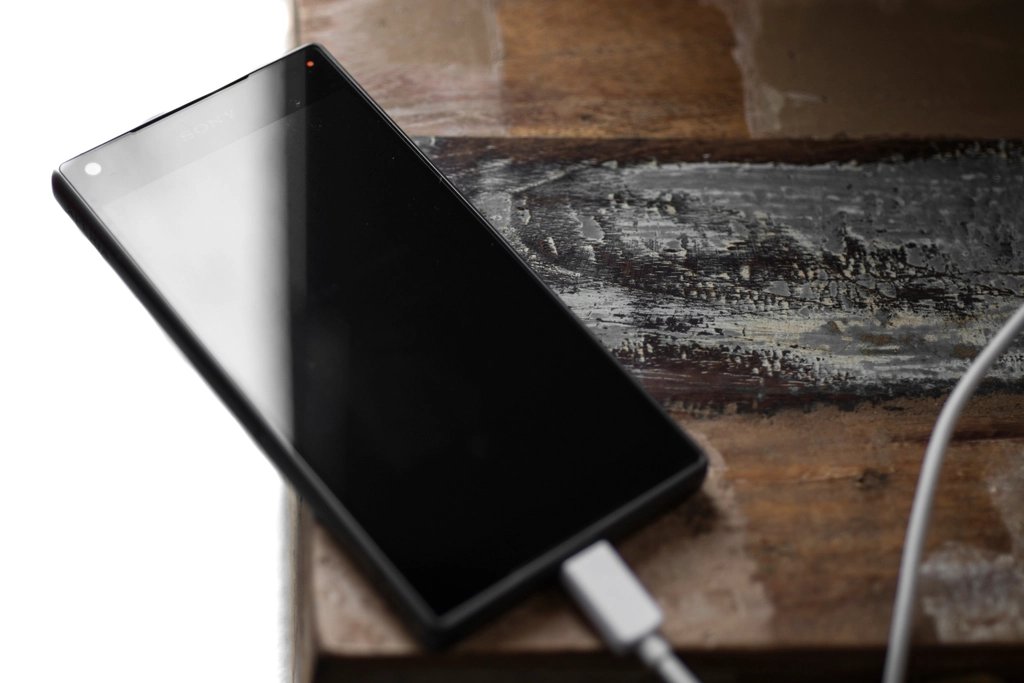
The Huawei Mate 80 Pro battery has a typical capacity of 5,750 mAh. PhoneArena measures 23 h 46 of web browsing and 17 h 37 of video playback, results the site calls remarkable. Glitched talks about more than two days of use, an asset when power cuts are part of life.
100 W wired, 80 W wireless
SuperCharge wired charging reaches 100 W. PhoneArena times a full charge at 1 h 01 with the supplied charger. Wireless charging goes up to 80 W with the brand’s own stand.
The 100 W charger, the cable and a case are in the box, depending on the market. The phone can also charge other devices, at 18 W by cable and 20 W wirelessly according to GSMArena.
Software: EMUI 15 outside China, HarmonyOS 6 in China
The Huawei Mate 80 Pro exists in two software versions. In China it runs HarmonyOS 6, the in-house system that no longer runs Android apps. Internationally it ships with EMUI 15, an interface built on Android’s open-source code.
Huawei Central calls the software dated, since there is no new version of EMUI. The AI features focus on photos and calls:
- AI Composition, which suggests a framing and adjusts the zoom;
- AI Remove, to erase a passer-by or an object;
- AI Best Expression, which picks everyone’s best face in a group photo;
- two-way noise reduction during calls;
- the Celia assistant, a long way from what Gemini can do according to Glitched.
Support is the sore point. PhoneArena describes the update policy as vague: Huawei does not commit to any number of years. Samsung and Google promise seven.
Huawei Mate 80 Pro without Google: what is it like to live with?
What is missing out of the box
The Huawei Mate 80 Pro has no Play Store, no Gmail and no Google services running in the background. The app store is called AppGallery. Petal Search and Petal Maps stand in for search and maps.
The workarounds, and their limits
According to JT Geek’s review, AppGallery automatically installs microG and GBox when an app asks for Google services. Gmail, YouTube, Google Maps and Spotify then work without any complicated steps. Glitched also mentions Aurora Store, which downloads Play Store apps without an account.
That does not solve everything. Here is what still gets stuck, according to the published reviews:
- Google Wallet does not work, so no contactless payment that way;
- some games refuse to start;
- apps that check device integrity, often banking apps, may block you: test yours as soon as the phone arrives;
- notifications and sync rely on third-party tools, which can break after an update.
Good to know — these workarounds are neither provided nor guaranteed by Google. If your bank, your mobile money operator or your employer requires a specific app, check that it is in AppGallery before you buy.
Huawei Mate 80 Pro price and availability in Europe and Africa
Huawei Mate 80 Pro in Europe: a price announced, no sales spotted
In Madrid, the brand announced the Huawei Mate 80 Pro at €1,299 (about 852,000 FCFA) for the single configuration, a price confirmed for Spain by Xataka and picked up by the South China Morning Post. The brand did not give a list of countries. The manufacturer’s official page presents the international version.
Since then, European distribution has remained hazy. HuaweiBlog says the model will not be sold in Germany. PhoneArena writes that the launch targets Asia and the Middle East, which in practice leaves Europe out. As of 3 October 2026, we had found no product listing in France at Amazon.fr, Fnac, Darty or Cdiscount.
Prices in China and the rest of the world
In China, the price list runs as follows: 5,999 yuan for 12 + 256 GB, or roughly €770 (about 505,000 FCFA); 6,499 yuan for 12 + 512 GB, or roughly €834 (about 547,000 FCFA); 6,999 yuan for 16 + 512 GB, or roughly €898 (about 589,000 FCFA); 7,999 yuan for 16 GB + 1 TB, or roughly €1,027 (about 674,000 FCFA).
Malaysia was the first country served outside China, in March, at 3,999 ringgit, or roughly €888 (about 582,000 FCFA) according to Notebookcheck. JT Geek paid 27,990 baht for its unit in Thailand, or roughly €743 (about 487,000 FCFA), with a watch and earbuds thrown in.
Importing: warranty and network
Importing the Huawei Mate 80 Pro from Asia is therefore tempting. Three checks are essential. The version must be the international one on EMUI 15, not the Chinese one on HarmonyOS. The warranty will be limited to the reseller’s. And buyers in the European Union have to add VAT, 20% in France, if the seller ships from outside the EU.
On the network side, the global version handles 4G bands B1, B3, B7, B8, B20 and B28, which covers every band used by French operators. It takes two nano-SIMs but no eSIM, Glitched notes.
In Africa
On the continent, the Huawei Mate 80 Pro has been sold officially in South Africa since 7 April 2026, at 21,999 rand, or in the region of €1,100 (about 722,000 FCFA) at the current rate. We found no official announcement for Cameroon, Côte d’Ivoire or Senegal. There, you will have to go through an importer, with no local warranty.
The lack of 5G is less of a problem in West and Central Africa, where 4G is still the norm, and bands B3, B7, B20 and B28 cover the region’s networks. The two physical SIM slots and the battery life are real assets.
Huawei Mate 80 Pro pros and cons
Pros
- Complete camera system: variable aperture, bright 4x telephoto, macro at 5 cm.
- Battery life among the best in its class according to PhoneArena.
- 100 W wired and 80 W wireless charging, charger in the box.
- IP68 and IP69 build, Kunlun Glass 2, 3D face recognition.
- Bright LTPO screen with PWM dimming at 1,440 Hz.
Cons
- No native Google services, Google Wallet unusable.
- International version without 5G or eSIM.
- Kirin chip clearly less powerful than recent Snapdragon and Dimensity chips.
- No stated number of years for updates.
- High European price and uncertain distribution.
These Huawei Mate 80 Pro scores sum up the spec sheet and the published reviews, not a hands-on test by our team. They are in line with the 76.6% average Notebookcheck calculated from six reviews, and with PhoneArena’s 7.1 out of 10.
Huawei Mate 80 Pro alternatives
Vivo X500 Pro Max
Oppo Find X10 Pro Max
Huawei Mate XT 2 Ultimate Design 16 Go + 256 Go
If you cannot do without Google, the alternatives to the Huawei Mate 80 Pro worth a look are the Vivo X500 Pro Max and the Oppo Find X10 Pro Max, both expected in Europe this autumn. The Xiaomi 18 Pro Max plays the same tune with Leica. To stay with Huawei and get a format like no other, the Mate XT 2 is the choice of the heart.
Conclusion: should you buy the Huawei Mate 80 Pro, Huawei’s best camera phone of 2026?
The Huawei Mate 80 Pro proves the brand still knows how to build a great phone. The camera is creative and dependable, the battery life is reassuring, the finish inspires confidence.
The rest is a matter of accepted trade-offs. No 5G, no eSIM, no Google Wallet, a chip that falls behind in games, and no written promise on updates. At €1,299 (about 852,000 FCFA), the bill is steep. At Asian prices, around €750 to €900 (about 492,000 to 590,000 FCFA), the reasoning changes.
Our verdict on the Huawei Mate 80 Pro: buy it if photography comes first and you have already lived without Google, preferably as an import and in the international version. Otherwise, a camera phone running full Android will give you fewer headaches.
Good to know — on paper, the best Huawei camera phone of 2026 is still the Mate 80 Pro Max with its two periscope telephotos. It is sold only in China, on HarmonyOS, without Android apps.
Huawei Mate 80 Pro: frequently asked questions
What is the Huawei Mate 80 Pro price in Europe?
Huawei announced €1,299 (about 852,000 FCFA) at the Madrid launch for the only version, 16 GB + 512 GB. That price is confirmed for Spain. In early October 2026, we had spotted no sales at the major French retailers. As an import from Asia, the prices reported by reviewers range from roughly €743 in Thailand to €888 in Malaysia (about 487,000 to 582,000 FCFA), before VAT and shipping.
Does the Huawei Mate 80 Pro support 5G?
Not in its international version. Huawei’s official spec sheet lists only 2G, 3G and 4G bands, which Notebookcheck and Xataka confirm. Only the Chinese version supports 5G. In France, for example, it will run on 4G across all the operators’ bands, with two nano-SIMs but no eSIM. If 5G matters to you, this is not the right model.
Can you install Google apps on the Huawei Mate 80 Pro?
Yes, through third-party tools. On the EMUI 15 version, AppGallery installs microG and GBox when an app needs them, according to JT Geek. Gmail, YouTube and Google Maps work that way. Google Wallet remains unusable, some games will not start and banking apps may reject the device. The Chinese version on HarmonyOS 6 no longer runs Android apps.
Is the Huawei Mate 80 Pro waterproof?
Yes. It is rated IP68 and IP69. Huawei claims resistance to immersion down to 6 metres and to high-pressure hot water jets. Dust protection is complete. Sea water and chlorinated water are still best avoided, and the warranty does not cover water damage.
How many years of updates will this Mate get?
Huawei gives no figure. PhoneArena finds the support policy vague, and Huawei Central stresses that the phone launched on EMUI 15, with no new version of the interface. Direct rivals commit to five to seven years. If you plan to keep your phone for a long time, that uncertainty should be part of your decision.
Share this content: