
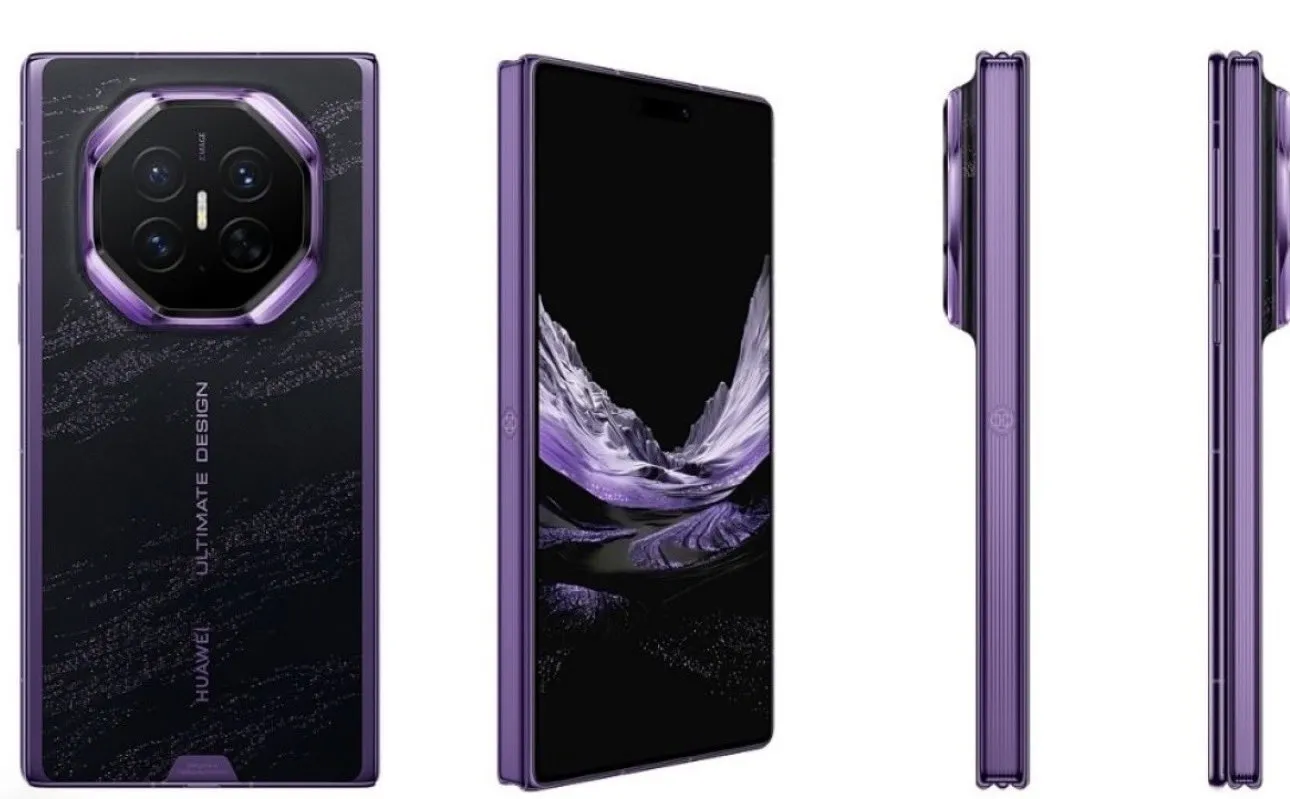
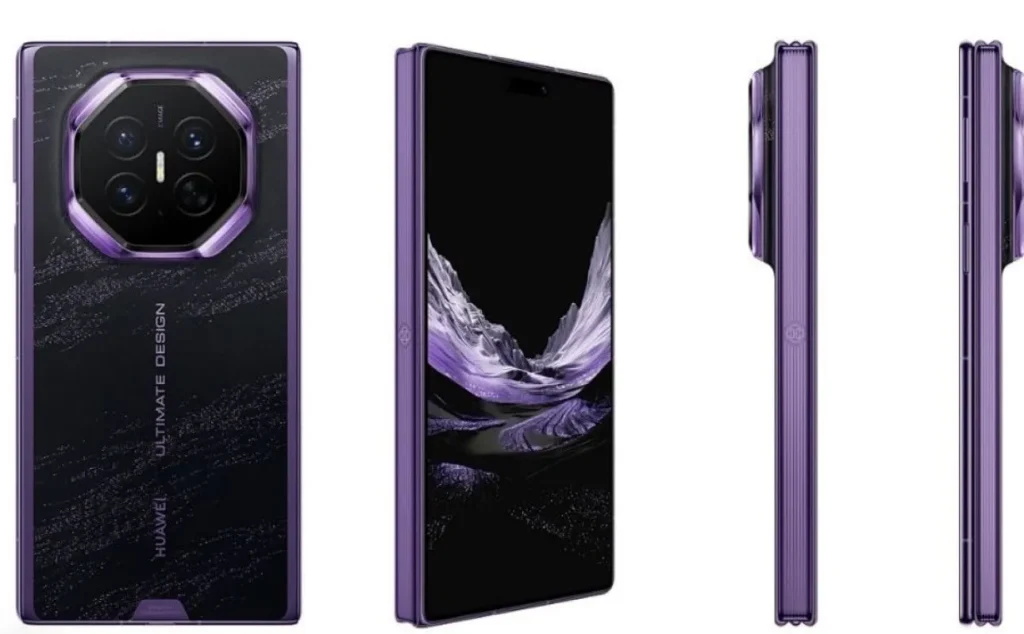
Huawei is picking up the pace. The Huawei Mate XT 2, successor to the world’s first commercially available tri-folding smartphone, has been officially open for pre-order in China since 31 August 2026, a week ahead of its scheduled 7 September unveiling. The reservation pages reveal four configurations, all with 16 GB of RAM, up to 2 TB of storage, a privacy-filter panel on the higher-end versions and, above all, a completely redesigned folding architecture. The price, for its part, is being carefully withheld.
Four configurations, 16 GB of RAM across the board
The Chinese pre-orders, opened against a deposit of 1,000 yuan (around 120 euros), list four versions of the Mate XT 2:
- 16 GB + 512 GB
- 16 GB + 1 TB
- 16 GB + 1 TB with privacy display
- 16 GB + 2 TB with privacy display and bundled stylus
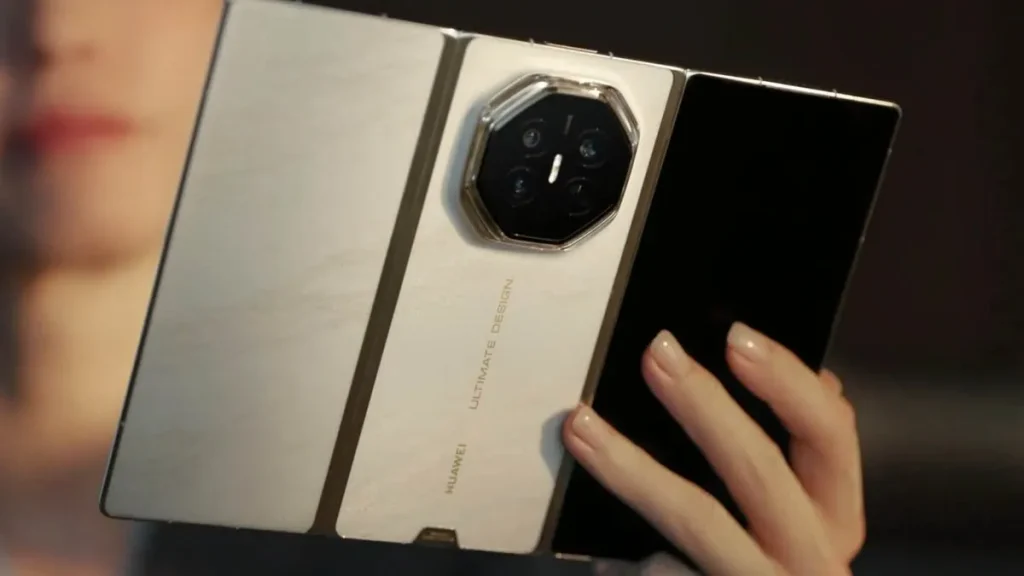
The first three options come in Obsidian Black, White and Purple. The 16 GB + 2 TB version is exclusive to the Purple finish. Final payment opens on 7 September after 2.45 pm Beijing time, with shipping announced before 31 October.
Fitting 16 GB of RAM across the entire range is not a trivial choice. On a tri-folding device the main appeal is multitasking: displaying three applications side by side on a panel the size of a small tablet demands generous memory. Huawei appears to have learned from the first generation, where memory segmentation created noticeable experience gaps between models.
Wing Fold: Huawei changes its folding mechanism
This is the real structural change of this second generation. The original Mate XT used a Z-fold: one flap folded inwards, the other outwards, leaving part of the flexible screen permanently exposed when the device was closed. An elegant but fragile solution that fuelled plenty of durability concerns.
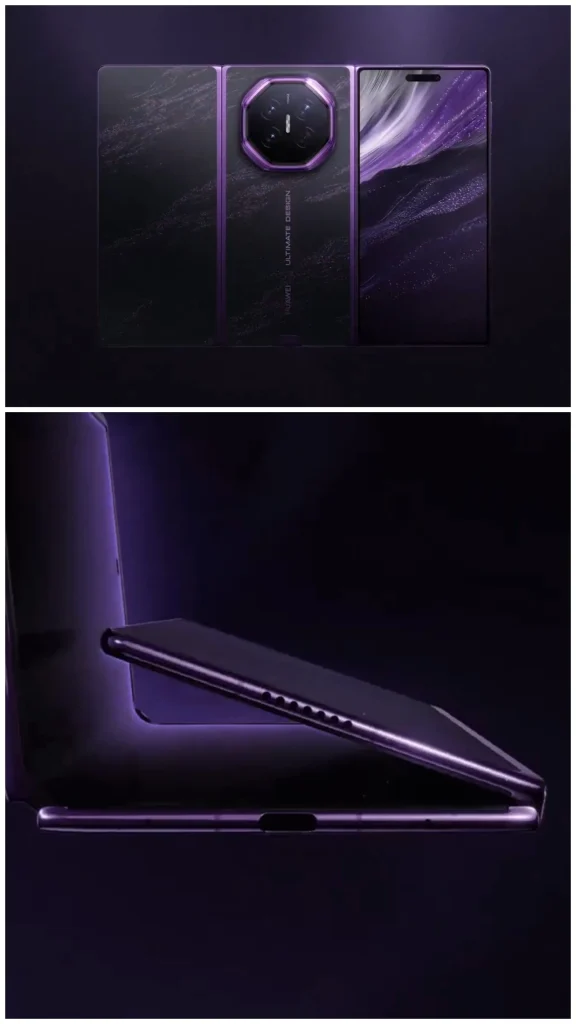
The Mate XT 2 adopts an architecture called Wing Fold. This time both secondary panels fold inwards, fully enclosing the main flexible display once the device is shut. A dedicated outer screen on one side takes over for calls, messages, payments and everyday tasks.
The benefit is twofold. First, protection: the flexible screen, still the most vulnerable component of any foldable, is no longer exposed to keys, sand or knocks while the phone sits in a pocket. Second, usability: you no longer need to unfold the device to check a notification, which was one of the recurring criticisms of the first model.
3.5 mm thick and a deliberate symmetry
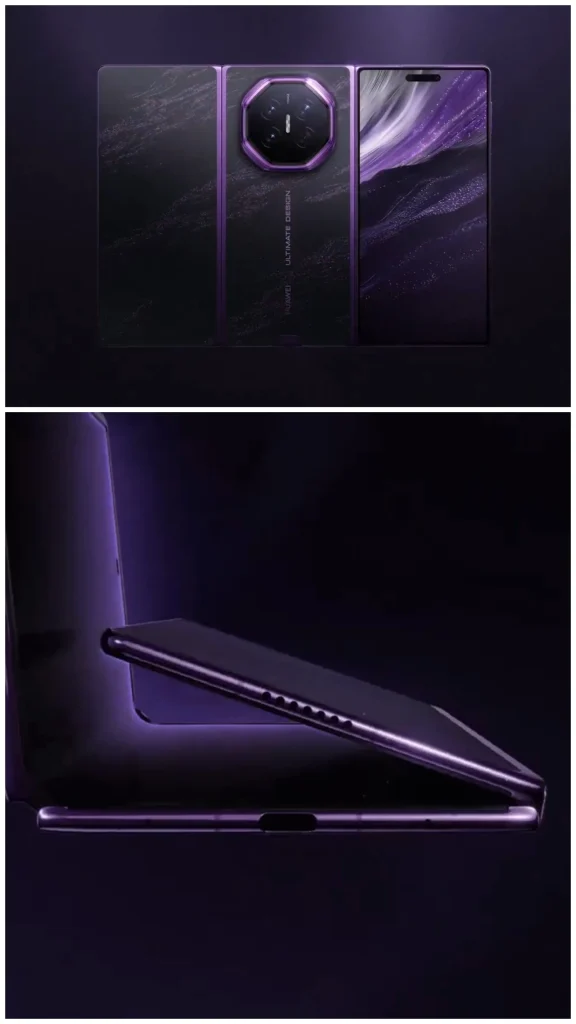
Huawei claims a thickness of 3.5 mm at the thinnest section of the unfolded device, while accommodating both the internal and external displays. The manufacturer also stresses the symmetry of the design, intended to balance weight distribution once the phone is fully open.
That point deserves emphasis. On a tri-folding device, imbalance is a structural flaw: when the three sections do not share the same density, the device becomes uncomfortable to hold one-handed and feels fragile. The first Mate XT suffered from exactly that. Huawei also says it has reinforced the hinge system and the panels to improve resistance to everyday impacts.
Outer display, 3D face recognition and health features
The outer display features a pill-shaped cutout for the front camera, a layout that suggests the presence of a 3D face recognition module, with face-based payments to follow. That is a rare capability on a foldable: the depth available inside such a thin chassis makes it difficult to integrate the necessary infrared sensors.
The Mate XT 2 is also tipped to include on-device heart-rate monitoring, without a connected watch. It is a function Huawei has been rolling out gradually across its high-end smartphones, as an extension of its health ecosystem.
On the software side, HarmonyOS 7 is expected with adaptations designed specifically for the display surface of a tri-folding device: enhanced multitasking, advanced split-screen management, and automatic switching between display formats according to the folding state.
The processor remains the big question mark
This is the main unknown of the launch. Available reports point to a Kirin 9030S or to a new chip in the Kirin 9050 series, with neither hypothesis confirmed. Huawei has designed its own processors since US sanctions cut it off from its usual suppliers, and the brand communicates very little about the manufacturing details of its silicon.
For buyers, the practical consequence is twofold. On one hand, raw performance still trails the most recent Snapdragon and Apple A-series chips. On the other, and this is more limiting in Europe, Huawei devices do not carry Google services. You will have to rely on AppGallery, the company’s own store, and cope with the absence of certain popular applications.
How much will the Mate XT 2 cost?
Huawei has not disclosed a price and will most likely hold that information back for the 7 September event. One reference point does exist: the first-generation Mate XT launched at roughly 2,800 dollars, a positioning that immediately placed it in a category of its own.
Nothing suggests the second generation will move downmarket. The mechanical complexity of a tri-folding device, the cost of flexible panels and the generous memory configurations all point instead towards a firmly premium price. For context, the first Mate XT faced such a shortage that resellers listed it at multiples of its official price.
Then there is European availability. Huawei does sell its foldables in Europe, but always with a delay compared with China, and sometimes without ever making the jump for the most exotic models. At this stage, no European release has been announced for the Huawei Mate XT 2.
What it changes for the foldable market
Beyond the product itself, this launch confirms that Huawei retains a real technical lead on multi-fold designs. Samsung, Honor and Xiaomi are all working on tri-folding concepts, but none has yet brought a mainstream model to market at this scale.
The stakes go beyond engineering. A tri-folding phone that properly protects its flexible screen and offers a fully functional outer display finally answers the fundamental criticism levelled at the category: what is the point of an unfoldable device if daily use remains awkward and the screen stays vulnerable? The Wing Fold is a concrete response to that objection.
For a European buyer, it nonetheless remains a technology showcase rather than a sensible purchase. If the foldable format appeals to you without the software constraints, the Huawei Mate X6 is available in Europe and offers a classic book-style fold with a solid spec sheet: 4.6 mm thick unfolded, 239 grams, a 5,110 mAh battery, 66 W wired and 50 W wireless charging.
Check the Huawei Mate X6 price on Amazon
As an Amazon Associate, Wanda-techs earns from qualifying purchases. This affects neither our independent analysis nor the price you pay.
See you on 7 September
The Huawei Mate XT 2 will be made official on 7 September in China. It will then remain to confirm the chosen processor, the price of each configuration and, for European readers, the possibility of a local release. We will update this article as soon as the conference ends.
Does the tri-folding format finally look mature to you, or does it remain an overpriced technology showcase? Share your view in the comments, and find our other foldable smartphone analyses on Wanda-techs.com.
Read also:
- iPhone 18 Pro: Keynote expected September 9, first foldable iPhone, and split lineup
- Poco F9 Ultra and F9 Pro: 8,050 mAh battery and Snapdragon 8 Elite Gen 5 on the agenda
Share this content: