

The Infinix Note 60 Ultra is the most ambitious phone Infinix has ever made: a Pininfarina design, a 200 MP main camera, a periscope telephoto lens, a 7,000 mAh battery and satellite calling. It targets demanding buyers who want something close to a flagship without paying for a top-end Samsung or Xiaomi. Yet its price, roughly 330,000 to 400,000 FCFA depending on the conversion, puts it a long way from the brand’s budget image. It is an excellent phone, provided you can find one and can live with a few blind spots.
Introduction: the Infinix that plays in the big league
The Note 60 series comes in three tiers. The Infinix Note 60 opens the range with a Dimensity 7400, and the Infinix Note 60 Pro moves up to a Snapdragon 7s Gen 4 and 90 W charging. The Note 60 Ultra jumps into another category altogether. Infinix unveiled it on 4 March 2026 at Mobile World Congress in Barcelona, in partnership with Pininfarina, the Italian design house best known for its Ferraris.
The spec sheet matches the ambition: a MediaTek Dimensity 8400 Ultimate chip, a 200 MP Samsung main sensor in a 1/1.4-inch format, a 50 MP periscope telephoto, a 7,000 mAh silicon-carbon battery, 100 W wired and 50 W magnetic wireless charging, a rear display and two-way satellite calling. So does the price: 32,999 pesos in the Philippines for the 12 + 512 GB model, 3,000 ringgit in Malaysia, and around one million naira in Nigeria for the 12 + 256 GB version.
This phone is aimed at professionals, content creators and enthusiasts who want a device that lasts two days, shoots well at a distance and gets noticed on a table. It is not for people chasing the best performance for the money: if raw power is all you need, Infinix sells the same chip for much less in its GT range.
Verdict at a glance
Verdict in 30 seconds
The Note 60 Ultra combines outstanding battery life, very fast charging, real optical zoom and a design unlike anything else. A high price for an Infinix and limited availability in West and Central Africa take some of the shine off.
For whom Buyers who want a phone with serious stamina, fast charging, strong long-range photos and a distinctive look, for around 330,000 to 400,000 FCFA.
Avoid if You want IP68 water resistance, a light phone, clean software, or a purchase covered by a local warranty today.
We like
- Top-tier battery life and 100 W charging
- Stabilised 200 MP sensor and 3.5x periscope
- Pininfarina design and rear display
We like less
- Only IP64 at this price
- 8 MP ultrawide camera
- Availability in the CFA franc zone unconfirmed
Infinix Note 60 Ultra specifications
| Écran | AMOLED 6,78 pouces, 1 208 x 2 644 px (1,5K, 429 ppp), 144 Hz, pic 4 500 nits annoncé, PWM 2 304 Hz, Gorilla Glass 7i ; écran matriciel Active Matrix au dos |
|---|---|
| Processeur | MediaTek Dimensity 8400 Ultimate (4 nm), 8 cœurs Cortex-A725 jusqu'à 3,25 GHz, GPU Mali-G720 MC7 |
| Mémoire | 12 Go de RAM |
| Stockage | 256 ou 512 Go (UFS 4.0 selon plusieurs fiches), pas de microSD |
| Appareil photo principal | 200 Mpx Samsung ISOCELL HPE 1/1,4 pouce, f/1,69, OIS ; vidéo 4K 60 i/s |
| Ultra grand-angle | 8 Mpx f/2,2, 112° |
| Téléobjectif | 50 Mpx périscope f/2,88, OIS, zoom optique x3,5 (x7 par recadrage capteur) |
| Caméra selfie | 32 Mpx f/2,2, vidéo 4K 30 i/s |
| Batterie | 7 000 mAh silicium-carbone |
| Charge | 100 W filaire (plein en 48 min annoncé, 57 min mesuré par GSMArena), 50 W sans fil magnétique (MagCharge), charge inversée |
| Système | Android 16, XOS 16 ; 3 mises à jour Android et 5 ans de correctifs de sécurité annoncés |
| Réseau | 5G, double nano-SIM + eSIM, Wi-Fi 6 (6E selon certaines fiches), Bluetooth 5.4, NFC, infrarouge, appels et SMS par satellite (Thuraya) |
| Étanchéité | IP64 |
| Dimensions et poids | 162,3 x 77,2 x 7,9 mm, 220 g |
| Date de sortie | Annoncé le 4 mars 2026 (MWC Barcelone), commercialisé au deuxième trimestre 2026 (Malaisie, Philippines mi-mai, Nigeria) |
| Launch price | ≈ 500 à 600 € (330 000 à 400 000 FCFA), prix Philippines, Malaisie et Nigeria convertis ; pas de prix officiel en zone FCFA |
Three numbers sum this phone up. First, 7,000 mAh packed into a 7.9 mm body thanks to silicon-carbon chemistry, which is what gives it its remarkable stamina. Then 100 W, which takes the battery back to 60% in half an hour according to published measurements. Finally, the pairing of a 200 MP sensor with a 3.5x periscope, rare at this price within Transsion’s brands, which makes it a genuinely versatile camera phone, the ultrawide aside.
Design: the Pininfarina touch, with the weight to match
Design is the Note 60 Ultra’s first selling point, and it works. The back borrows from Italian car styling: a hexagonal camera module that Infinix calls Uni-Chassis, a light strip named Floating Taillight inspired by a car’s rear lights, and four colours named after race circuits and cities, Torino Black, Monza Red, Amalfi Blue and Roma Silver. The front glass is Gorilla Glass 7i, and the camera island is covered by Gorilla Glass Victus according to Notebookcheck.
Most published spec sheets list an aluminium frame, although one Nigerian listing mentions plastic. At 162.3 x 77.2 x 7.9 mm, the dimensions stay reasonable for a 6.78-inch screen. The weight, however, climbs to 220 g, and you feel it in a shirt pocket.
The secondary display on the back is a real curiosity. Infinix calls it Active Matrix: a dot-matrix panel built into the camera module that shows notifications, music playback, a timer, the charge level and even a few small games. Part gimmick, part genuinely handy when the phone is lying face down.
On durability, the Note 60 Ultra settles for IP64. It is dust-tight, which matters on laterite roads or during the Harmattan, but it only resists splashes. A downpour in Douala is fine; a drop into a puddle or a pool is not. That is GSMArena’s main criticism, and a fair one: at this price, Chinese rivals often offer IP68, and the Tecno Camon 50 Ultra, which costs less, goes as far as IP69.
Display: a bright, comfortable 1.5K AMOLED
The 6.78-inch AMOLED panel has a resolution of 1,208 x 2,644 pixels, which works out at 1.5K and 429 pixels per inch. The refresh rate goes up to 144 Hz, and Infinix quotes a peak brightness of 4,500 nits, reached only on a small area and for a short time.
Published measurements give a more realistic picture. GSMArena recorded about 720 nits with manual brightness, 1,217 nits in auto mode under strong light and close to 1,580 nits on a small white patch. With HDR photos, the screen reaches around 2,370 nits. In plain terms, it stays readable in midday sun, which is no luxury in Yaoundé or Abidjan.
Eye comfort has been looked after. 2,304 Hz PWM dimming limits flicker at low brightness, and minimum brightness drops to 2.2 nits for reading in bed. Reviews point to two drawbacks: no HDR10 certification for streaming platforms, and a 144 Hz mode that does not kick in in every app.
Performance: the Dimensity 8400 Ultimate, a safe bet
The Note 60 Ultra runs on the MediaTek Dimensity 8400 Ultimate, built on a 4 nm process. Its distinctive feature is eight Cortex-A725 cores with no low-power cores at all, one of which reaches 3.25 GHz. Graphics are handled by a Mali-G720 MC7. It comes with 12 GB of RAM and 256 or 512 GB of storage, UFS 4.0 according to several spec sheets, a standard that has yet to be confirmed. There is no microSD slot.
GSMArena’s published scores put the phone in context: around 2.09 million points on AnTuTu v11, 1,631 single-core and 6,783 multi-core on Geekbench 6, and just over 4,100 points on 3DMark Wild Life. That is not Snapdragon 8 Elite territory, but it is well beyond everyday needs.
For gaming, the chip runs Call of Duty Mobile, PUBG Mobile, Free Fire and eFootball on high settings without trouble. Cooling relies on a 3D IceCore vapour chamber. Reviews differ slightly on heat: GSMArena rates its stability as very good, with more than 70% of peak performance held under sustained load, while Android Headlines recorded surface temperatures of up to 45°C during a stress test. Without air conditioning in the dry season, expect a warm back after a long session.
The rest of the package is complete: loud JBL stereo speakers that are light on bass according to GSMArena, an in-display fingerprint reader, an infrared blaster to control the air conditioner, and NFC. There is no headphone jack.
Camera: 200 MP and a real periscope, with a weaker ultrawide
The camera module is the phone’s second big argument. The main sensor is a 200 MP Samsung ISOCELL HPE in a 1/1.4-inch format, with an f/1.69 aperture and optical stabilisation. It is backed by a 50 MP periscope telephoto at f/2.88, also stabilised, with 3.5x optical zoom (roughly 80 mm equivalent). The ultrawide, on the other hand, makes do with 8 MP and a 112° field of view. On the front, a 32 MP sensor takes care of selfies.

In daylight, early published reviews describe detailed, well-exposed images, with a 200 MP mode that is useful for cropping. The XDR Image Engine processing handles high-contrast scenes well. Creative Bloq notes a sometimes flattering look, tuned more for social media than for demanding photography. Portraits are described as sharp, a notch below a Pixel 10 Pro according to Android Headlines.
The telephoto really changes how you use the phone. At 3.5x, shots of a stage, a concert or architectural detail stay sharp, and digital zoom up to 7x keeps decent quality thanks to in-sensor cropping. The advertised 100x is marketing. At night, the large sensor and Super Night mode are praised by several reviews, with noise kept well under control.
The weak point is well known: the 8 MP ultrawide produces soft images as soon as the light drops, and its colours do not always match the main sensor. For video, the phone records 4K at 60 frames per second on the main camera and 4K at 30 on the selfie camera. Reviews rate it as good, without reaching the consistency of an iPhone.
Battery and charging: the Note 60 Ultra’s best weapon
Infinix has squeezed a 7,000 mAh battery into a 7.9 mm body thanks to a silicon-carbon anode, which is denser than conventional graphite. GSMArena measured an Active Use Score of 17 h 32 min, one of the best results in its class, with excellent figures for browsing, video and gaming. TechCabal, in Nigeria, reports up to three days of use on a single charge.
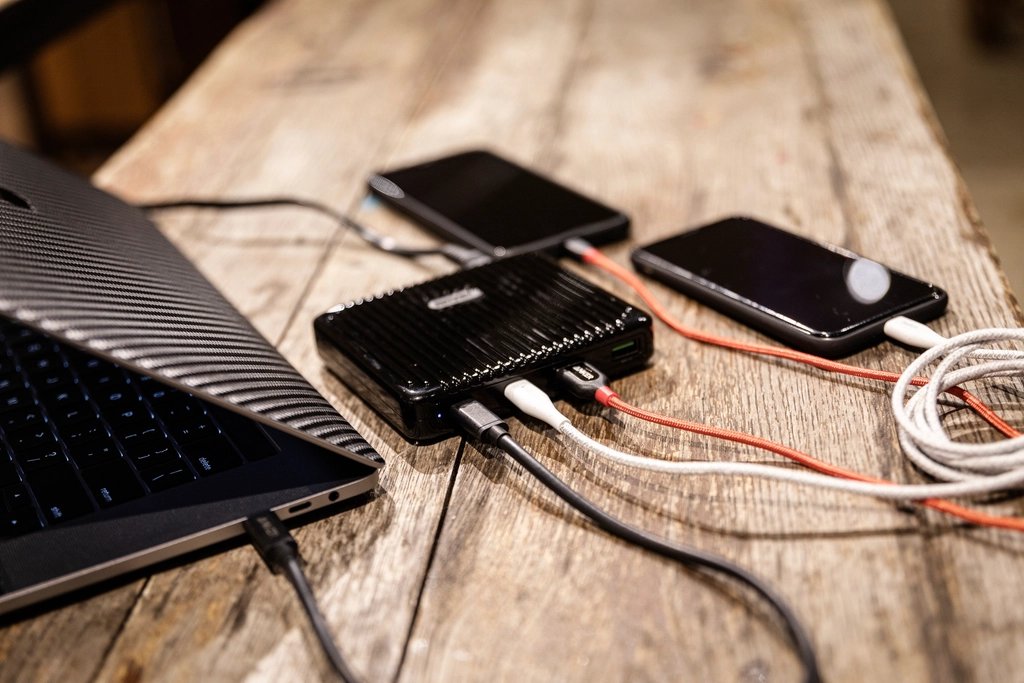
In practice, heavy use (WhatsApp, social media, video, GPS for Yango or Gozem, a few calls) should still leave a comfortable margin at the end of the second day. When power cuts last several hours, that kind of endurance makes a real difference. Infinix also promises battery self-repair, recovering 1% of health every 200 cycles, which is impossible to verify in the short term.
Wired charging goes up to 100 W. Infinix claims 50% in 18 minutes and a full charge in 48 minutes. Independent measurements are slightly less flattering: 34% in 15 minutes, 60% in 30 minutes and 57 minutes to full according to GSMArena. Watch the charger, though: with a 67 W adapter, Android Headlines needed more than two hours. The 100 W charger is reportedly included in the box in most markets; for units sold in Africa, check with the retailer.
The Note 60 Ultra also supports 50 W magnetic wireless charging, branded MagCharge, plus reverse charging to top up earbuds or another phone.
Good to know — Satellite calls go through Space42’s Thuraya network, whose coverage includes Africa. Infinix claims 130 compatible countries for voice, text messages and a little data outside mobile coverage. Activation does, however, depend on local agreements and possibly a subscription, so check with the seller before making it a buying criterion, as we could not confirm that the service is active in Cameroon, Côte d’Ivoire or Senegal.
Software: XOS 16 on Android 16, feature-rich but cluttered
The Note 60 Ultra runs Android 16 with Infinix’s XOS 16 skin, dressed for the occasion in a motorsport-inspired theme. Infinix promises three major Android updates and five years of security patches. That is clearly better than the brand’s usual record, but behind Samsung and Google, which promise seven years. The phone should therefore go as far as Android 19.
There are plenty of AI features. The Folax voice assistant is built on the DeepSeek R1 model. You also get real-time translation of calls and conversations, writing assistance, sketch-to-image, wallpaper generation and object removal in photos. Google adds Circle to Search.
The downside is a familiar one with Transsion. GSMArena points to several preinstalled apps you could happily do without, such as XClub, Visha Player, XTheme and the Hola browser, and Android Headlines describes an overall feeling of cluttered software. Most of them can be uninstalled, so plan a little clean-up on first boot.
Price and availability: a selective launch
As of 1 October 2026, we have found no official price for the Note 60 Ultra in Cameroon, Côte d’Ivoire or Senegal. The reference points come from other markets. In the Philippines, the 12 + 512 GB version went on sale in mid-May at 32,999 pesos, or about €500 (330,000 FCFA). In Malaysia, the same version is listed at 3,000 ringgit, about €600 (395,000 FCFA). In Nigeria, in the absence of an official price, retailers quote around 1,000,000 naira for the 12 + 256 GB model and 1,250,000 for the 12 + 512 GB, roughly €570 to €710, based on unofficial retailer listings.
For West and Central Africa, a range of about €500 to €600 (330,000 to 400,000 FCFA) looks realistic if Infinix launches the model officially, and more through grey imports. At that price, the warranty matters. A phone bought from an authorised dealer is covered by Carlcare, Transsion’s after-sales network, which is well established in Douala, Yaoundé, Abidjan and Dakar. A unit imported from Malaysia or the Philippines may be refused under the local warranty, so always ask for an invoice and check where it comes from. On the network side, 5G and 4G work on the common bands, but the exact band list for the African version has yet to be confirmed with the retailer.
In France, the Note 60 Ultra is not officially distributed, and we found no listing on Amazon, Fnac, Darty or Cdiscount. Creative Bloq quotes a UK price of £699, which suggests, without any official confirmation, a European price of around €700 to €800 if it launches. It would then go up against the Galaxy S25 FE and the Xiaomi 15T Pro, both far more widely available.
Pros and cons
Pros
- Outstanding battery life, more than 17 hours of measured active use
- 100 W wired and 50 W magnetic wireless charging
- Stabilised 200 MP sensor and a real 3.5x periscope telephoto
- Bright 1.5K 144 Hz AMOLED screen with 2,304 Hz PWM
- Original Pininfarina design, rear display and satellite calling
Cons
- Only IP64, no protection against immersion
- 8 MP ultrawide lags well behind
- Heavy, at 220 g
- Lots of preinstalled apps
- High price for an Infinix and uncertain official availability in the CFA franc zone
Alternatives to the Infinix Note 60 Ultra
Infinix Note 60 Pro 5G
Tecno Camon 50 Ultra 5G
Infinix GT 50 Pro 5G
The Note 60 Pro keeps the 1.5K AMOLED screen, very good battery life and 90 W charging for a noticeably smaller bill. The Tecno Camon 50 Ultra, from the same group, is less powerful but offers a 3x telephoto, IP68 and IP69 protection and a gentler price. Finally, the Infinix GT 50 Pro uses exactly the same Dimensity 8400 Ultimate chip for much less, but without optical zoom or 100 W charging.
Conclusion: should you buy the Infinix Note 60 Ultra?
Yes, if you want a high-end phone that genuinely lasts two days, recharges in under an hour and takes good photos both close up and at a distance. The Note 60 Ultra is the first Infinix that does not need its price as an excuse to win you over.
It does have three limits, though. IP64 is light for its class, the ultrawide is not worthy of the rest of the camera module, and the software needs some tidying up. Above all, whether it makes sense depends on how you buy it. Above 400,000 FCFA, or without a local Carlcare warranty, the balance tips towards better-distributed rivals. At around 330,000 FCFA from an authorised dealer, on the other hand, it becomes one of the most complete phones on the African market.
Our pick
Infinix Note 60 Ultra — the best choice in the Transsion family if you want battery life, optical zoom and style in a single device, ideally bought for around 330,000 to 400,000 FCFA with a local warranty.
Frequently asked questions
How much does the Infinix Note 60 Ultra cost in Cameroon?
As of 1 October 2026, Infinix has not published an official price in Cameroon. Converting the launch prices from the Philippines, Malaysia and Nigeria, you can expect around 330,000 to 400,000 FCFA depending on the storage, 256 or 512 GB. Imported units sold in the markets of Douala or Yaoundé may cost more and may not be covered by the Carlcare warranty. Ask for an invoice and check where the phone comes from before you pay.
Does the Infinix Note 60 Ultra support 5G?
Yes. There is only one version, and it is 5G, thanks to the MediaTek Dimensity 8400 Ultimate chip. It takes two nano-SIM cards and an eSIM, with 4G, 3G and 2G as fallbacks. In West and Central Africa, 5G is still limited to a few districts of the big cities, but the phone is ready for its rollout. Check with the seller that the version on offer covers the bands used by your operator, whether MTN, Orange or Moov.
Is the Infinix Note 60 Ultra waterproof?
Not entirely. It is rated IP64, meaning it is fully protected against dust and can handle splashes of water, such as a rain shower or a spilled glass. It is not designed for immersion, unlike an IP68 phone. So keep it away from the pool, the beach and puddles. For use on a building site or near water, the Tecno Camon 50 Ultra, rated IP68 and IP69, offers much better protection.
How many Android updates will the Infinix Note 60 Ultra get?
Infinix promises three major Android updates and five years of security patches. Launched on Android 16 with XOS 16, the Note 60 Ultra should therefore receive Android 17, 18 and 19, and stay secure until around 2031. That is real progress for the brand, even if Samsung and Google do better with seven years of support. The rollout schedule may vary by country and by the version sold.
Share this content: