
\n\n
\n\n
A 64GB DDR5 memory kit that sold for around $195 in 2025 is now climbing toward $788. That single figure sums up the year: the RAM crisis — nicknamed RAMageddon by the industry — is no longer an analyst’s worry, it is a reality you read on price tags. Lenovo, Dell, HP, Acer and ASUS have all warned customers of 15% to 20% PC price increases through 2026. And the effect is now spilling over into smartphones. Here are the numbers, the causes, and what you can actually do.
The raw numbers: a rise with no recent equivalent
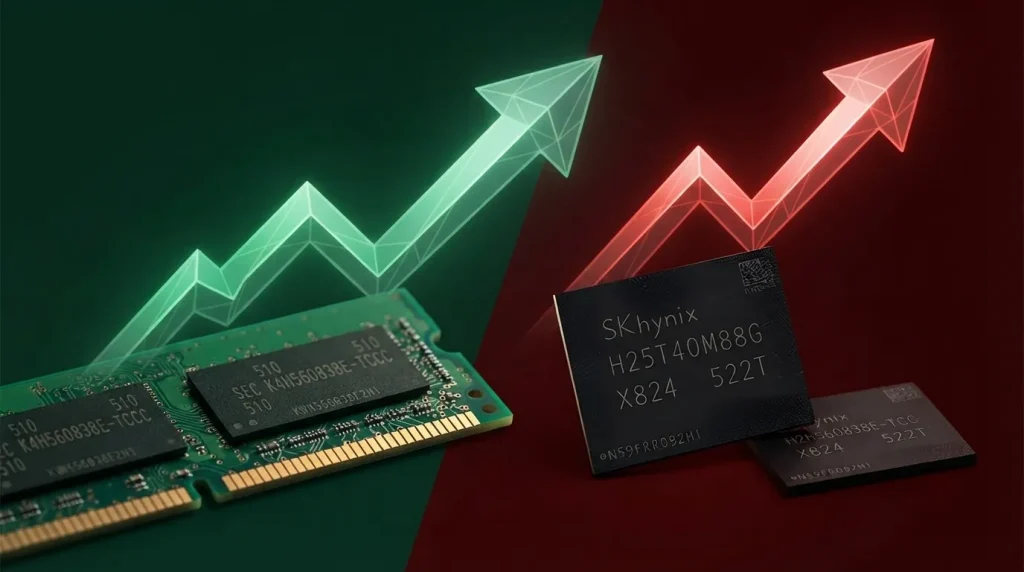
DRAM contract prices — the ones negotiated by large assemblers, not retail prices — have followed a brutal path:
- Q1 2026: roughly +90% to 95% quarter over quarter;
- Q2 2026: roughly +58% to 63% sequentially;
- Q3 2026: a projected +10% to 15%.
The Q3 slowdown is misleading: it applies to an already vastly inflated base. Across the full year, projections point to DRAM and SSD prices 130% above 2025 levels. Flash storage is not spared either, with SSD prices up around 60% in Q1 alone.
For consumers, the pass-through is estimated at +17% on PC prices. Manufacturer warnings align, landing in a 15% to 20% band, with some reports citing up to 30% if supply tensions worsen.
The cause: artificial intelligence is eating the supply
The origin fits in one sentence: AI data centres are absorbing a growing share of global memory output. Estimates put AI’s share at roughly 20% of total DRAM production in 2026, a proportion that may rise further as infrastructure scales.
The mechanism is worth explaining. AI accelerators need HBM (High Bandwidth Memory), a stacked memory type offering far greater throughput than standard DDR5. But HBM is made in the same fabs and on the same production lines as consumer memory. Every silicon wafer devoted to HBM is a wafer not producing DDR5 for your computer. And since HBM sells for considerably more, foundries have no economic incentive to favour the consumer market.
A timing factor compounds this: semiconductor capacity investments are measured in years, not months. Micron CEO Sanjay Mehrotra signalled earlier this year that the crisis would extend beyond 2026.
The knock-on effect on smartphones
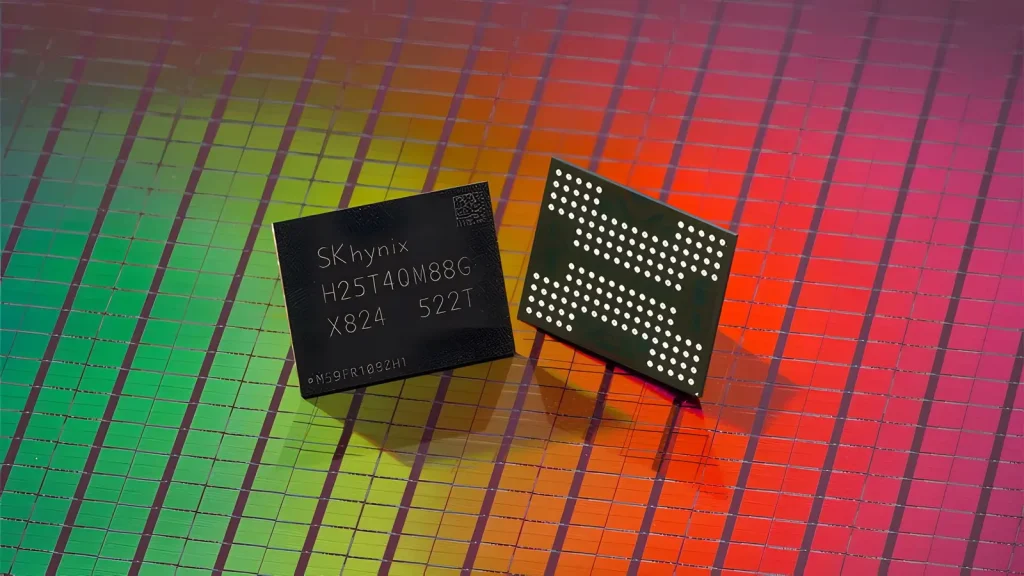
For a long time the mobile market seemed insulated: manufacturers buy in volume, on long contracts, with more negotiating leverage than a PC assembler. That protection is eroding.
Google’s Pixel 11, whose specifications leaked widely ahead of the August 12 event, is the clearest illustration. Two decisions there are directly attributed to memory costs:
- the disappearance of the 128GB version in favour of 256GB as the entry capacity — which looks like good news but comes with a roughly $100 price increase;
- base RAM cut from 16GB to 12GB on the Pro and Pro XL models.
In other words, consumers pay more for a weaker memory configuration. That is the classic signature of a supply-constrained market.
What it means for you, in practice
If you must buy a PC now
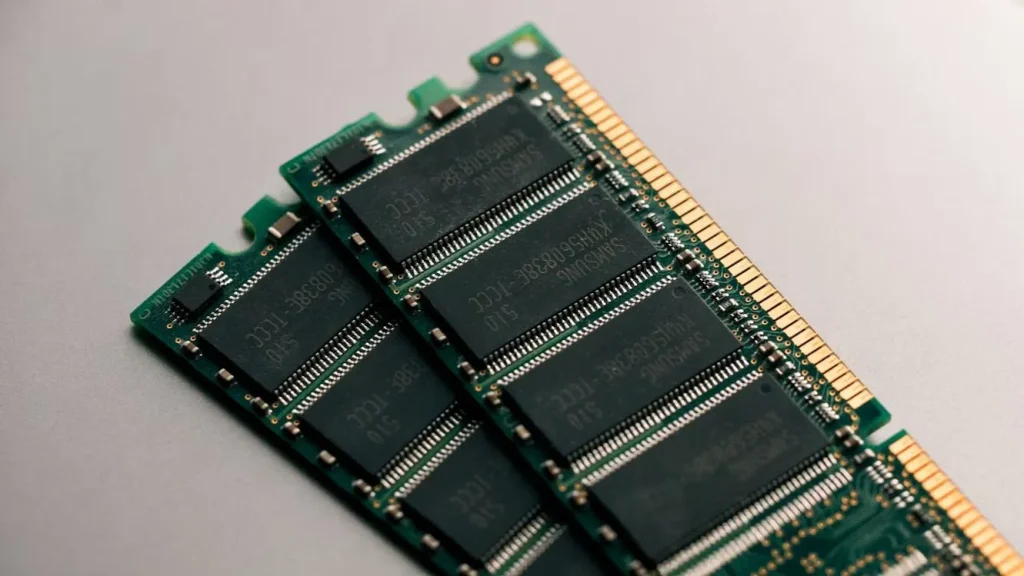
Read the memory configuration with unusual care. In a laptop, RAM is most often soldered to the motherboard and therefore not upgradeable: the amount you choose at purchase is final. In today’s context, the manufacturer’s +8GB option has become expensive, but it is generally still cheaper than replacing the whole machine two years later.
If you build or upgrade a desktop
A desktop keeps the decisive advantage of modularity. If your machine still accepts DDR4, that format is taking the price surge less violently than DDR5, as production lines are gradually redeployed. Check your motherboard compatibility before buying: DDR4 and DDR5 are not interchangeable, physically or electrically.
For a new DDR5 build, a 32GB kit as 2 × 16GB at 6,000MHz remains the most defensible sweet spot in 2026: enough for gaming and creative work, without paying the premium attached to higher capacities.
Check the Corsair Vengeance DDR5 32GB kit price on Amazon
If you can wait
That is the cheapest strategy, provided you are clear-eyed about the horizon. Available indications point to no relief before 2027 at the earliest. And keep in mind a well-known asymmetry in this industry: component price drops pass through to finished products far more slowly than increases do. A manufacturer raises prices in weeks but takes several quarters to bring them back down.
The reflex not to forget
Before buying more memory, check that memory is really your problem. A system starved of RAM shows constant near-maximum memory usage and heavy disk activity tied to the page file. On many machines, simply trimming startup programs or moving from a mechanical hard drive to an SSD delivers a clearer gain than an extra stick.
The bottom line
The 2026 RAM crisis is not a passing accident but a structural effect of the AI race. It will last at least into 2027, it affects PCs and smartphones alike, and it shows up as much in visible price increases as in quiet spec-sheet regressions. Information is your best defence: read memory configurations carefully before buying, and be wary of deals on machines whose RAM has discreetly shrunk.
Have you already postponed a purchase because of these prices? Share your experience in the comments.
As an Amazon Associate, Wanda-techs earns from qualifying purchases. This affects neither our independent analysis nor the price you pay.
Read also:
- DDR5 RAM: what is the point of frequency? (DDR5-5600 vs. 6000 CL30)
- RAM prices: why your next PC will cost much more
Share this content: