
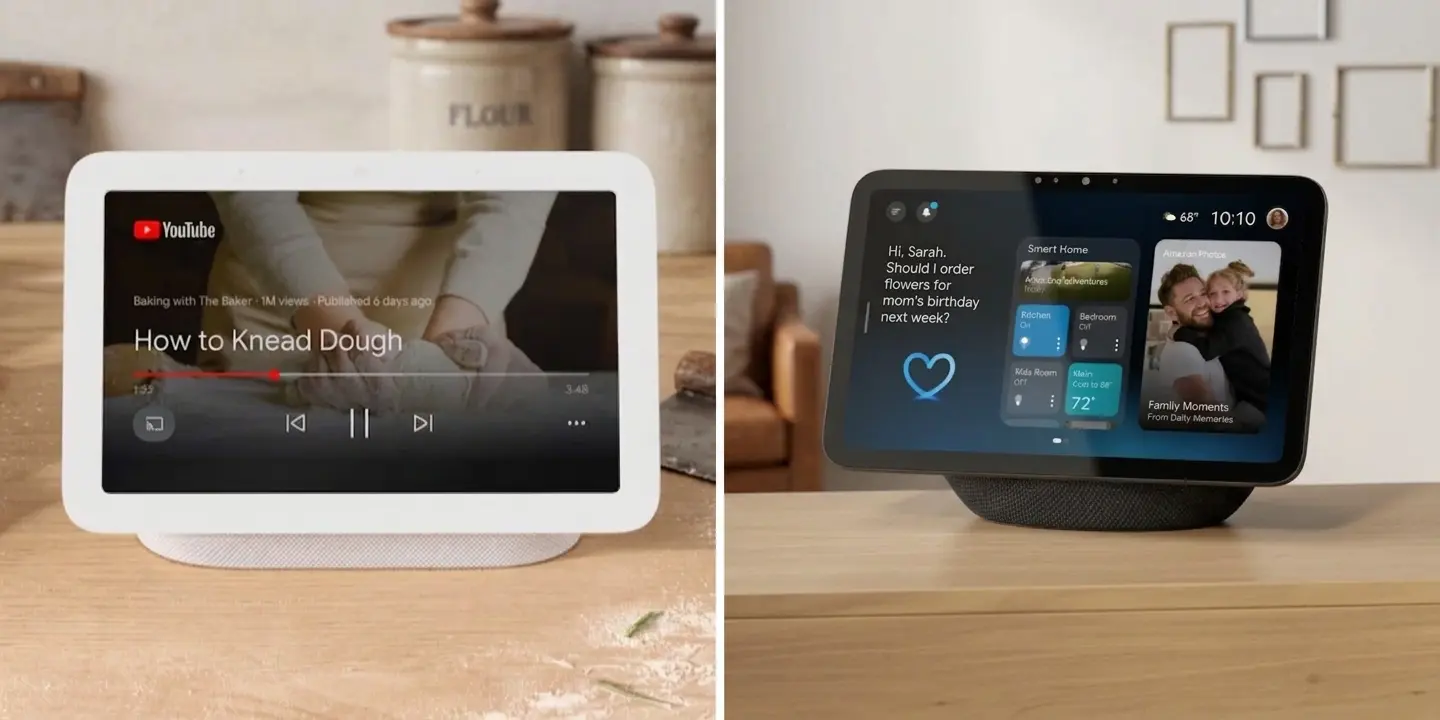
According to a report published on July 28, 2026 and picked up by several trade outlets including MacRumors and 9to5Mac, Apple is preparing to launch a brand-new Home Hub as soon as October 2026: a 7-inch touchscreen smart display designed to take control of the connected home and go head-to-head with Amazon’s Echo Show and Google’s Nest Hub. The project, rumored on and off for years without ever materializing, now appears to be entering its final development stage, alongside two other products described as “nearly ready to launch”: a new Apple TV and a refreshed HomePod mini.
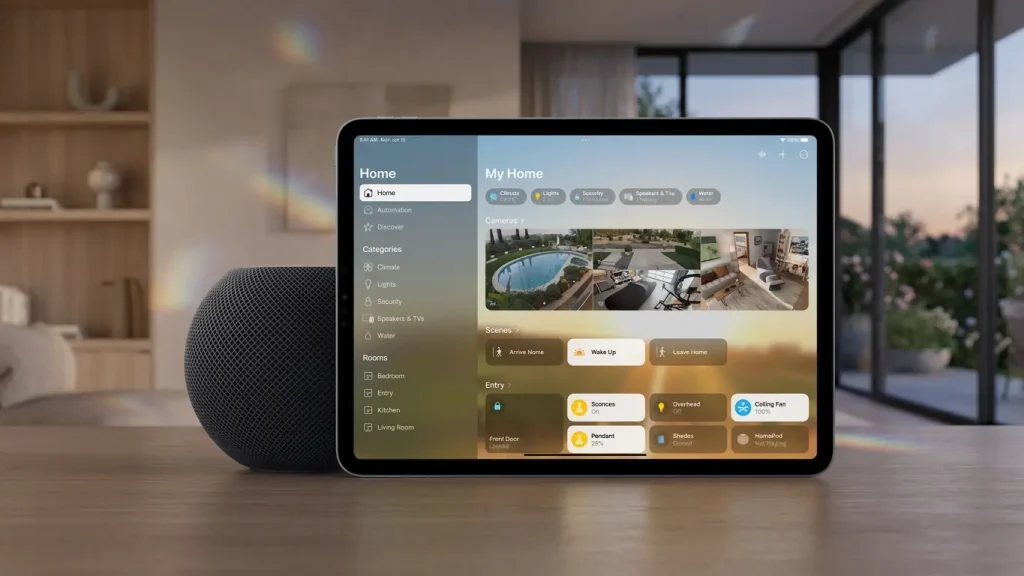
A square 7-inch screen, tabletop or wall-mounted
Per the reports, the device would take the form of a square 7-inch display, available in two versions: a tabletop model resting on a stand, and a wall-mounted model designed to be fixed directly to a wall, similar to a high-end smart thermostat. This dual form factor reflects Apple’s intent to offer a versatile product that fits equally well in a kitchen, an entryway, or a living room.
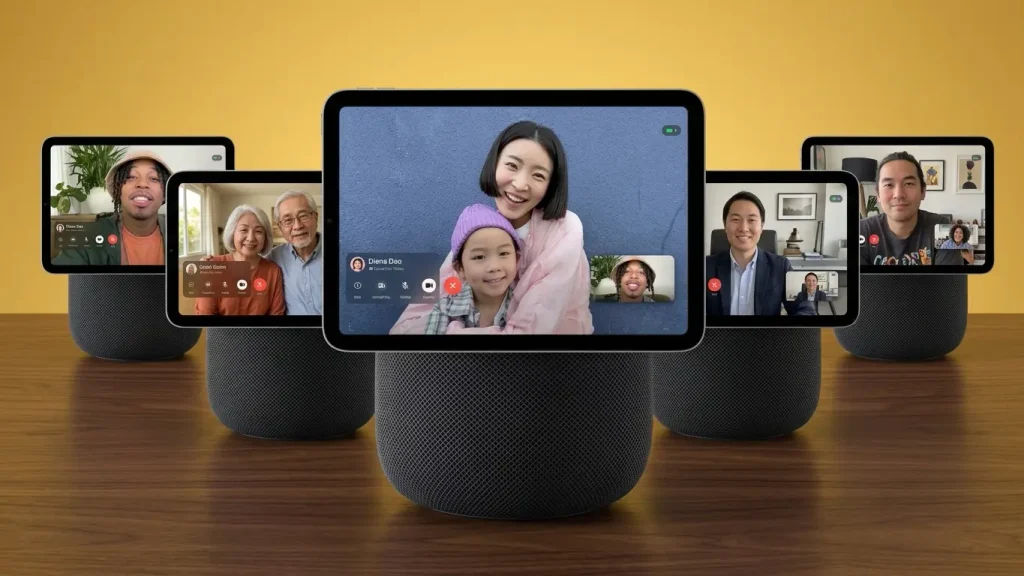
On the software side, the Home Hub would run on an entirely new operating system built on tvOS, but borrowing heavily from watchOS and iOS visually. In practice, the interface would blend apps, icons and widgets in a hybrid style, somewhere between an Apple Watch home screen and an Apple TV interface. It would also support FaceTime, HomeKit-based home security monitoring, and customizable watch-face-style clock faces.
Facial recognition as the headline feature
The most talked-about feature of this future Home Hub is its facial recognition capability. According to the reports, the display would be able to automatically identify whoever is standing in front of it, estimate their distance from the screen, and adjust the displayed interface in real time accordingly — personal calendar, reminders, preferred music, or relevant smart home widgets for that specific user.
This approach fits into a broader strategy described by Bloomberg, which points to a combination of artificial intelligence, deep personalization, and dedicated hardware. The stated goal is clear: compete more directly with rivals like Amazon and Google, which have dominated the smart display market for years — a segment where Apple has remained surprisingly absent despite several abandoned internal attempts.
Two more products expected alongside it
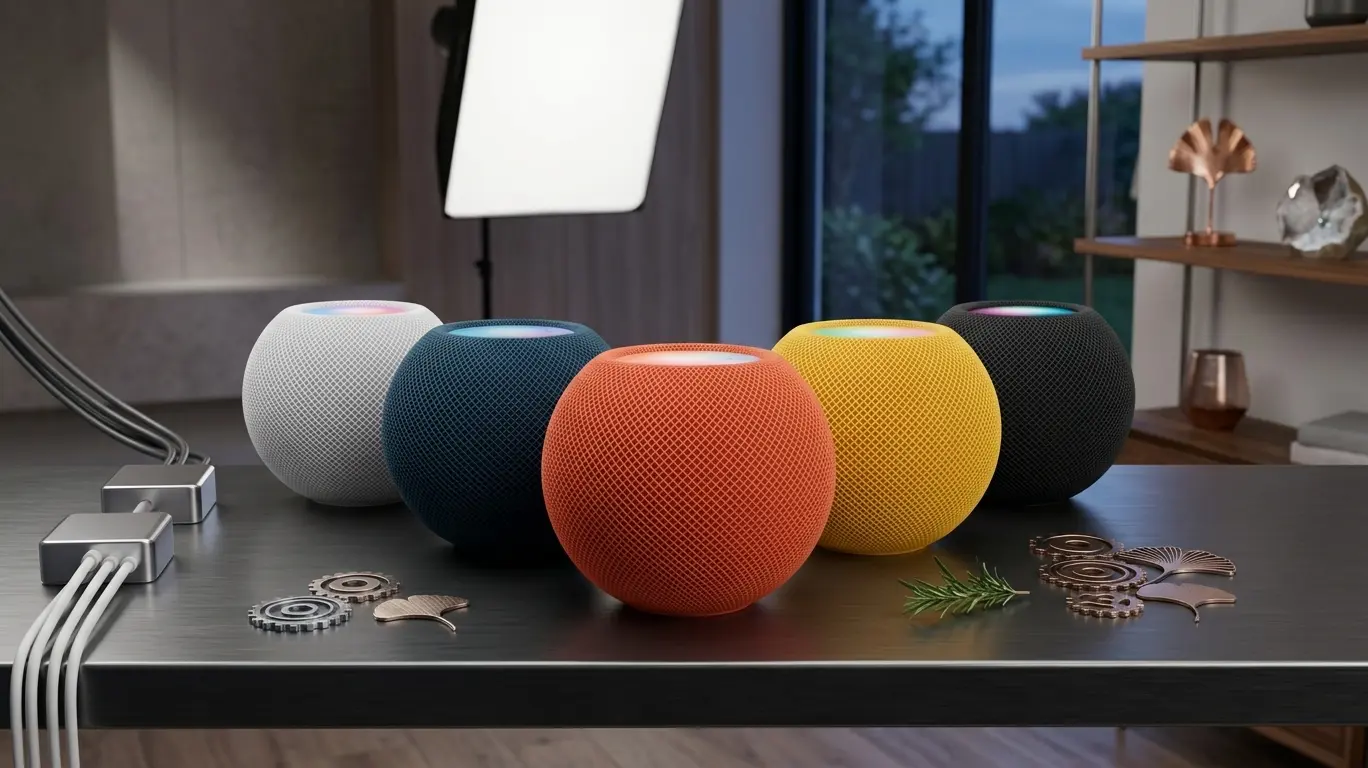
The Home Hub wouldn’t be the only connected product in Apple’s pipeline for late 2026. According to the same report, a new generation of Apple TV and a refreshed HomePod mini are also said to be nearly ready for launch. Together, these three announcements would mark the biggest update to Apple’s smart home lineup in years, following a period during which the company had notably slowed the pace of refreshes to its connected-home products.
Why Apple is finally getting serious about it
The smart home display market isn’t new: Amazon launched its first Echo Show back in 2017, closely followed by Google with its various generations of Nest Hub. Apple, meanwhile, has long stuck with the screen-less HomePod, leaving this segment to competitors. Several past reports had already floated a Home Hub project, without any product ever making it to market, the company apparently stumbling over internal software and technology decisions.
This new project would coincide with Apple’s efforts to breathe new life into Siri, its voice assistant, widely criticized in recent years for lagging behind rivals powered by generative AI. A dedicated device with a screen and facial recognition capabilities could serve as an ideal showcase for a finally modernized version of the assistant, reportedly being developed in parallel.
Taking on Echo Show and Nest Hub
On paper, this future Home Hub would directly challenge two already well-established products: Amazon’s Echo Show, sold in multiple screen sizes since 2017, and Google’s Nest Hub, both positioned as smart-home control centers paired with a voice assistant. These two product families currently dominate the segment, largely thanks to very aggressive pricing, with Amazon and Google having long sold their smart displays at a loss to drive adoption of their respective voice assistants.
Apple, by contrast, has always positioned its products at a higher price point, betting on perceived quality, software integration and data privacy rather than aggressive pricing. It’s therefore likely this Home Hub will be priced well above its direct rivals, while leaning on differentiators like facial recognition, seamless integration with the rest of the Apple ecosystem, and data handling widely seen as stricter than its competitors’.
A long history of false starts
This Home Hub project isn’t an entirely new idea inside Apple. Several reports, some dating back to 2022 and 2023, had already pointed to the development of a connected home display, without any product ever reaching the market. Those earlier attempts reportedly ran into complex internal debates, notably over whether the device should run on iOS, tvOS, or an entirely new system — a debate that now seems to have been settled in favor of a tvOS base enriched with watchOS-inspired visuals.
What this means for you
If the reports hold up, households already invested in HomeKit-compatible smart devices will, as early as late 2026, gain a central control point built specifically for the Apple ecosystem, something it has so far lacked natively. For users already deeply invested in Apple products (iPhone, Apple Watch, HomePod), this new device could be a strong argument for centralizing smart home management without relying on an Amazon or Google screen.
It’s worth keeping in mind that, at this stage, this is only a report based on internal sources not officially confirmed by Apple. The launch window, ranging from October 2026 to early next year according to current estimates, along with exact specs and pricing, remain to be confirmed. Wanda-techs will of course keep a close eye on this story until an official announcement.
The bottom line
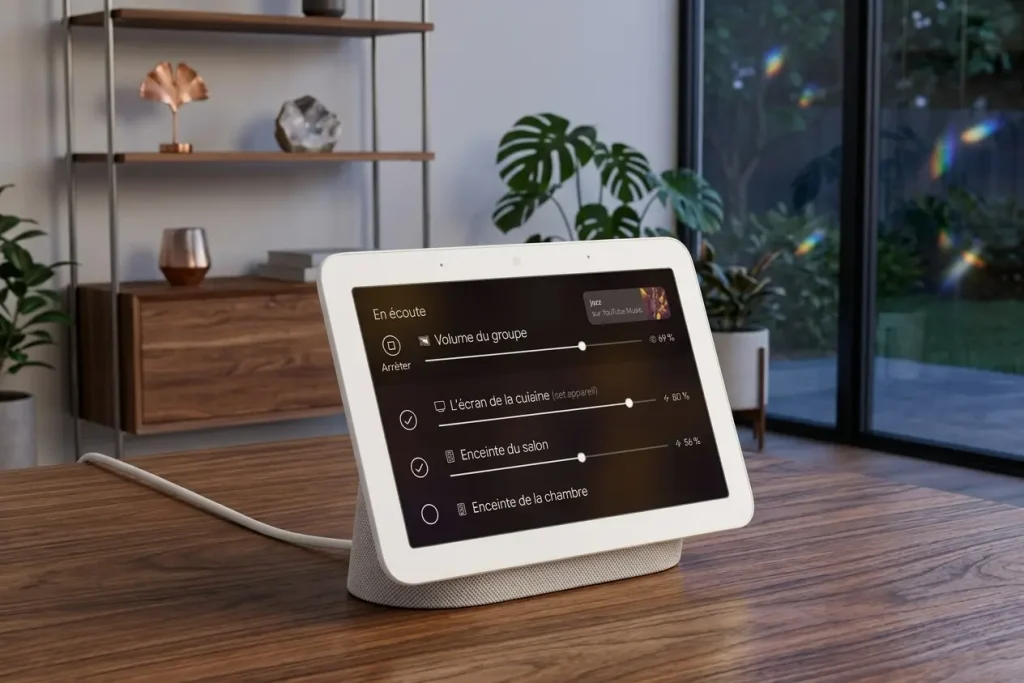
After years of rumors and false starts, Apple’s Home Hub finally seems on track to become reality, built around a 7-inch touchscreen, ambitious facial recognition, and a new hybrid tvOS/watchOS interface. A launch alongside a new Apple TV and HomePod mini that could mark Apple’s big return to the smart home battlefield.
Share this content: