

The Zenfone 12 Ultra is the last high-end smartphone Asus has launched, and it may well stay that way for good. With its Snapdragon 8 Elite chip, 144 Hz AMOLED display, 5,500 mAh battery and gimbal-stabilised camera, it is still a very fast phone with excellent stamina in 2026, and one of the few that still has a headphone jack. Since mid-January 2026, when Asus confirmed it would stop launching new smartphones, the question is no longer just “is it any good?” but “can you still buy it with peace of mind?”. Our answer: yes, as long as you pay well under its €1,099.99 launch price (around 722,000 FCFA) and accept fairly short software support.
Introduction: the Zenfone 12 Ultra, Asus’s last flagship
Unveiled on 6 February 2025, the Zenfone 12 Ultra replaces the Zenfone 11 Ultra, keeping its form factor and much of its spec sheet. It shares its foundations with the ROG Phone 9 Pro, the brand’s gaming phone: same chip, same large screen, same battery. Asus pitched it as the understated, all-round take on its gamer, with a more polished camera and fewer light effects.
Its place in the market has shifted along the way. At launch, it was up against the Galaxy S25, the OnePlus 13 and other phones costing more than €1,000 (around 656,000 FCFA), with one obvious handicap: much shorter software support. In 2026, it is a former flagship sold at a discount, in a market where new models cost more because of the surge in memory prices.
It is aimed at people who want a very fast, long-lasting, water-resistant phone with a proper 6.8-inch screen, a headphone socket and software close to stock Android. If you keep a phone for five or six years, or if zoomed night shots matter a lot to you, look elsewhere.
Verdict at a glance
Verdict in 30 seconds
The Zenfone 12 Ultra is still a very fast, long-lasting and well-built flagship with exemplary thermal management. Its short software support and Asus's exit from the smartphone market mean you should only buy it at a substantial discount.
For whom People who want a powerful, water-resistant phone with a headphone jack and long battery life, for two or three years of use.
Avoid if You keep your phone for more than four years, or you want the best night-time zoom or a compact device.
We like
- Stable Snapdragon 8 Elite that runs cool
- Solid battery life and 65 W charging
- Very bright 144 Hz AMOLED display
- IP68 and 3.5 mm headphone jack
- Gimbal video stabilisation
We like less
- Only two major Android updates
- Weaker telephoto and ultra-wide cameras
- Heavy at 220 g
- Uncertain long-term after-sales support
Zenfone 12 Ultra specs
| Écran | AMOLED LTPO plat 6,78 pouces, 2 400 x 1 080 px (Full HD+), 1 à 120 Hz, 144 Hz en jeu, 1 600 nits (HBM), 2 500 nits en pic, Gorilla Glass Victus 2 |
|---|---|
| Processeur | Qualcomm Snapdragon 8 Elite (3 nm), 2 cœurs à 4,32 GHz et 6 cœurs à 3,53 GHz |
| Mémoire | 16 Go LPDDR5X (12 Go sur certains marchés) |
| Stockage | 512 Go UFS 4.0 (256 Go sur certains marchés), pas de microSD |
| Appareil photo principal | 50 Mpx Sony Lytia 700, 1/1,56 pouce, f/1,9, stabilisation hybride à nacelle 6 axes ; vidéo 8K 24 i/s, 4K 60 i/s |
| Ultra grand-angle | 13 Mpx f/2,2, 120° |
| Téléobjectif | 32 Mpx f/2,4, zoom optique 3x, OIS |
| Caméra selfie | 32 Mpx RGBW f/2,5 |
| Batterie | 5 500 mAh |
| Charge | 65 W filaire (100 % en 39 min selon Asus), 15 W sans fil Qi, recharge inversée 10 W selon GSMArena |
| Système | Android 15 et Zen UI au lancement, Android 16 depuis novembre 2025 ; 2 mises à jour majeures et 5 ans de correctifs de sécurité promis |
| Réseau | 5G, double SIM (nano-SIM et eSIM), Wi-Fi 7, Bluetooth, NFC, prise jack 3,5 mm |
| Étanchéité | IP68 (1,5 m pendant 30 min) |
| Dimensions et poids | 163,8 x 77 x 8,9 mm, 220 g (224 g selon GSMArena) |
| Date de sortie | Annoncé et disponible en France le 6 février 2025 |
| Launch price | 1 099,99 € (environ 722 000 FCFA) en 16 + 512 Go, France, février 2025 ; offre de lancement 999 € (environ 655 000 FCFA) |
Three figures matter here. The Snapdragon 8 Elite, built on a 3 nm process, is still one of the most powerful chips around in 2026, just behind Qualcomm’s next generation. The 5,500 mAh battery is no longer exceptional next to the 7,000 mAh-plus models that have appeared since, but it comfortably lasts the day. Finally, the 50 MP Sony Lytia 700 main sensor, a 1/1.56-inch unit, is backed by hybrid gimbal stabilisation that few rivals offer.
The full official spec sheet is available on Asus’s product page. Note that there is no microSD slot, and that eSIM support is new to this generation.
Zenfone 12 Ultra design: understated, sturdy but bulky
Asus stuck with the Zenfone 11 Ultra recipe: an aluminium frame, a matte glass back with a silky feel, and Gorilla Glass Victus 2 on the front. The camera module has been redesigned, and that is the main visual change. Three colours are available: Ebony Black, Sakura White and Sage Green.
The Zenfone 12 Ultra is a big phone: 163.8 x 77 x 8.9 mm and about 220 g. It fills the hand and is awkward to use one-handed. Early published reviews praise the flawless finish but find the design a little too safe, almost anonymous for a phone at this price.
Durability and connectivity
The Zenfone 12 Ultra is IP68-rated: it is dust-tight and survives 30 minutes under 1.5 metres of water. That is a real plus in hot, dusty climates and for outdoor use. The fingerprint reader sits under the display.
What sets it apart is on the bottom edge: a 3.5 mm headphone jack, now extremely rare on high-end phones. You plug in wired earphones directly, with no adapter. The two stereo speakers do the job without shining, and some reviews consider them average for the category.
Display: a 144 Hz AMOLED panel that still holds up
The 6.78-inch AMOLED screen has a Full HD+ resolution (2,400 x 1,080 pixels). That is lower than the QHD resolution of some rivals, but the difference is hard to spot at this size. The LTPO panel adjusts its refresh rate between 1 and 120 Hz, and goes up to 144 Hz in supported games.
Claimed brightness reaches 1,600 nits in high brightness mode and 2,500 nits peak on small areas. Published reviews describe it as smooth, well calibrated and readable in direct sunlight. Asus quotes 107% coverage of the DCI-P3 colour space.
The screen is flat, which cuts down on reflections and accidental touches along the edges. For everyday use, video or gaming, this panel remains one of the phone’s strong points in 2026.
Zenfone 12 Ultra performance: powerful and cool
The Snapdragon 8 Elite combines two cores at 4.32 GHz and six cores at 3.53 GHz, with 16 GB of RAM in France and 512 GB of UFS 4.0 storage. TechRadar recorded a multi-core score of 9,818 points in Geekbench 6, on a par with the best phones of 2025. In 2026, the chip is only beaten by the Snapdragon 8 Elite Gen 5 generation.
Gaming and heat
The real strength of the Zenfone 12 Ultra is how it handles heat. According to LesMobiles’ review, throttling stays under 10% after an hour of heavy load. Phonandroid measured a surface temperature that never goes above 45°C in a stress test, with stability close to 90%. Put simply, it keeps its performance where many rivals slow down.
In games, the 144 Hz mode works in supported titles, and the phone runs the most demanding games at high settings. It does not have the shoulder triggers or the optional cooling fan of the ROG Phone 9 Pro. Hardcore gamers will find better-suited options in dedicated gaming phones such as the ROG Phone 9 Pro or the RedMagic 11 Pro, built for competitive play.
For everyday use, the Zenfone 12 Ultra has far more power than you need. Above all, that gives it comfortable headroom for the years ahead: the chip will not be what limits the phone’s lifespan, its software support will.
Camera: an effective gimbal, weaker secondary lenses
The main camera uses the 50 MP Sony Lytia 700 sensor (f/1.9), stabilised by a six-axis hybrid gimbal system. It is flanked by a 13 MP ultra-wide (120°) and a 32 MP telephoto with 3x optical zoom and optical stabilisation. On the front, a 32 MP RGBW sensor handles selfies.

What to expect by day and by night
In daylight, published reviews describe punchy photos with flattering colours, good sharpness and well-handled HDR. It is not at the level of the best camera phones of 2025, but it is solid. At night, the main sensor does a decent job thanks to night mode, with a little noise in the dark areas.
The secondary cameras are weaker. Phonandroid finds the telephoto too dark and grainy at night, and the ultra-wide, which lacks autofocus, cannot shoot macro. Asus offers a “HyperClarity” digital zoom up to 30x, best kept for emergencies.
Video and selfies
Video is where the Zenfone 12 Ultra stands out. The gimbal delivers remarkable stabilisation while walking, and the AI Tracking and AI Portrait Video 2.0 features follow a subject or blur the background live. Video goes up to 8K at 24 frames per second, but 4K at 60 frames per second is the most useful setting. Selfies are detailed and fine for video calls.
Battery life and charging: a day and a half with ease
The 5,500 mAh battery of the Zenfone 12 Ultra comfortably gets through a busy day, and gets close to two days with moderate use according to TechRadar. Phonandroid measured about 26 hours on its test cycle in dynamic mode, but only 13 hours in performance mode. The mode you choose therefore has a big impact on endurance.
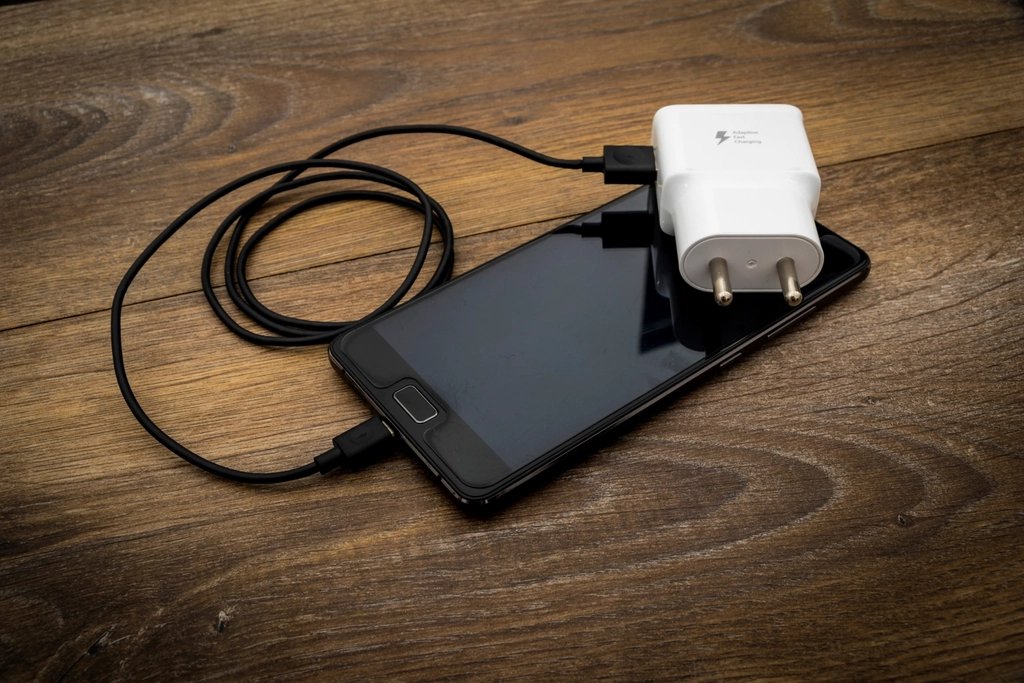
65 W wired charging fills the battery in 39 minutes according to Asus, and in 53 minutes with the charger tested by Phonandroid. LesMobiles recorded around 50% in fifteen minutes. Wireless charging tops out at 15 W. GSMArena’s spec sheet lists 10 W reverse charging, which LesMobiles’ review did not find, so the feature remains uncertain.
Where power cuts are common, this endurance is a real asset, especially since fast charging gets you plenty of battery back in little time. On the other hand, several 2026 models now go beyond 7,000 mAh, which puts this figure into perspective.
Software: near-stock Android, but short support
The Zenfone 12 Ultra shipped with Android 15 and the Zen UI skin, one of the lightest on the market. It lets you choose between a near-stock Android look and an interface customised by Asus. There are few preinstalled apps, and every published review praises how smooth it is.
On the AI front, Asus runs Meta’s Llama 3 model locally on the chip. It powers AI Transcript 2.0, which transcribes and summarises meetings, real-time call translation, document summaries, and the AI Magic Fill and AI Unblur photo editing tools. Some reviews find these tools slow and heavy on downloads. Gemini became the default assistant with a 2025 update.
Zenfone 12 Ultra updates: what has been promised
The policy announced at launch covers two major Android updates and five years of security patches. Android 16 rolled out in November 2025, so one promised major update remains, logically Android 17, for which Asus has not yet given a timeline. Security patches run until early 2030 if Asus keeps its word.
Asus quitting smartphones: what it means for buyers in 2026
In mid-January 2026, Asus chairman Jonney Shih announced that the Zenfone and ROG Phone ranges would get no new models. The group is moving its teams to business PCs and what it calls physical AI: robots and smart glasses. According to Taiwanese press reports picked up by Heise, local distributors had been told that the smartphone division would operate until 31 December 2025.
Asus describes the decision as a pause rather than a permanent exit. Above all, the brand has promised that warranty, software updates and after-sales service for existing phones are not affected. In practice, here is what that means for you.
Warranty and after-sales service
The manufacturer’s warranty is still honoured. In France and the rest of the EU, the two-year legal guarantee of conformity applies anyway, and it is the seller’s responsibility, not the manufacturer’s. The real risk lies further ahead: spare parts and authorised repair centres could become harder to find over the years as the number of Asus phones in use shrinks.
Updates
The original promise, two Android versions and five years of security patches, has not been called into question. It was already short, but it has not been cut. There is still an execution risk: a smaller software team may ship patches later than before. That is a reasonable concern, not an established fact.
Price, resale and accessories
The most visible effect is on price. Remaining stock is being cleared at a discount, which makes the phone far more attractive than at launch. On the flip side, its resale value will drop fast, and cases and screen protectors will become harder to find over time.
Our advice comes down to a few simple rules:
- Only buy it on sale, ideally under €800 (around 525,000 FCFA).
- Choose an established retailer in Europe that handles the legal guarantee itself.
- Plan to keep it for two to three years, no longer.
- Buy a spare case and screen protector now.
Good to know — Asus has not ruled out a return to the smartphone market. But no announcement had confirmed it as of 1 October 2026. Buy this phone for what it is today, not on the bet that support will be extended.
Zenfone 12 Ultra price and availability
In France, the Zenfone 12 Ultra went on sale on 6 February 2025 at €1,099.99 (around 722,000 FCFA) for the 16 GB + 512 GB version, with a launch offer at €999 (around 655,000 FCFA) until 28 February 2025. A 12 GB + 256 GB version was sold in other markets, notably in Asia. In 2026, it can still be found on Amazon and on Asus’s online store, often below its original price: check the current price with the retailer.
In West and Central Africa, Asus does not officially sell the Zenfone 12 Ultra as far as we know. You will need to import it or go through specialist resellers, and the manufacturer’s warranty may then be limited to the region of purchase. Check the warranty terms with the seller before ordering. The European version’s 4G bands cover the 1,800 MHz frequency used by many operators in the region. Check 5G compatibility with your operator before buying.

Where to buy the Zenfone 12 Ultra at the best price
Smartphone Asus Zenfone 12 Ultra 16 + 512 Go
- AmazonSee at Amazon
Some links on this page are affiliate links: Wanda-techs may earn a commission if you buy through them, at no extra cost to you. This does not influence our opinion.
Pros and cons
Pros
- Very powerful Snapdragon 8 Elite, remarkably stable under load
- Bright, well-calibrated 144 Hz LTPO AMOLED display
- Solid battery life and 65 W wired charging
- IP68 rating and 3.5 mm headphone jack
- Gimbal video stabilisation and a light interface
Cons
- Only two major Android updates
- Disappointing telephoto at night, ultra-wide without autofocus
- Heavy and bulky
- Average speakers for the category
- Uncertain future for after-sales service and parts after Asus’s exit
Zenfone 12 Ultra alternatives
Asus ROG Phone 9 Pro
RedMagic 11S Pro
If you want to stick with Asus and care about gaming, the ROG Phone 9 Pro shares the same foundations with shoulder triggers and more memory, but suffers from the same exit by its maker. The Poco F9 Ultra, released in 2026 (see our article on its global launch), has a newer chip and a battery of more than 8,000 mAh. The RedMagic 11S Pro bets on a much bigger battery and a built-in fan.
Conclusion: should you buy the Zenfone 12 Ultra in 2026?
In hardware terms, the Zenfone 12 Ultra has barely aged. Its chip is still among the fastest, it runs cool, lasts a long time, is water-resistant and keeps a headphone jack. Its weaknesses were known from the start: average secondary cameras and short software support.
Asus pulling out of the market for new smartphones does not make it unusable: warranty and updates continue. But it does shorten its reasonable lifespan even further. At €1,099 (around 721,000 FCFA), you should not buy it. Under €800 (around 525,000 FCFA), it is a very solid flagship for two or three years.
Good to know — Before ordering, check the date of the latest installed security patch, the Android version (16 at least) and the warranty offered by the seller. For an imported unit, ask who handles repairs if something goes wrong.
Zenfone 12 Ultra FAQ
What is the Zenfone 12 Ultra price in Europe?
The Zenfone 12 Ultra launched in France on 6 February 2025 at €1,099.99 (around 722,000 FCFA), in a single version with 16 GB of RAM and 512 GB of storage. A launch offer brought it down to €999 (around 655,000 FCFA) until the end of February 2025. In 2026, after Asus announced its exit from the market for new smartphones, it is regularly discounted by retailers. In our view, it becomes really worthwhile under €800 (around 525,000 FCFA).
Will the Zenfone 12 Ultra get Android 17?
Asus promised two major Android updates for this model, which shipped with Android 15. The first, Android 16, rolled out in November 2025. The second should therefore be Android 17, but as far as we know Asus has not yet published a timeline. It will be the last major update. Security patches are promised for five years, which takes you to around early 2030.
Is Asus quitting smartphones, and what happens to warranty and updates?
In mid-January 2026, Asus confirmed it would no longer launch new Zenfone or ROG Phone models, in order to focus on PCs and AI. The brand says warranty, updates and after-sales service for existing phones will continue. In France and the rest of the EU, the two-year legal guarantee of conformity binds the seller anyway. The risk to watch is rather the long-term availability of spare parts.
Is the Zenfone 12 Ultra waterproof?
Yes. It is IP68-rated, which means it is fully protected against dust and can withstand 30 minutes in fresh water at a depth of 1.5 metres. That protection is useful in the rain, at the beach or in dusty environments. It does not cover salt water or hot water, and warranties generally exclude water damage. So avoid dunking it on purpose.
Does the Zenfone 12 Ultra have a headphone jack?
Yes, and it is one of its rarest selling points. The Zenfone 12 Ultra keeps a 3.5 mm headphone jack on its edge, so you can plug in wired earphones or headphones without an adapter. Almost every rival flagship dropped it long ago. It also supports Bluetooth earbuds and has two stereo speakers, which published reviews rate as decent but nothing more.
Share this content: