

Sony has officially unveiled the Sony Xperia 10 VIII, its new mid-range smartphone, on Tuesday 25 August 2026. The Japanese manufacturer is asking 599 euros in Europe (549 pounds in the UK) for a spec sheet that is almost identical to last year’s Xperia 10 VII. Same display, same processor, same battery, same camera sensors: the upgrades can be counted on one hand. Retail availability is announced for the second half of September.
This launch is bound to raise eyebrows. In a market where Chinese competitors stack gigahertz and milliamp-hours for half the price, Sony is choosing absolute continuity. One question remains: is there still an audience for a phone that bets on a 3.5 mm headphone jack and a microSD slot rather than raw performance?
Sony Xperia 10 VIII: what changes, and mostly what does not
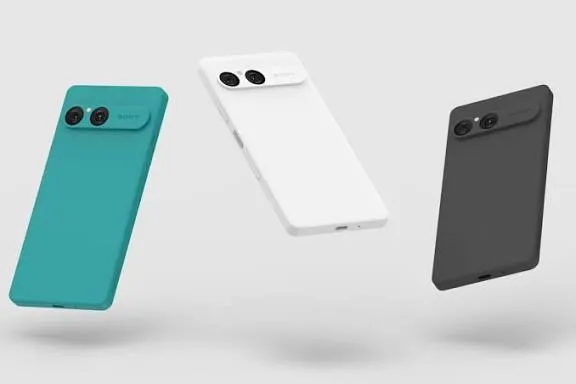
Let us start with the essentials. The Xperia 10 VIII carries a 6.1-inch LTPS OLED panel at Full HD+ resolution, with a 120 Hz refresh rate. That is exactly the same panel as the Xperia 10 VII. Sony does claim a 50 percent increase in brightness over the previous model, but never publishes a figure in nits, which makes the promise hard to verify until an independent test is run.
Under the hood sits Qualcomm’s Snapdragon 6 Gen 3. This 4 nm chip was already a year old when it shipped in the Xperia 10 VII. It is paired here with 8 GB of RAM and 128 GB of storage. At this price point, most competitors now offer 256 GB as standard, along with Snapdragon 7 series processors or Dimensity 8000 chips that are considerably faster.
The camera setup does not move either. The rear module keeps a 50-megapixel main sensor in 1/1.56-inch format, backed by a 13-megapixel ultra-wide. No telephoto lens, therefore no optical zoom. The battery stays at 5,000 mAh with wired charging capped at 30 W, a modest figure against the 80 W or 100 W now common in this price bracket.
On the software side, the phone boots Android 16 with Sony’s near-stock skin, known for being restrained and light on resources. The company promises up to four major Android updates, a decent commitment without being exceptional. Three colours are announced: Frozen White, Frosted Grey and Misty Lilac.
The headphone jack and microSD, last arguments of a dying breed
If the Xperia 10 VIII has one selling point, this is it. The phone keeps the 3.5 mm headphone jack, gone from the vast majority of smartphones sold today. It also keeps a microSD slot, housed in the hybrid SIM tray, which lets you expand storage without relying on the cloud or paying a manufacturer premium.
These two features are far from trivial for some users. Audiophiles using a quality wired headset avoid a USB-C adapter, which is often worse-sounding and always in the way. Heavy consumers of photos, offline music or downloaded video appreciate being able to slot in a 512 GB card for thirty euros instead of paying a hundred euros for extra internal storage.
The front-firing stereo speakers are also retained, housed in the top and bottom bezels. Sony states they deliver sound that is 30 percent more powerful than on the previous model. Again, the claim will need verification, but front-facing orientation remains a genuine everyday advantage: sound is not muffled by your palm when watching video in landscape.
599 euros: the real sticking point
Pricing is where the problem lies. At 599 euros (549 pounds), the Sony Xperia 10 VIII is inevitably compared with far better-equipped devices. In this bracket you now find smartphones with higher-tier processors, 256 GB of storage, fast charging above 65 W, and triple camera arrays that include an optical zoom.
Sony is not quite playing the same game, however. The brand targets a niche audience attached to compact form factors, software restraint, durability and audio features. The Xperia 10 VIII belongs to the rare category of phones genuinely usable one-handed, a criterion that has become almost impossible to find elsewhere.
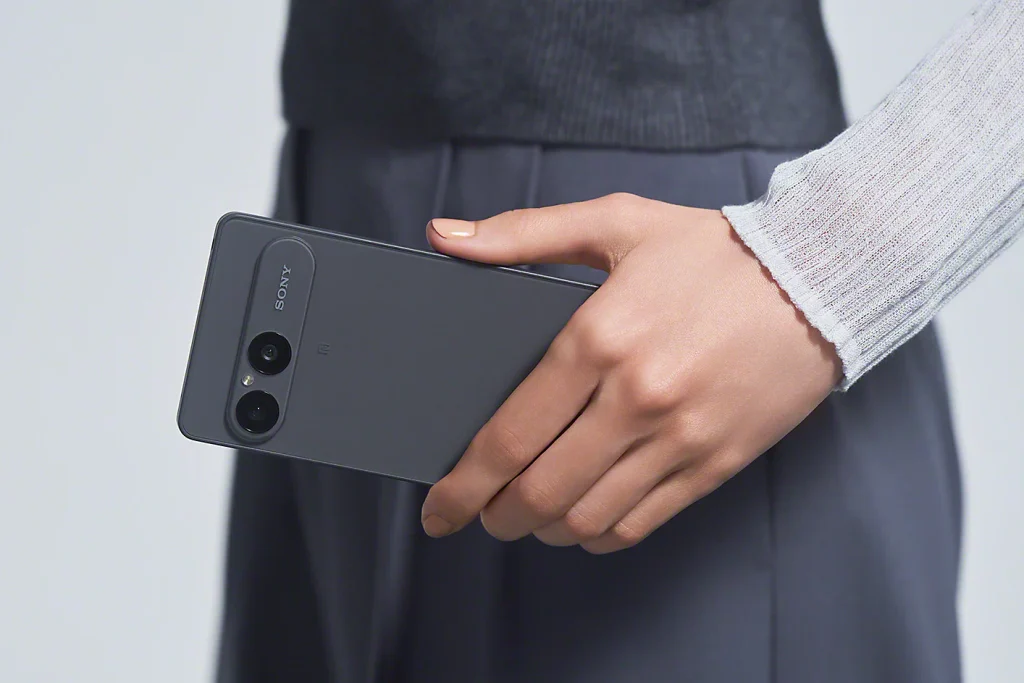
That niche positioning still comes at a steep price, and a generation with no meaningful technical progress makes the bill hard to justify. If the form factor and connectivity appeal to you, the Xperia 10 VII, released last year with a very similar spec sheet, now sits well below the new model’s launch price. That is probably the more rational option while we wait for independent reviews of the 10 VIII.
Check the Sony Xperia 10 VII price on Amazon
What this says about Sony’s mobile strategy
This launch fits a familiar trajectory. Sony has steadily scaled back its smartphone presence, withdrawing from several regions and concentrating on Japan and Europe. The company’s mobile division is no longer chasing volume, but profitability across a loyal customer base.
In that context, a minimalist transitional generation has industrial logic: reuse a validated platform, avoid recertification costs, limit risk. The wider environment strongly encourages it. The sector is going through a historic memory shortage, with DRAM and NAND storage contract prices climbing sharply since the start of 2026 under pressure from artificial intelligence demand. Several manufacturers have already raised prices to absorb the shock, and sticking with a known memory configuration helps secure supply.
None of that excuses everything. A manufacturer that raises prices without improving its product risks accelerating the erosion of its base. But it does explain why 2026 looks, across several brands, like a year of technical standstill.
Should you buy the Sony Xperia 10 VIII?
The answer depends entirely on your priorities. If you want a compact smartphone with a 3.5 mm jack, a microSD slot, a clean interface and four years of updates, the Sony Xperia 10 VIII is one of the few devices on the market ticking every box. Very few manufacturers still offer that combination.
If instead you are after the best performance per euro spent, or versatile photography with optical zoom, this is not the right device. The value proposition remains unfavourable, and the lack of progress makes the previous generation far more attractive financially.
Our advice: wait for full reviews, expected around the September release, particularly to verify the brightness and audio claims. And keep an eye on actual street prices, which tend to drop quickly below Sony’s official tariff.
Do the 3.5 mm jack and microSD card still weigh on your buying decision? Tell us in the comments which criteria drive your smartphone choice today, and find our other mobile market analyses on Wanda-techs.
As an Amazon Associate, Wanda-techs earns from qualifying purchases. This affects neither our independent analysis nor the price you pay.
Share this content: