
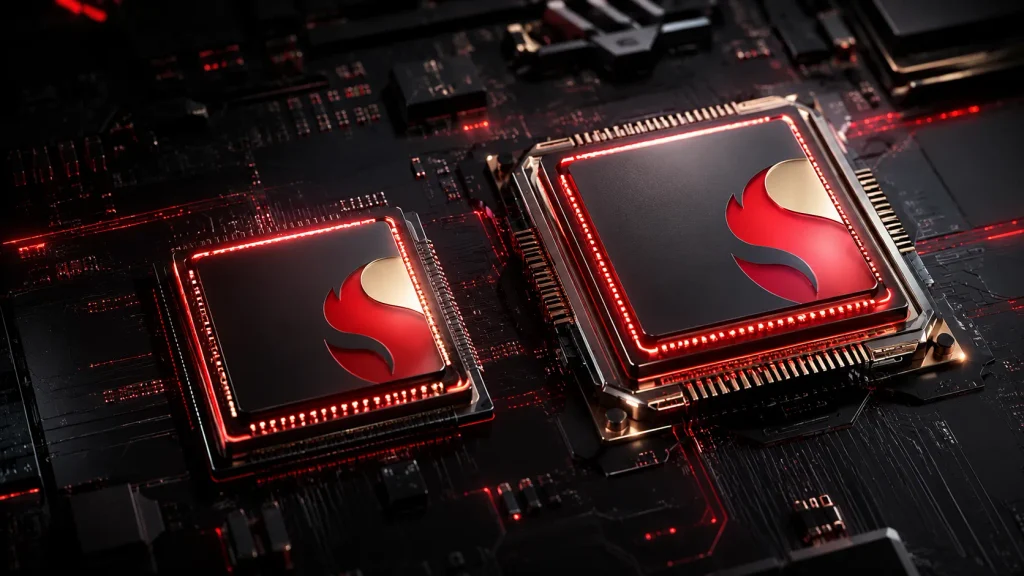
The rumour had circulated for months: it is now confirmed. Qualcomm will unveil not one but two Snapdragon 8 Elite Gen 6 chips at its annual Snapdragon Summit on 22 September 2026. The American chipmaker ended the suspense on 19 August with a post on the social network X, accompanied by an unambiguous tagline: when two changes the game. In practical terms, premium Android smartphones in 2027 will no longer all share the same reference processor. Here is what that means, and why the decision could affect the price of your next phone.
Two flagship chips instead of one: what Qualcomm announced
The teaser published by Qualcomm refers to the next chapter of the agentic AI era and sets the reveal for 22 September. The company has not yet made the names official, but leaks have long converged on two designations: the Snapdragon 8 Elite Gen 6 and the Snapdragon 8 Elite Gen 6 Pro.
A reminder is in order for readers less familiar with the vocabulary. A SoC, or System on Chip, is a single piece of silicon that bundles the central processor, the graphics section, the artificial intelligence engine, the cellular modem and several controllers. It is the single most decisive component in a smartphone, governing smoothness, battery life, photographic quality and advanced software features alike.

Until now, Qualcomm offered a single flagship chip per generation, sometimes followed later by a slightly less powerful variant. Having two premium references from launch changes the commercial logic: phone makers will be able to choose their performance tier at the design stage.
A benchmark score that turns heads
An AnTuTu 11 measurement attributed to the Pro model recently circulated. The reported result reaches 4,835,412 points.
That figure deserves perspective. AnTuTu is a synthetic test that aggregates several measurements, covering the processor, graphics, memory and interface, into a single score. It gives an indication of raw power, but says nothing about real-world experience: not about thermal stability after twenty minutes of gaming, nor battery life, nor image processing quality. A highly rated device can disappoint in use if it heats up and throttles its clock speeds.
That said, crossing the 4.8 million point threshold remains a significant marker of how far mobile performance has come. It should be stressed, however, that this score comes from a leak rather than an independent test on a retail device.
The 2-nanometre process is the real technical story
Both chips are expected on a 2-nanometre manufacturing process. This is probably the most important detail in the entire announcement.
Process node size refers to the scale of the transistors that make up a chip. The smaller it gets, the more you can fit on a given surface, and the less power each transistor draws to perform the same operation. Moving from 3 to 2 nanometres therefore translates, in theory, into a simultaneous gain in performance and energy efficiency.
This point carries particular weight this year. Google, for instance, kept its Tensor G6 in the Pixel 11 series on a 3-nanometre process. If Qualcomm confirms 2 nanometres for both Snapdragon 8 Elite Gen 6 chips, the efficiency gap against certain rivals could become visible in battery life testing.
Agentic artificial intelligence is the real marketing pitch
The vocabulary Qualcomm uses is not accidental. The chipmaker speaks of the agentic AI era, not simply generative AI.
The distinction is worth clarifying. A generative AI produces content on request: a piece of text, an image, a summary. So-called agentic AI goes further: it chains actions autonomously to accomplish a goal, interacting with your applications. Booking a ticket, sorting an inbox or organising a trip end to end all fall into this category.
This kind of processing demands local computing power, for reasons of latency and privacy: running these tasks on the device avoids sending your data to a remote server. That is precisely the ground on which Qualcomm wants to position its new generation of chips.
The pricing context darkens the picture somewhat
One piece of news that passed more quietly deserves recalling: Qualcomm officially confirmed this summer a price increase on its processors.
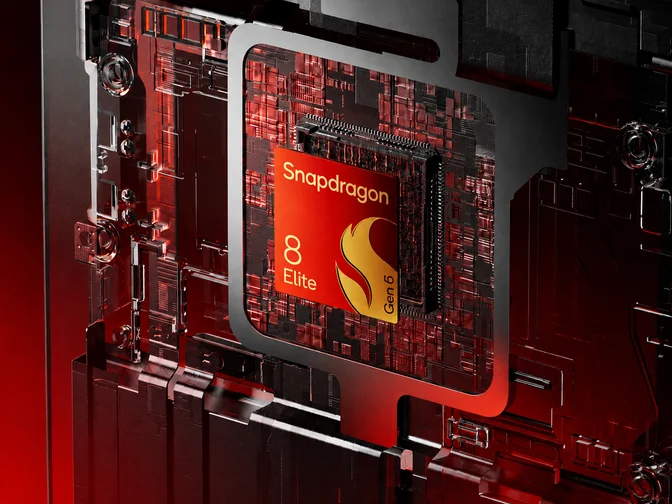
The SoC is one of the heaviest cost items in the bill of materials for a premium smartphone. An increase at that level feeds through mechanically to the final price, unless the manufacturer accepts a thinner margin, which is rarely the case.
Seen in that light, the two-chip strategy takes on additional meaning. By offering a standard version and a Pro version, Qualcomm gives manufacturers a lever to contain the bill on certain models, while reserving the most powerful chip for the most expensive devices. It is a segmentation that suits the chipmaker as much as its customers, but it could make spec sheets harder for buyers to read.
Also worth noting: a persistent rumour points to the launch of a new Snapdragon 8 Elite Gen 5 before the end of the year. Qualcomm’s premium catalogue has never been so full, nor so difficult to decipher.
What this changes for you
If you are considering a premium Android smartphone, two lessons stand out.
First, wait if you can. The first devices using these chips will arrive in the weeks after 22 September, and their release will mechanically trigger price drops on the current generation, which remains more than sufficient for almost every use case.
Second, read spec sheets carefully from 2027 onwards. Two phones both listing a Snapdragon 8 Elite Gen 6 will not necessarily deliver the same performance if one carries the Pro variant and the other the standard version. The suffix will make all the difference.
The bottom line
Qualcomm has confirmed the arrival of two Snapdragon 8 Elite Gen 6 chips, a standard version and a Pro version, to be unveiled on 22 September 2026 at the Snapdragon Summit. Both are expected on a 2-nanometre process, with a leaked AnTuTu score of 4,835,412 points for the Pro model. All of this against a backdrop of announced price increases on Qualcomm processors.
Does this two-chip strategy strike you as smart or as a source of confusion? Share your view in the comments and follow Wanda-techs for our coverage of the Snapdragon Summit on 22 September.
Read also
- Samsung Galaxy M55: A New Gem Powered by Snapdragon 7 Gen 1—Details Revealed on Geekbench
- Honor 100 Pro Goes Official with Snapdragon 8 Gen 2 and Exclusive Features
Share this content: