
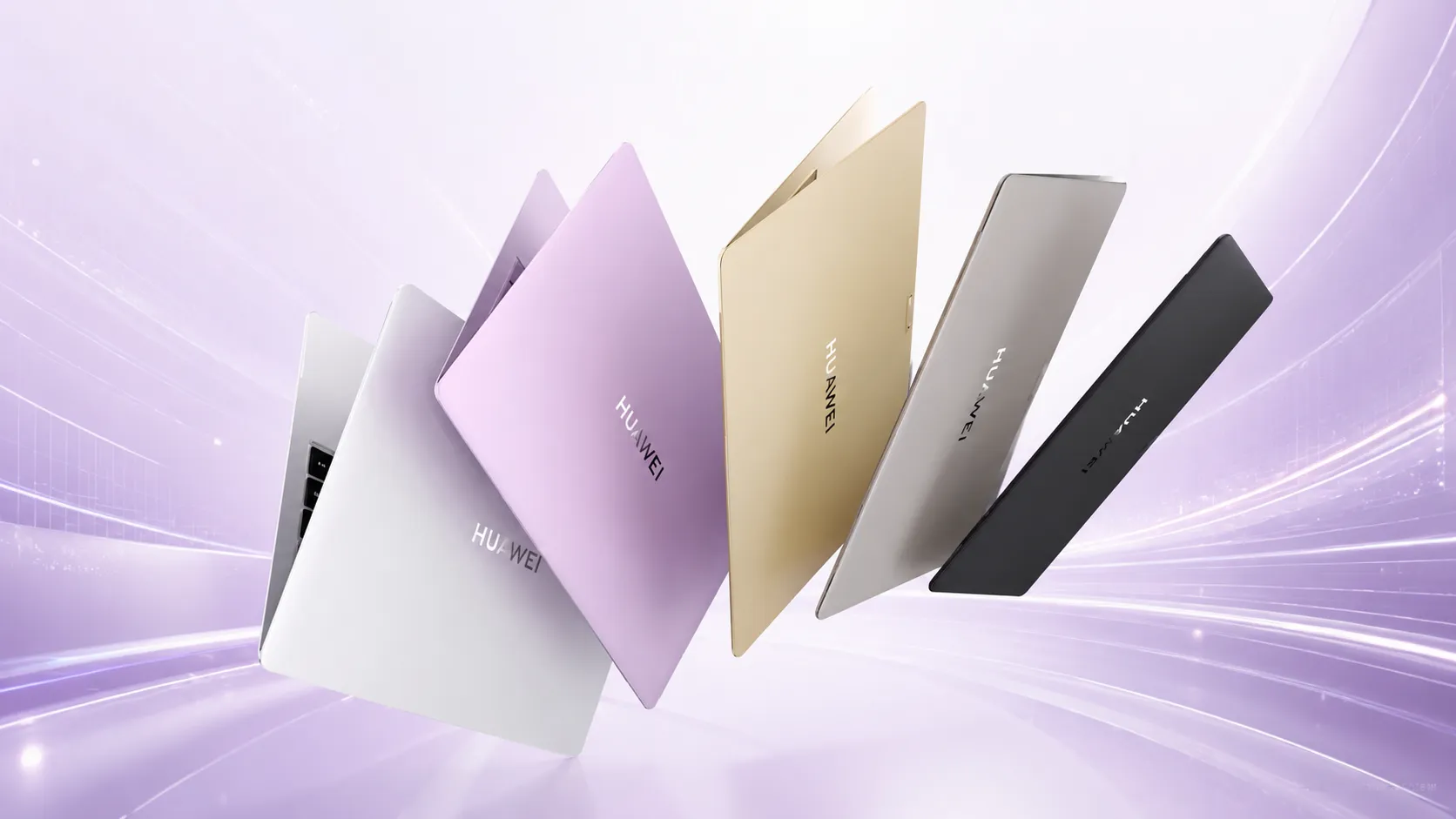
The Huawei MateBook Pro S will be unveiled on August 5, 2026, in China, and the manufacturer is highlighting one eye-catching figure: 798 grams. That’s around 200 grams lighter than a typical 14-inch ultrabook. This first “S” branded PC running HarmonyOS is expected to feature Huawei’s new in-house Kirin XE90 chip, unveiled at the end of July. It will kick off a packed launch event alongside the MateBook Fold 2026, the MatePad Pro, and the Watch GT 7 series.
798 grams: How Huawei achieved it
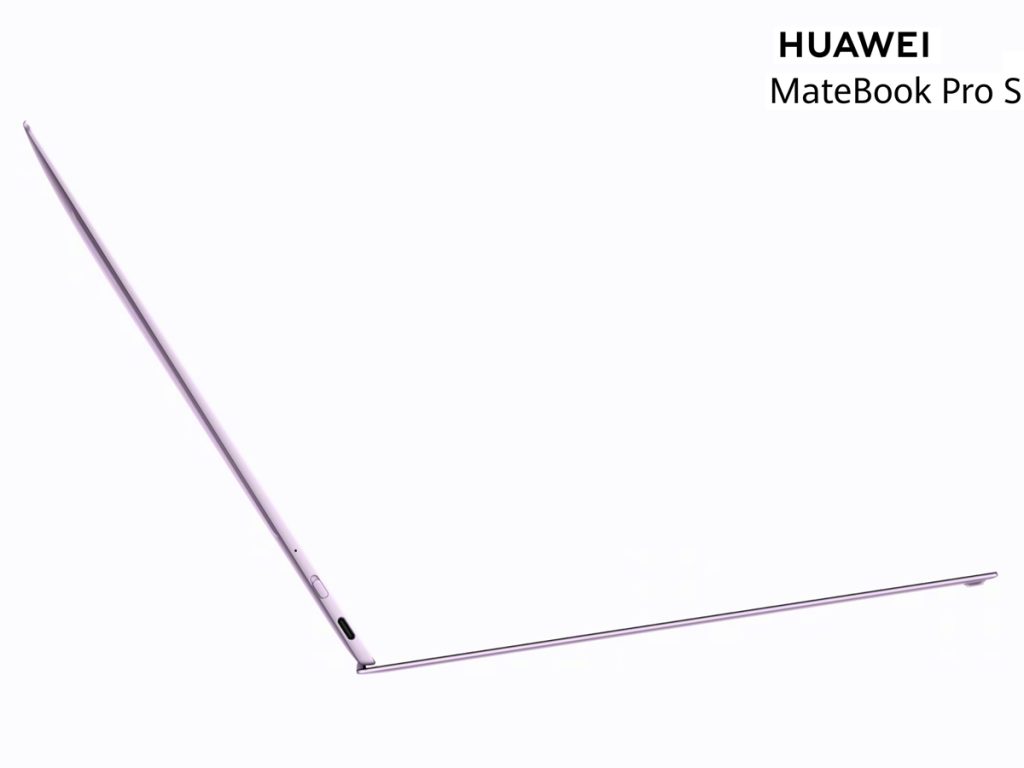
For a laptop equipped with a 14.2-inch display, dropping below the 800-gram mark is an impressive engineering achievement. A 13-inch MacBook Air weighs around 1.24 kg, while the LG Gram, long regarded as the benchmark for lightweight laptops, comes in at roughly one kilogram in comparable sizes.
The secret lies mainly in the chassis, which is made from a magnesium-lithium alloy. Magnesium has a density of approximately 1.74 g/cm³, compared to 2.70 g/cm³ for aluminum. At the same volume, the structure is therefore nearly 35% lighter. Adding lithium further reduces the weight while maintaining acceptable rigidity. This material remains expensive and difficult to machine, which is why it is usually reserved for premium laptops.
The announced thickness is 11.9 mm. Huawei will offer the MateBook Pro S in five colors, whose Chinese names translate to Midsummer Purple, Aurora Yellow, Smoky Gray, Velvet White, and Feather Black. It is an unusually colorful lineup for a professional laptop.
Kirin XE90: The in-house chip powering HarmonyOS
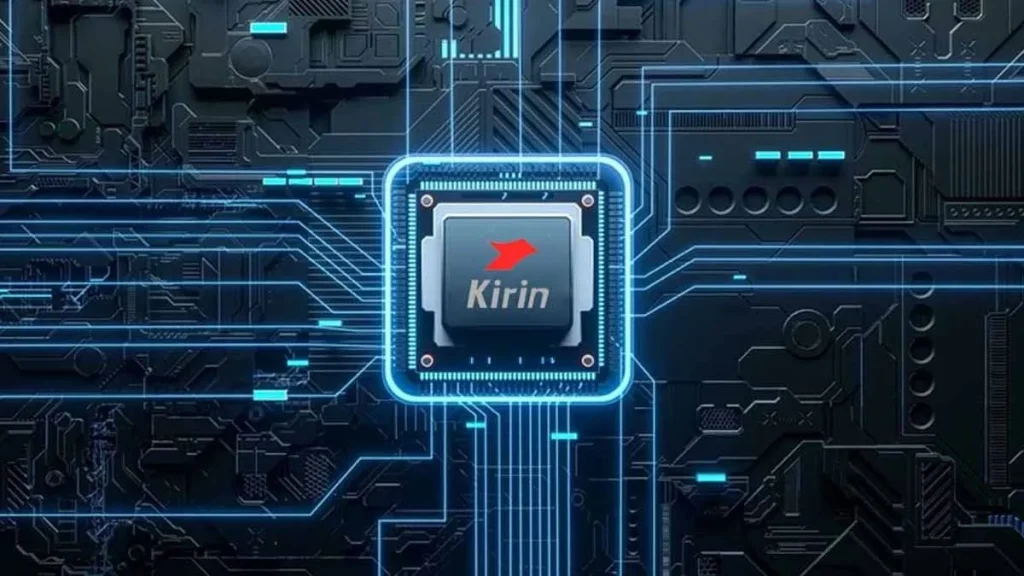
The most interesting part is under the hood. The MateBook Pro S is expected to debut the Kirin XE90, an ARM processor designed by HiSilicon, Huawei’s semiconductor division, and officially introduced at the end of July 2026 alongside the more powerful Kirin X90 Plus.
Its configuration consists of ten cores:
- Four high-performance cores clocked at 2.45 GHz, with 1 MB of L2 cache
- Four large cores running at 2.1 GHz, also with 1 MB of L2 cache
- Two intermediate cores at 2.15 GHz, with 512 KB of L2 cache
Compared to the first-generation Kirin X90, Huawei claims a 23% improvement in single-core performance, 25% better energy efficiency, and 40% higher NPU throughput, the dedicated unit for artificial intelligence workloads. These figures come from Huawei’s own presentation slides and have yet to be independently verified.
The XE90 is positioned as the high-efficiency chip in the lineup, while the X90 Plus targets maximum performance. This split is reminiscent of Intel’s U-series vs. H-series strategy, or Apple’s distinction between standard M-series chips and the Pro variants.
HarmonyOS on PC: The real challenge behind this launch
Beyond its weight, the MateBook Pro S represents a broader strategy. Cut off from Windows and Western processors due to U.S. sanctions, Huawei has built its own software and hardware stack: an in-house operating system (HarmonyOS) and its own processor (Kirin), manufactured by the Chinese foundry SMIC.
That is also where the main limitation lies. SMIC currently tops out at roughly a 7 nm manufacturing process, while TSMC is already producing chips on a 2 nm node. This gap of two to three generations inevitably affects performance per watt. As a result, the efficiency gains announced for the XE90 are likely driven primarily by architectural optimizations rather than a major leap in manufacturing technology.
The decisive question remains software compatibility. An ARM PC running HarmonyOS does not natively run Windows x86 applications. Huawei is betting on a growing ecosystem of native apps and seamless integration with its smartphones and tablets. That strategy may work well in the Chinese market, but it is far less convincing internationally.
Memory, storage, and connectivity
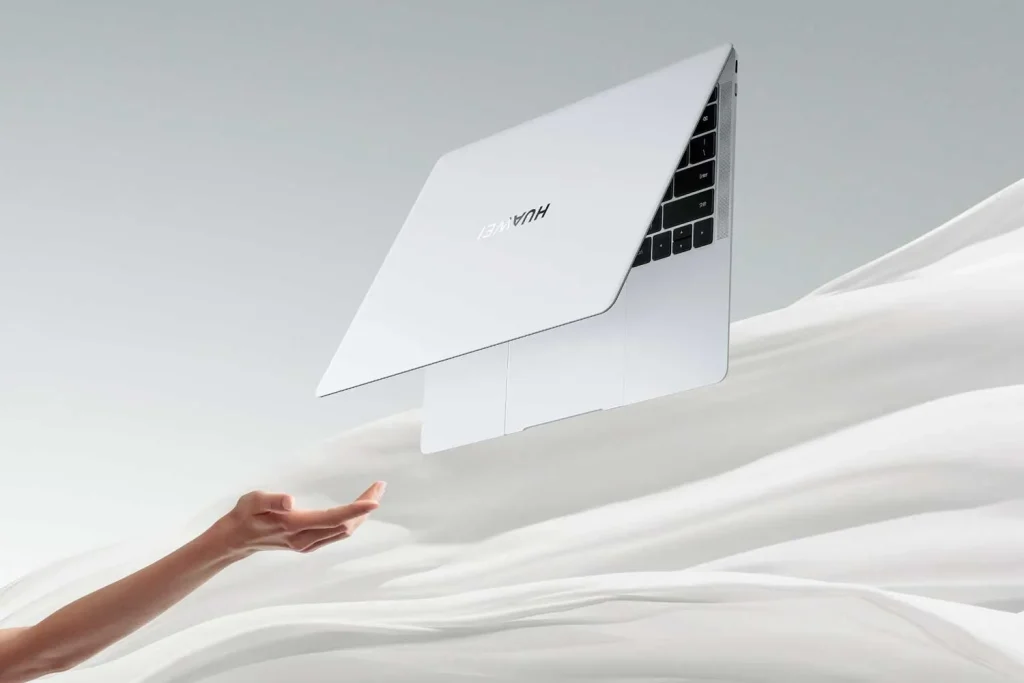
Reported configurations include 16 GB to 32 GB of RAM and 512 GB to 1 TB of SSD storage. Hands-on images also reveal two rear-facing cameras behind the display, in addition to the standard webcam positioned above the screen.
For connectivity, the chassis includes one USB-C port on each side along with ventilation openings on the underside. There is also a physical privacy shutter for the webcam, a welcome feature for privacy-conscious users.
However, having only two USB-C ports is rather limiting for professional use. One port will often be occupied by charging, leaving only a single connection available. Users connecting an external monitor and peripherals will likely need a docking station.
A packed Huawei event on August 5
The MateBook Pro S will not be the only product on stage. Huawei’s “All-Scenario New Product” launch event is also expected to feature:
- The MateBook Fold 2026, Huawei’s 18-inch foldable laptop, confirmed in three classic colors
- The MatePad Pro 2026, the latest generation of Huawei’s premium tablet
- The Watch GT 7 series, including a Pro model already teased in a green finish
- A nova 16 SE smartphone
This wave of announcements highlights Huawei’s aggressive pace in its domestic market, where the brand has largely recovered the ground it lost following international sanctions.
What this means for you
Let’s be clear: the Huawei MateBook Pro S has been announced for the Chinese market, and there is currently no indication of a European launch. Even if it were released internationally, a HarmonyOS laptop would face a significant usability challenge outside China due to the limited local software ecosystem.
The real significance of this announcement lies elsewhere. It demonstrates that it is possible to build a 14-inch laptop weighing less than 800 grams without sacrificing a quality display or decent connectivity. This race toward lighter laptops will likely influence Western manufacturers as well, where weight remains a key purchasing factor for mobile users.
It also shows that a company cut off from cutting-edge technologies can, within just a few years, rebuild an entire technology stack—from processors to operating systems. The technological gap remains real, but it is gradually narrowing.
Key takeaways
The MateBook Pro S is shaping up to be the lightest laptop Huawei has ever released: 798 grams, 11.9 mm thick, a magnesium-lithium chassis, a 14.2-inch display, and a 10-core Kirin XE90 running HarmonyOS. Full pricing and technical specifications will be revealed on August 5.
Would you be interested in an ultrabook weighing less than 800 grams, or do you think that extreme lightness always comes with compromises elsewhere? Share your thoughts in the comments and stay up to date with all the latest PC news on Wanda-techs.com.
Read also:
- 2026 RAM Crisis: Why Your Next PC and Smartphone Will Cost Much More
- Mechanical gaming keyboard vs. office keyboard: which one to choose in 2026?
- Wired vs. wireless gaming mice: which one to choose in 2026?
Share this content: