
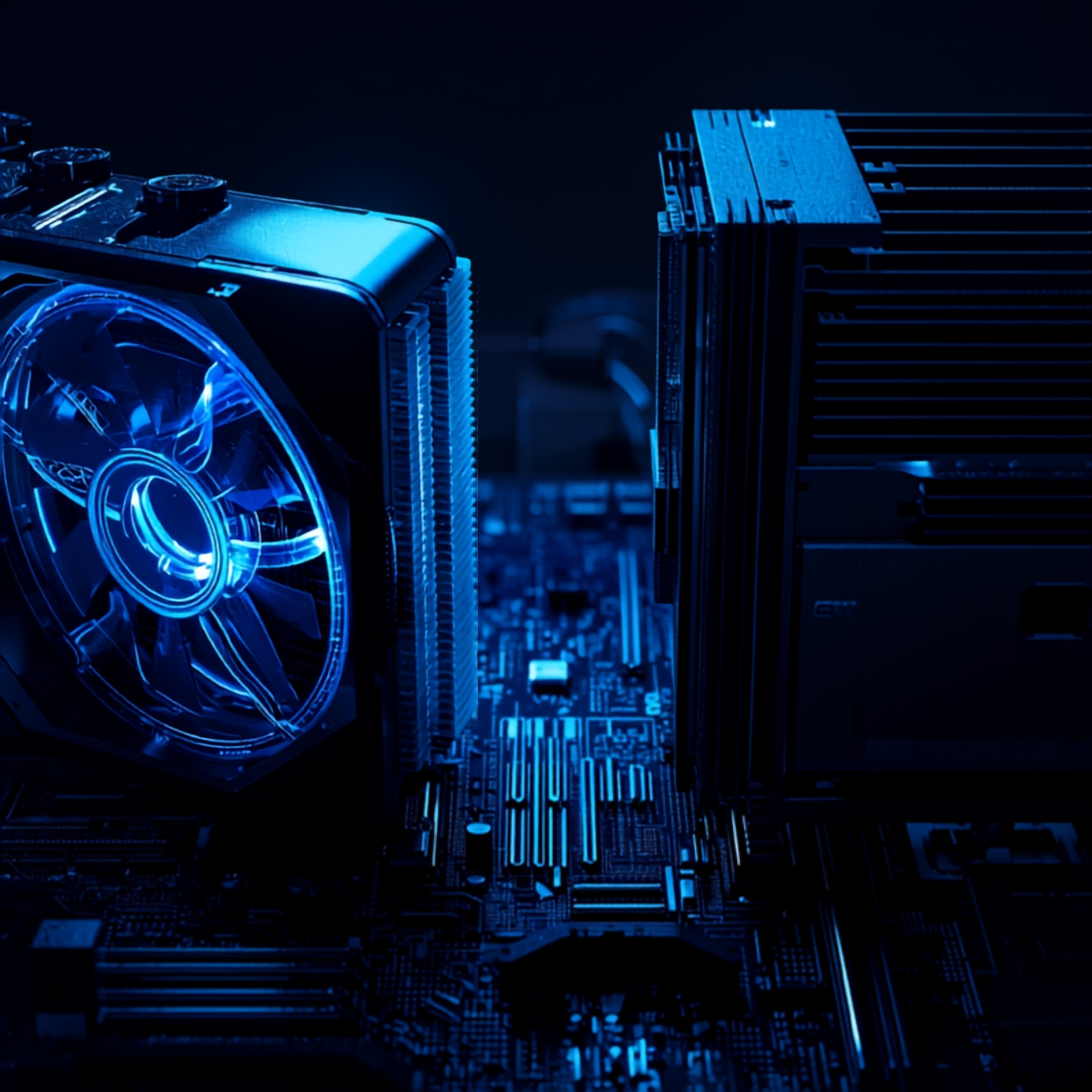
To keep your processor cool, two schools face off: the AIO liquid cooler (all-in-one kit with radiator and pump), praised for its performance and clean look, and the air cooler (large heatsink with fans), champion of reliability and simplicity. Depending on whether you overclock, chase silence or peace of mind, one stands out. Here, criterion by criterion and use case by use case, is how to decide.
At a glance: the match in one table
| Criterion | AIO liquid cooler (360 mm) | Air cooler |
|---|---|---|
| Indicative price | around €90 to €140 | around €90 to €110 |
| Performance | Excellent (ideal for high TDP/OC) | Very good (rivals a 240-280 AIO) |
| Noise | Good, but pump potentially audible | Often very quiet |
| Footprint | Frees the CPU area, radiator to fit | Bulky (RAM/GPU clearance) |
| Installation | More steps (radiator, pump, tubes) | Simple, one piece |
| Reliability / lifespan | Pump long-term, leak risk (rare) | No critical moving part, near-eternal |
| Ideal for | Overclocking, aesthetics, RGB | Reliability, silence, no maintenance |
Thermal performance
The AIO liquid cooler in 360 mm offers the best performance for dissipating heat from high-TDP or overclocked processors: the radiator’s large surface efficiently evacuates heat spikes. But beware, a good high-end air cooler (dual-tower type) rivals a 240-280 mm AIO and stays close to a 360 mm on many processors. To tame a very hungry or maxed-out CPU, the 360 AIO takes the edge; for a standard CPU, the air cooler is more than enough.

Noise and silence
An often-decisive point. The air cooler is frequently quieter at idle and under moderate load, since it relies only on its fans. The AIO liquid cooler adds a pump that can emit a slight hum, and its radiator fans sometimes ramp higher under load. Both can be very discreet with good fans, but for the pursuit of absolute silence, the air cooler has a slight edge.
Footprint and compatibility
The air cooler is bulky: you need to check clearance above the RAM and the case’s maximum height. The AIO liquid cooler frees the area around the socket (handy for RAM and access), but requires room to mount the radiator (top or front of the case). Depending on your case and components, one or the other will be easier to fit. Always check compatibility before buying.
Installation, reliability and lifespan
The air cooler is simpler to install (one piece to screw on) and above all rock-solid reliable: no pump or liquid, it can last decades with no maintenance. The AIO liquid cooler requires a few more steps (radiator, tubes, pump) and carries a pump that, in the very long term, can wear out; the leak risk exists but stays rare on quality kits. For peace of mind over time, the air cooler; for performance and looks, the AIO.
Aesthetics
This is often an argument in favor of the AIO: a discreet radiator, thin tubes and a pump sometimes lit in RGB offer a clean, modern look in a windowed case. The air cooler, more imposing, owns a rougher style (even if some models refine the finish). If your build’s aesthetics matter, the AIO scores points.
Price
The two categories overlap: an excellent air cooler costs around €90 to €110, a quality 360 mm AIO around €90 to €140. At comparable performance for a standard CPU, the air cooler is often the more economical and carefree; the AIO is justified for overclocking, aesthetics and very hot processors.
AIO liquid cooler — Pros / Cons
Pros:
- Best performance on high TDP / overclocking
- Frees the area around the socket
- Clean aesthetics, RGB
- Ideal for pushed builds
Cons:
- Pump potentially audible
- More complex installation
- Pump long-term, leak risk (rare)
Air cooler — Pros / Cons
Pros:
- Total reliability, near-eternal (no maintenance)
- Often quieter
- Simple installation, one piece
- Excellent value for money
Cons:
- Bulky (RAM clearance, case height)
- A notch behind a 360 AIO on very hot CPUs
- More imposing style
Verdict: which one should you choose?
- Choose a 360 mm AIO liquid cooler if you overclock, if you have a very hungry processor, and if you want a clean look with RGB.
- Go for an air cooler if you want absolute reliability with no maintenance, silence, simple installation, and excellent value for a standard CPU.
In short: to tame a maxed-out processor or for aesthetics, the AIO is ideal; for peace of mind, silence and longevity, the air cooler remains an unbeatable choice. Two excellent solutions, depending on your build and priorities.
Conclusion
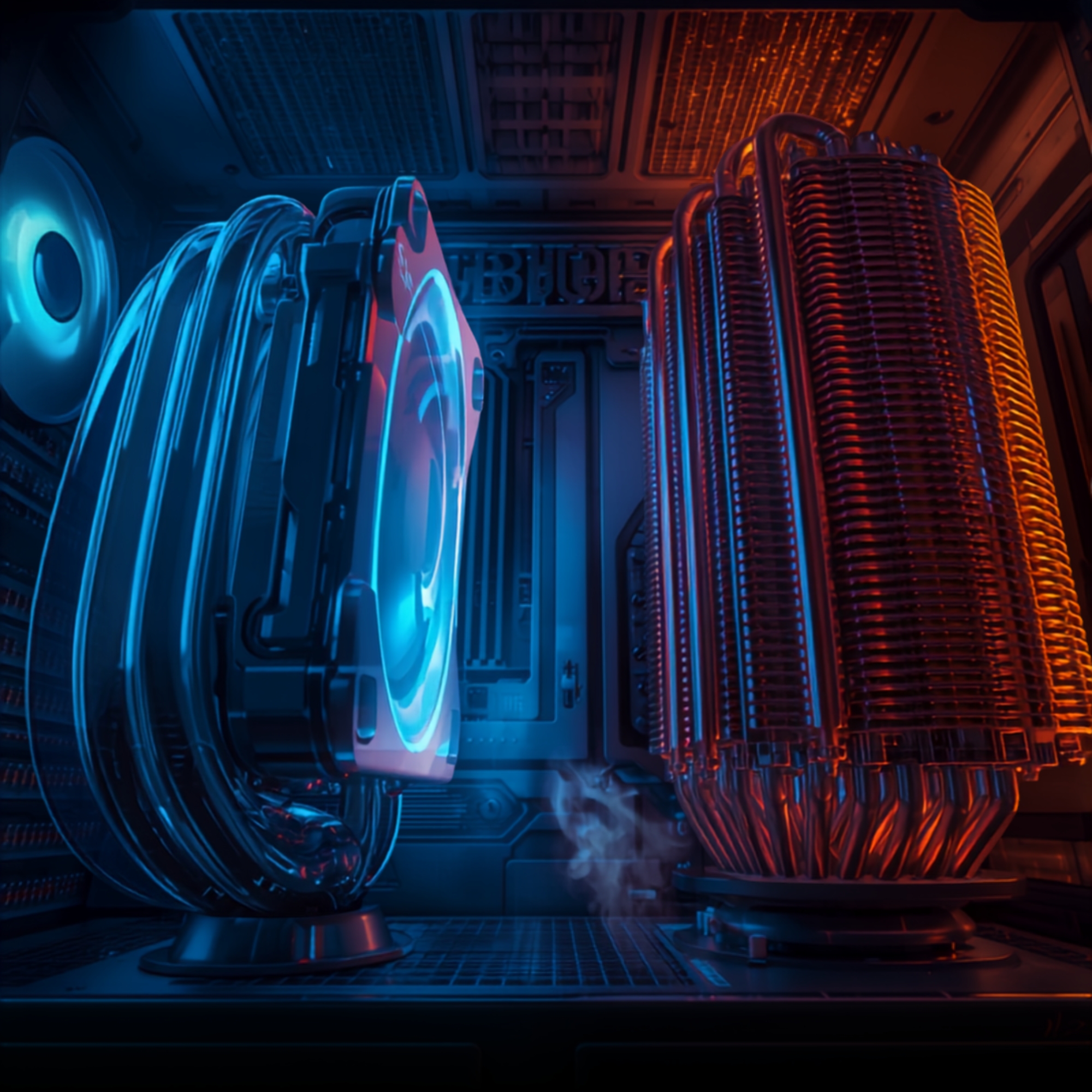
Performance and aesthetics on the AIO side, reliability and silence on the air-cooler side: the best cooling depends on your processor and priorities. Which would you install? Tell us in the comments and find our other component comparisons on Wanda-techs.
As an Amazon Associate, Wanda-techs earns from qualifying purchases. This affects neither our independent analysis nor the price you pay.
Share this content: