
This article contains affiliate links: if you buy through them, Wanda-techs earns a commission at no extra cost to you.
Which car jump starter should you choose for winter? For a standalone unit that is compact and well documented, our pick is the NOCO Genius Boost GB40.
To start the car and inflate tires with a single device, choose the WOLFBOX MegaVolt16 Air, with the VTOMAN VX1 as the other 2-in-1. No jump starter will save a faulty or completely dead battery: it only helps out a weak one.
Our picks at a glance
- NOCO Genius Boost GB40: for anyone who wants a standalone jump starter with a flashlight and a USB output, usable from -30 to +50 °C (-22 to 122 °F).
- WOLFBOX MegaVolt16 Air: for anyone who wants a 2-in-1 jump starter and tire inflator, tested in winter by GearLab, rated for up to 6 L diesel engines.
- VTOMAN VX1: another 2-in-1, rated for up to 6.0 L diesel engines, with a less powerful compressor.
We only include models whose specifications can be read on the manual or the maker’s page, or were measured by a reference test site. Gooloo jump starters are not among them. We could read neither their maker page nor their manual, and the listings contradict each other from one version to the next.
How to choose a car jump starter and a portable tire inflator
Peak current and engine size
Peak current is the maximum current the jump starter can deliver for a short moment, measured in amps (A). It ranges from 1,000 A for the NOCO GB40 to 2,500 A for the VTOMAN VX1 and 3,000 A for the WOLFBOX MegaVolt16 Air.
Each maker presents its figures in its own way. Compare them with caution.
The rated engine size says more. The WOLFBOX MegaVolt16 Air is rated for 8 L gas (petrol) and 6 L diesel engines, the VTOMAN VX1 for 8.5 L gas (petrol) and 6.0 L diesel. The NOCO GB40 manual gives no engine size.
Diesel or gas
A diesel engine needs more current to start. The German motoring club ADAC also points out that jump starters suit smaller engines better. For a big diesel, start from a model whose rated diesel engine size covers yours.
Protections
ADAC recommends a jump starter protected against reverse polarity, short circuits, deep discharge and overcharging, and protected against water splashes. Reverse polarity means connecting the red clamp to the negative terminal and the black one to the positive: it can damage the car’s electronics. Check these protections on the spec sheet before you buy.
Capacity and cold
The capacity of the internal battery is measured in watt-hours (Wh). The VTOMAN VX1 claims 66.6 Wh; the WOLFBOX MegaVolt16 Air claims 59.2 Wh, but GearLab measured only 51.3. Also look at the operating range: -30 to +50 °C for the GB40, -20 to 60 °C for the VX1.
The tire inflator
A built-in inflator is judged on its maximum pressure and on its automatic shutoff, which stops inflation at the set pressure. The MegaVolt16 Air goes up to 160 PSI, about 11 bar, and stops at the pressure you choose. The VX1 goes up to 100 PSI, about 6.9 bar; the spec sheet we read mentions neither airflow nor automatic shutoff.
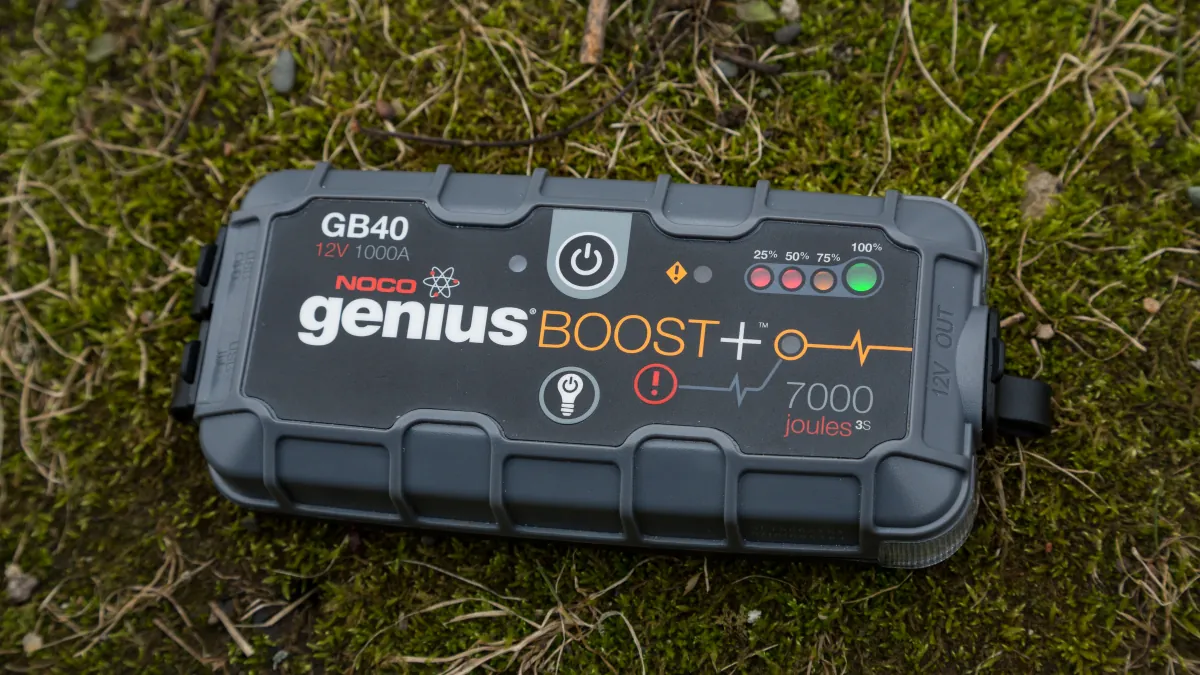
NOCO Genius Boost GB40: the compact standalone jump starter
The GB40 is a lithium-ion jump starter with 1,000 A of peak current, for 12 V lead-acid batteries only. It weighs 2.4 lb, about 1.1 kg, and is IP65 waterproof when its ports are closed. It works from -30 to +50 °C.
In daily use, it is handy. Four LEDs show the charge in 25% steps, an LED flashlight offers 7 modes and a USB output charges a phone. A red Error LED signals reverse polarity.
The GB40 detects a battery down to 2 V. Below that, Manual Override forces it on, but it switches off the spark-proof protection and the reverse polarity protection. Tip: keep this mode for cases where you know what you are doing, with the clamps held apart from each other.
On the downside, the manual gives no engine size, and recharging is by micro USB: 12 hours with a 0.5 A charger, 3 hours with a 2 A charger. It allows 5 consecutive starts within 15 minutes, then needs 15 minutes of rest. The manual mentions no inflator.
In the box: the jump starter, a micro USB cable, a 12 V USB charger, the X Connect HD clamps, the manual and the warranty.
If you are looking for a standalone jump starter, here is the NOCO GB40.
NOCO Boost GB40 jump starter, 1000 A
Compact lithium jump starter with a built-in LED light and a USB output. It works from -30 to +50 °C.
- AmazonSee at Amazon
WOLFBOX MegaVolt16 Air: the 2-in-1 tested in winter
The MegaVolt16 Air combines a 3,000 A jump starter and a 160 PSI inflator with automatic shutoff. It is rated for 8 L gas (petrol) and 6 L diesel engines. Our figures come from the GearLab test: the maker’s page could not be read.
The test ranks it 4th out of 13, with a score of 77 out of 100. It passed 3 rapid starts in a row, started a V6 SUV at 33 °F, about 0.5 °C, and started a 2010 Ford Explorer three times in winter. As for the inflator, it added 5 PSI, about 0.34 bar, to the tires of an F-150 pickup in about 3 minutes.
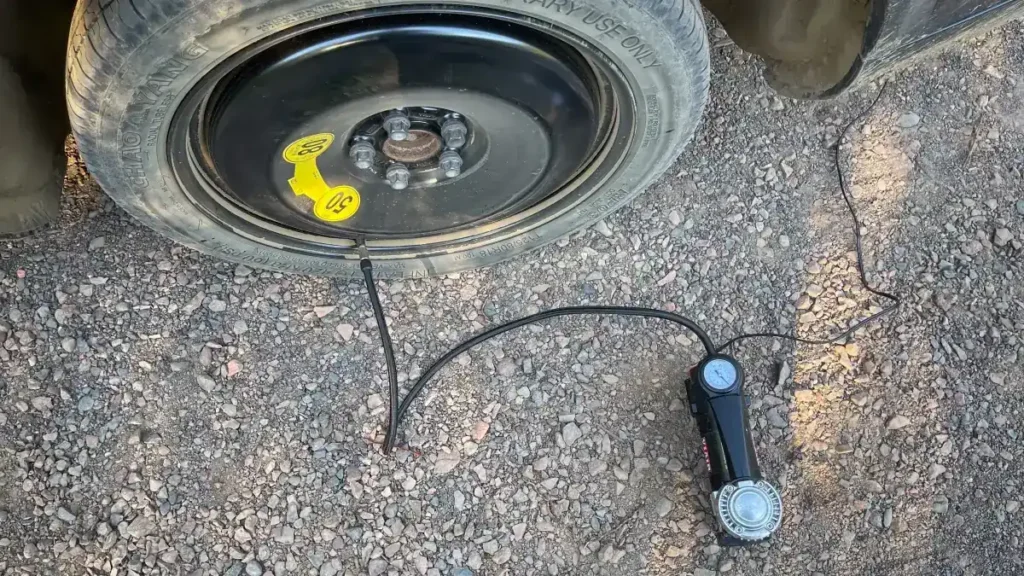
It recharges over USB-C at 65 W, in 1.3 hours in the test, and also has a USB-A output. It weighs 2.4 kg, more than twice as much as the GB40.
Its drawbacks, noted by GearLab: an LCD that shows little information, a boost button on the cable plug, a short air hose and stubby clamps. The measured capacity, 51.3 Wh, falls short of the 59.2 Wh claimed.
To start and inflate with a single device, here is the MegaVolt16 Air.
WOLFBOX MegaVolt16 Air jump starter and air compressor, 3000 A, 160 PSI
Jump-starts a car with a flat battery and inflates tyres with a single device. The compressor stops at the pressure you set.
- AmazonSee at Amazon
VTOMAN VX1: the other 2-in-1, on the maker’s word
The VX1 pairs a 2,500 A jump starter with a 100 PSI inflator and a 66.6 Wh battery. It is rated for 8.5 L gas (petrol) and 6.0 L diesel engines, and works from -20 to 60 °C. Its claimed capacity is higher than the 59.2 Wh claimed for the MegaVolt16 Air.
Its main drawback is the sources: we only have the maker’s spec sheet, with no independent test. Its inflator tops out at 100 PSI, against 160 PSI for the MegaVolt16 Air. The spec sheet says nothing about airflow or automatic shutoff: check both before you buy.
Comparison table
| Model | Peak current | Rated diesel engine size | Inflator | Operating range | Who it suits |
|---|---|---|---|---|---|
| NOCO Genius Boost GB40 | 1,000 A | not stated | no | -30 to +50 °C | a compact standalone jump starter |
| WOLFBOX MegaVolt16 Air | 3,000 A | 6 L | 160 PSI, auto shutoff | not verified | a tested 2-in-1 |
| VTOMAN VX1 | 2,500 A | 6.0 L | 100 PSI | -20 to 60 °C | a 2-in-1 with a big battery |
Table sources: NOCO manual, GearLab test and VTOMAN spec sheet.
Here are the two models from our picks that we were able to compare in stores.
- NOCO Boost GB40 jump starter, 1000 ACompact lithium jump starter with a built-in LED light and a USB output. It works from -30 to +50 °C.AmazonSee at Amazon
- WOLFBOX MegaVolt16 Air jump starter and air compressor, 3000 A, 160 PSIJump-starts a car with a flat battery and inflates tyres with a single device. The compressor stops at the pressure you set.AmazonSee at Amazon
Using it in winter
Warning: switch off the ignition; do not work on airbags, seatbelt pretensioners or the high-voltage system of a hybrid or electric vehicle; a red warning light means the vehicle must stop; this procedure does not replace a diagnosis in a workshop.
Warning: never puncture, bend or heat a lithium battery; a swollen battery can no longer be recharged and must be taken to a collection point; work on a non-flammable surface. Do not recharge the jump starter while it is starting a car.
Warning: unplug the device from the mains before opening it; never work on a device that is plugged in; the capacitors of some devices (TVs, microwaves, power supplies) stay charged after unplugging: do not touch them. In Manual Override mode, clamps that touch each other produce sparks.
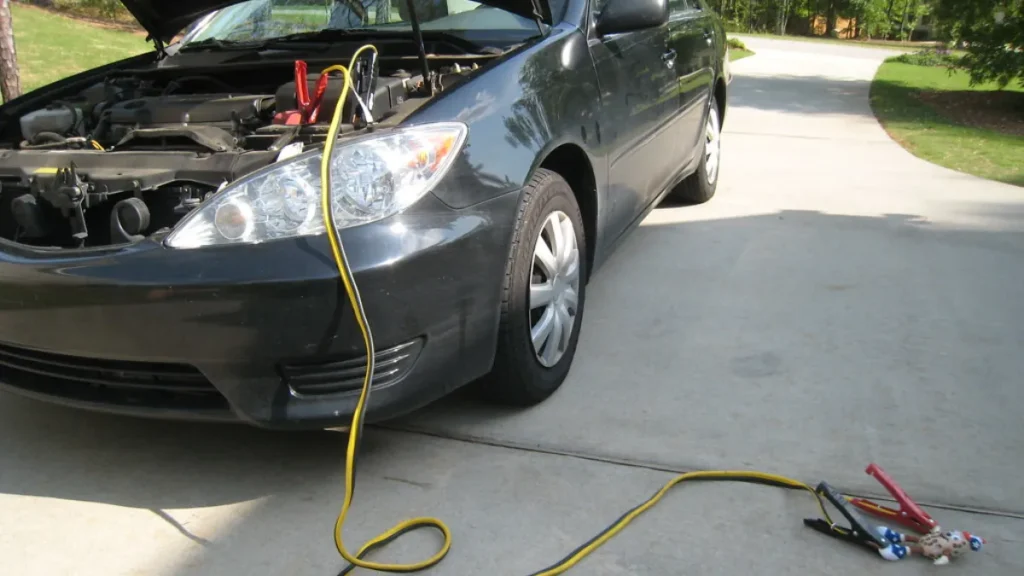
Read your car’s manual first: it gives the precautions for jump starting. The procedure below is the one from the NOCO GB40 manual.
- Check that the car’s battery is a 12 V lead-acid battery.
- Connect the red clamp to the + terminal of the battery.
- Connect the black clamp to the – terminal or to the vehicle’s chassis.
- Plug the X Connect connector into the jump starter.
- Switch off everything electrical in the car: headlights, heater, radio.
- Press Power: the white Boost LED should light up.
- Start the car. Some vehicles need up to 30 seconds of connection; if it does not start, wait 20 to 30 seconds before trying again.
- Disconnect in reverse order, starting with the black clamp.
If the red Error LED stays on, the clamps are reversed; if it blinks, the jump starter’s battery is too hot and must cool down.
On the black clamp, the sources differ. The GB40 manual accepts the – terminal or the chassis, whereas ADAC, for jump starting with cables, recommends a ground point or bare metal on the engine, not the – terminal of the dead battery. On a car with start-stop, the black clamp goes to the ground point in the engine bay, which protects the battery sensor: your car’s manual has the final say.
After about 3 failed attempts, call a professional. Once the car is running again, have the battery and the alternator checked. An electric car can generally receive a jump, but not give one.
Cold and storage
Cold weakens lithium jump starters. In an ADAC test published in 2016 on older models, no jump starter met its rated figure at -18 °C, and only one did at 0 °C; moderate warming gave most of their strength back. So keep the jump starter at room temperature, or warm it gently before use.
Avoid repeated attempts: each failed try heats the internal battery. For the GB40, the manual gives a storage range of -20 to +50 °C, at average temperature, and charging between 0 and +40 °C.
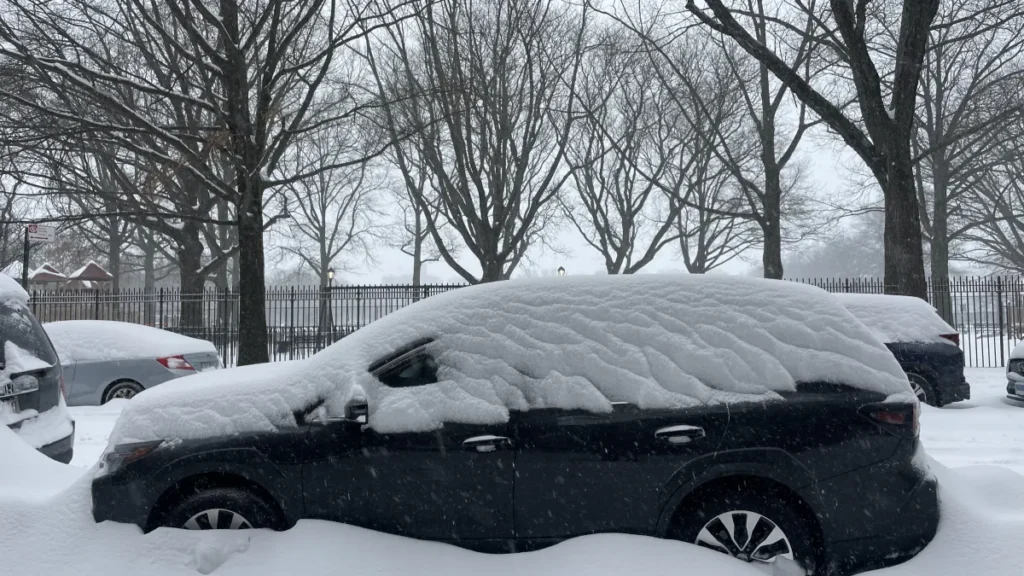
Good to know: we found no official source that sets a recharge interval during storage. Check the charge LEDs before every winter departure.
Before winter, the French Ministry of Ecological Transition also advises checking the battery, the lights, the heating, then tire pressure and condition. It recommends carrying a high-visibility vest, a warning triangle, snow chains or snow socks, a scraper, a charged phone with its charger, water, food and a blanket.
Buying at the right time
Prices change by the hour during sales: the offer table under each model shows the current offer. Before you confirm, check the exact model number, the contents of the box and the list of protections.
Good to know: the NOCO manual lists a micro USB cable with the GB40. If a sales listing mentions a different cable, trust the manual.
Recharge the jump starter as soon as you receive it: a GB40 recharges in 3 hours with a 2 A charger. To judge a discount, follow our method for checking a crossed-out price on Black Friday. The other categories to watch are gathered in our guide to Black Friday 2026 tech deals.
If your car already refuses to start, begin with our guide flat car battery: what to do to restart.
Complete your winter kit: our toolbox
These accessories complete a jump starter for safer roadside help in cold weather.
- GYS 1000 A jumper cables, 50 mm², 4.5 m, brass clampsHeavy-gauge cables for jump-starting from another vehicle. Their 4.5 m length makes it easier to reach the battery.AmazonSee at Amazon
- Mechanix Wear Original Covert mechanic glovesClose-fitting work gloves that protect the hands when working under the bonnet. They keep a good grip on tools and clamps.AmazonSee at Amazon
- NOCO Boost GB40 jump starter, 1000 ACompact lithium jump starter with a built-in LED light and a USB output. It works from -30 to +50 °C.AmazonSee at Amazon
Frequently asked questions
Which jump starter should I get for a diesel car?
Choose a jump starter whose rated diesel engine size covers your engine, because a diesel needs more current to start. The WOLFBOX MegaVolt16 Air is rated for up to 6 L diesel engines, the VTOMAN VX1 for up to 6.0 L. The NOCO GB40 manual gives no engine size.
How do you use a car jump starter?
Connect the red clamp to the + terminal and the black clamp to the – terminal or the chassis, as your car’s manual says, then switch the jump starter on. On the NOCO GB40, press Power and wait for the white Boost LED before starting. Then disconnect in reverse order, black clamp first.
Can a jump starter damage the car?
Yes, if it is connected wrongly: reverse polarity can damage the electronics. Choose a model protected against reverse polarity and short circuits. On a start-stop car, connect the black clamp to the ground point in the engine bay to protect the battery sensor.
Which portable inflator should I use to top up my tires?
In our selection, the WOLFBOX MegaVolt16 Air has the most powerful inflator, 160 PSI, with automatic shutoff at the set pressure. GearLab saw it add 5 PSI to a pickup’s tires in about 3 minutes. The VTOMAN VX1 goes up to 100 PSI.
Photo credits: NOCO Genius Boost GB40 – Car Battery Booster Jump Starter (27189494027) by Tony Webster from Minneapolis, Minnesota, United States, licence CC BY 2.0; Buddy McNutty, can you help me jumpstart my car? by Doug Waldron, licence CC BY-SA 2.0; Inflating Temporary Spare – Tire Inflator – Air Compressor (54122728542) by Tony Webster, licence CC BY 2.0; Car covered snow January 2026 by Wil540 art, licence CC BY 4.0
Share this content: