LG OLED C5 vs. Samsung Neo QLED QN90F: Which TV to choose in 2026?
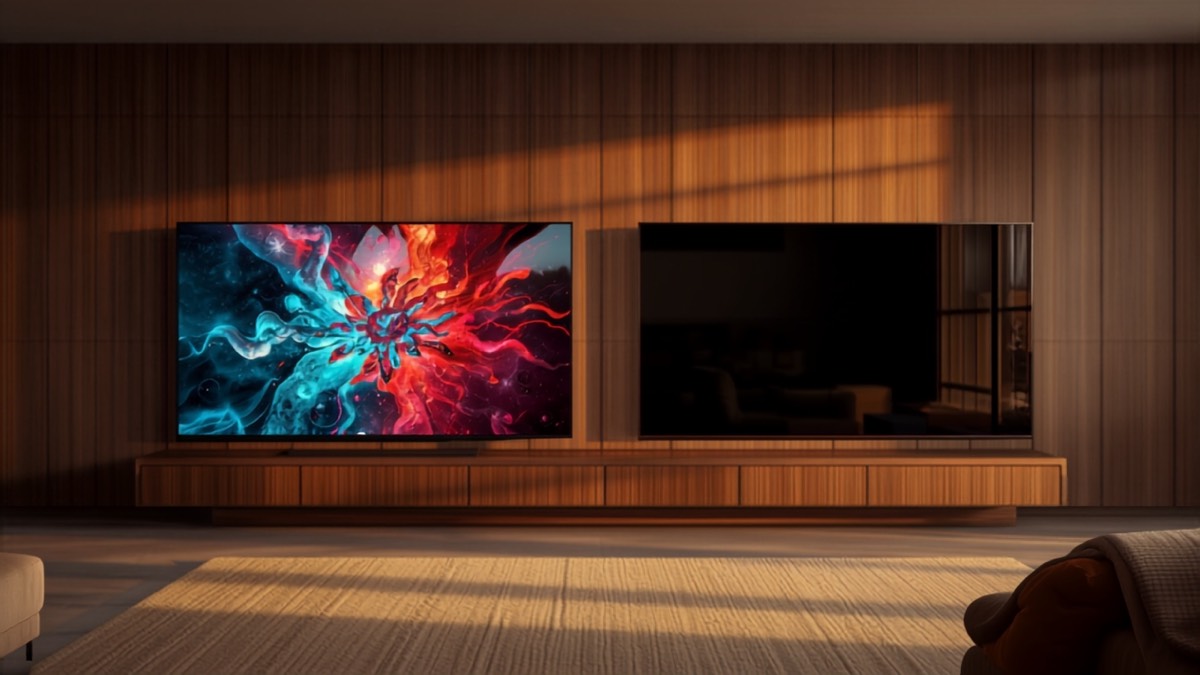
This is the ultimate TV showdown: on one side, the LG OLED C5, an OLED panel with perfect blacks and infinite contrast, a benchmark for home cinema; on the other, the Samsung Neo QLED QN90F, a Mini LED TV that crushes the competition in brightness and shines in well-lit rooms. OLED versus QLED, cinema in the dark versus a bright TV in broad daylight: everything depends on your living room and how you use your TV. Here is how to make the right choice, criterion by criterion and use case by use case.
In a nutshell: the match at a glance
| Criterion | LG OLED C5 | Samsung Neo QLED QN90F |
|---|---|---|
| Indicative price (55″) | Around €949 | Around €1,099 |
| Technology | OLED (self-emissive) | Mini LED + Quantum Dots |
| Blacks / Contrast | Perfect, infinite contrast | Excellent (Mini LED) |
| Brightness | Good (Brightness Booster) | Extreme (ideal for bright rooms) |
| HDR | Dolby Vision + HDR10 | HDR10+ (no Dolby Vision) |
| Gaming | 120 Hz, VRR up to 144 Hz, G-Sync | High brightness, low latency |
| Key strength | Contrast + cinema + Dolby Vision | Brightness + bright rooms + anti-reflection |
Contrast and picture quality: OLED takes the lead
The LG OLED C5 uses an OLED panel where each pixel lights up independently. The result is perfect blacks and infinite contrast, making every detail in dark scenes stand out. For watching movies in a dimly lit room, it simply delivers the best picture, with accurate colors and Dolby Vision support as an added bonus.
The Samsung QN90F offers excellent contrast thanks to its finely controlled Mini LED backlighting, but its blacks, although very deep, cannot match the perfection of OLED. For watching movies in a dark room, LG clearly wins.
Brightness and bright rooms: Samsung strikes back
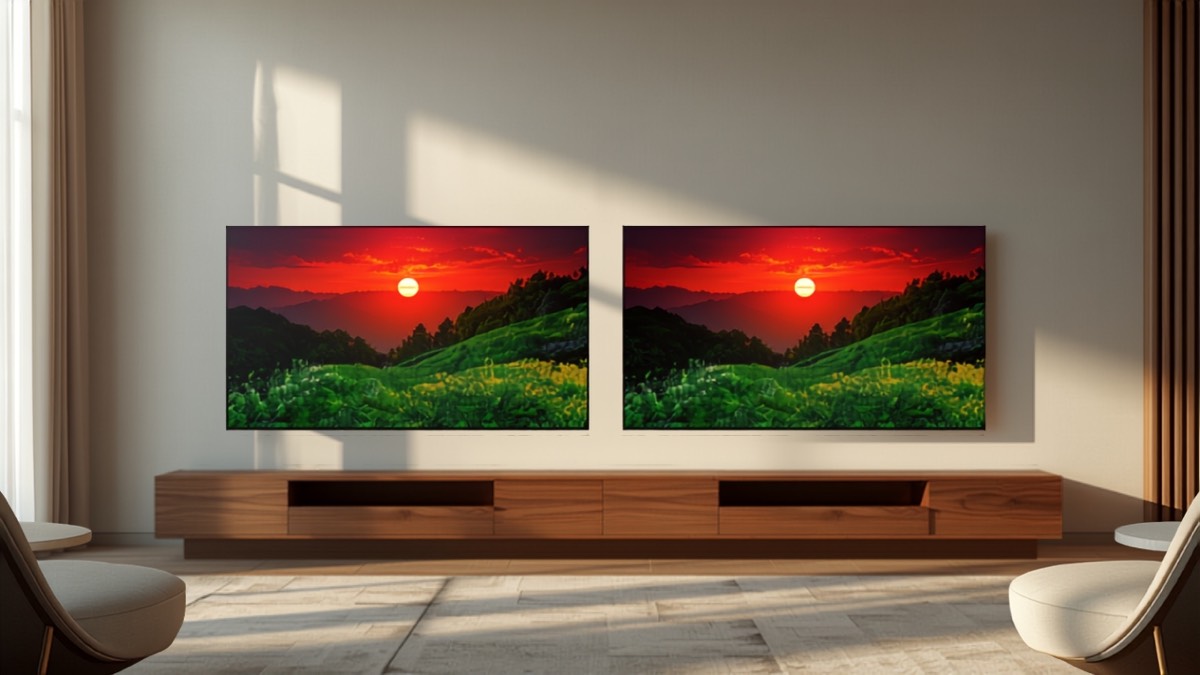
This is where the Samsung QN90F shines. Its Mini LED technology delivers extreme brightness, while its anti-reflection treatment keeps the picture vivid even in broad daylight or in a very bright living room.
The LG C5 has made significant progress with its Brightness Booster technology, but OLED still cannot compete with the sheer light output of a good Mini LED TV. If your TV is placed opposite a window, or if you watch a lot of sports or daytime content, Samsung is the better choice.
Colors and HDR
Both TVs deliver stunning colors. The Samsung QN90F relies on Quantum Dots for a high “color volume,” meaning it can maintain vivid colors even at high brightness levels.
The LG C5 responds with reference-level color accuracy and, above all, Dolby Vision support, which is absent from Samsung TVs, as Samsung instead focuses on HDR10+.
If your content on Netflix, Disney+, or Apple TV is available in Dolby Vision, the LG can make better use of it. For sheer brightness and visual impact, however, Samsung remains unbeatable.
Gaming
Both are excellent gaming TVs.
The LG OLED C5 offers 120 Hz with VRR up to 144 Hz, Dolby Vision Gaming, ALLM, FreeSync, and NVIDIA G-Sync, all combined with very low input latency and OLED’s unmatched picture quality.
The Samsung QN90F also offers an excellent gaming mode, a high refresh rate, and, above all, brightness that works wonders in a well-lit room.
For the best gaming picture in a dark room, choose LG. For gaming in broad daylight, Samsung has the advantage.
Burn-in risk and durability
One important point to keep in mind: OLED panels have a theoretical risk of burn-in when static images are displayed for very long periods, although modern protection systems make this risk very low under normal use.
QLED/Mini LED technology does not have this type of risk. If you use your TV for many hours with static logos, such as news channels, or games with a permanent HUD, Samsung offers greater peace of mind over the long term.
Price and availability
In the 55-inch size, the LG OLED C5 starts at around €949, which is an aggressive price for a high-end OLED TV, while the Samsung QN90F is priced at around €1,099.
With a similar budget, the choice therefore comes down to the technology and your room rather than price alone.
See the price of the LG OLED C5 on Amazon
See the price of the Samsung Neo QLED QN90F on Amazon
LG OLED C5 — Pros / Cons
Pros:
- Perfect blacks and infinite contrast
- Best picture quality in a dark room for movies
- Dolby Vision + 144 Hz gaming, G-Sync
- Excellent value for money among OLED TVs
Cons:
- Less bright than a good Mini LED TV
- Theoretical burn-in risk with prolonged static content
Samsung Neo QLED QN90F — Pros / Cons
Pros:
- Extreme brightness, perfect for bright rooms
- Effective anti-reflection treatment, ideal for sports and daytime viewing
- Vivid colors thanks to Quantum Dots, with no burn-in risk
- Excellent gaming mode
Cons:
- Blacks and contrast fall behind OLED
- No Dolby Vision (HDR10+ only)
- Often slightly more expensive
Verdict: which one should you choose?
Choose the LG OLED C5 if you mainly watch movies in a dimly lit room, want the best possible picture quality, Dolby Vision, and cutting-edge OLED gaming performance.
Go for the Samsung Neo QLED QN90F if your living room is bright, you watch a lot of sports or daytime content, and you want maximum brightness without any risk of burn-in.
In short: for a dark room and movie enthusiasts, the OLED C5 is unbeatable; for bright rooms and sports, the Neo QLED QN90F rules. Both are excellent TVs — your living room is what ultimately decides the winner.
See the price of the LG OLED C5 on Amazon
See the price of the Samsung Neo QLED QN90F on Amazon
Conclusion
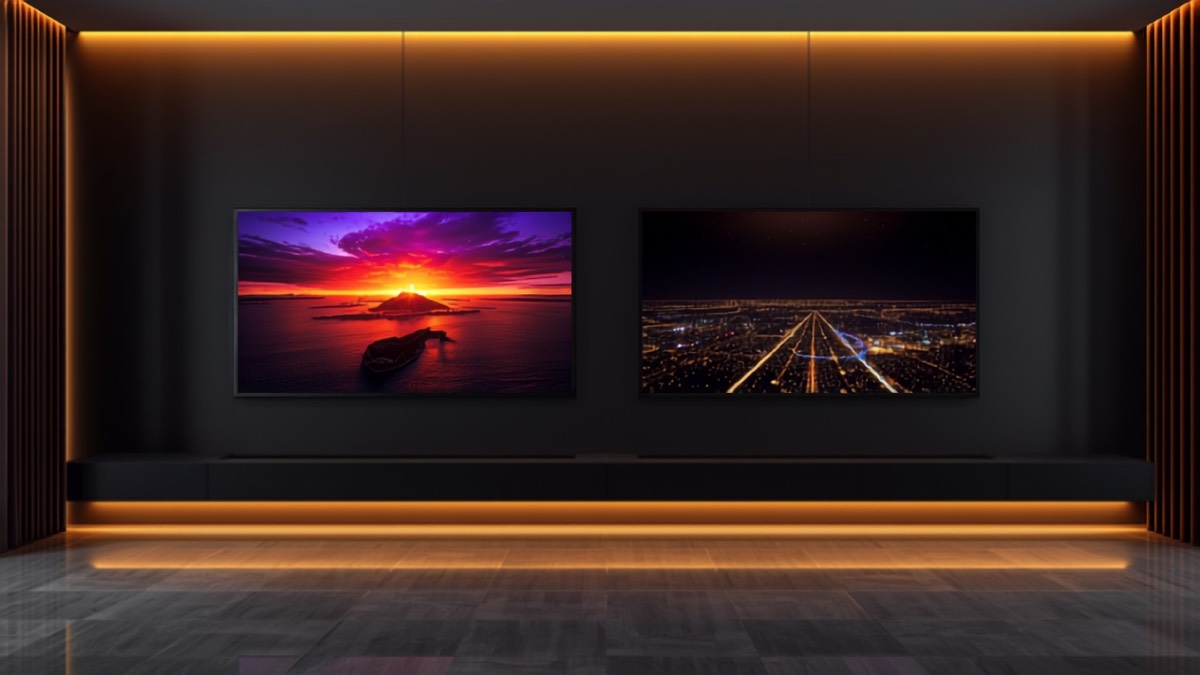
LG delivers superior contrast and a true cinema experience, while Samsung focuses on brightness and versatility. Ultimately, the best TV depends mainly on your room.
Which one would you choose for your living room? Let us know in the comments and check out our other comparisons on Wanda-techs.
As an Amazon Associate, Wanda-techs earns from qualifying purchases. This does not affect our independent analysis or the price you pay.
Bien sûr. Voici la traduction complète en anglais, en conservant la structure et le style comparatif de l’article.
This is the ultimate TV showdown: on one side, the LG OLED C5, an OLED panel with perfect blacks and infinite contrast, a benchmark for home cinema; on the other, the Samsung Neo QLED QN90F, a Mini LED TV that crushes the competition in brightness and shines in well-lit rooms. OLED versus QLED, cinema in the dark versus a bright TV in broad daylight: everything depends on your living room and how you use your TV. Here is how to make the right choice, criterion by criterion and use case by use case.
In a nutshell: the match at a glance
| Criterion | LG OLED C5 | Samsung Neo QLED QN90F |
|---|---|---|
| Indicative price (55″) | Around €949 | Around €1,099 |
| Technology | OLED (self-emissive) | Mini LED + Quantum Dots |
| Blacks / Contrast | Perfect, infinite contrast | Excellent (Mini LED) |
| Brightness | Good (Brightness Booster) | Extreme (ideal for bright rooms) |
| HDR | Dolby Vision + HDR10 | HDR10+ (no Dolby Vision) |
| Gaming | 120 Hz, VRR up to 144 Hz, G-Sync | High brightness, low latency |
| Key strength | Contrast + cinema + Dolby Vision | Brightness + bright rooms + anti-reflection |
Contrast and picture quality: OLED takes the lead
The LG OLED C5 uses an OLED panel where each pixel lights up independently. The result is perfect blacks and infinite contrast, making every detail in dark scenes stand out. For watching movies in a dimly lit room, it simply delivers the best picture, with accurate colors and Dolby Vision support as an added bonus.
The Samsung QN90F offers excellent contrast thanks to its finely controlled Mini LED backlighting, but its blacks, although very deep, cannot match the perfection of OLED. For watching movies in a dark room, LG clearly wins.
Brightness and bright rooms: Samsung strikes back
This is where the Samsung QN90F shines. Its Mini LED technology delivers extreme brightness, while its anti-reflection treatment keeps the picture vivid even in broad daylight or in a very bright living room.
The LG C5 has made significant progress with its Brightness Booster technology, but OLED still cannot compete with the sheer light output of a good Mini LED TV. If your TV is placed opposite a window, or if you watch a lot of sports or daytime content, Samsung is the better choice.
Colors and HDR
Both TVs deliver stunning colors. The Samsung QN90F relies on Quantum Dots for a high “color volume,” meaning it can maintain vivid colors even at high brightness levels.
The LG C5 responds with reference-level color accuracy and, above all, Dolby Vision support, which is absent from Samsung TVs, as Samsung instead focuses on HDR10+.
If your content on Netflix, Disney+, or Apple TV is available in Dolby Vision, the LG can make better use of it. For sheer brightness and visual impact, however, Samsung remains unbeatable.
Gaming
Both are excellent gaming TVs.
The LG OLED C5 offers 120 Hz with VRR up to 144 Hz, Dolby Vision Gaming, ALLM, FreeSync, and NVIDIA G-Sync, all combined with very low input latency and OLED’s unmatched picture quality.
The Samsung QN90F also offers an excellent gaming mode, a high refresh rate, and, above all, brightness that works wonders in a well-lit room.
For the best gaming picture in a dark room, choose LG. For gaming in broad daylight, Samsung has the advantage.
Burn-in risk and durability
One important point to keep in mind: OLED panels have a theoretical risk of burn-in when static images are displayed for very long periods, although modern protection systems make this risk very low under normal use.
QLED/Mini LED technology does not have this type of risk. If you use your TV for many hours with static logos, such as news channels, or games with a permanent HUD, Samsung offers greater peace of mind over the long term.
Price and availability
In the 55-inch size, the LG OLED C5 starts at around €949, which is an aggressive price for a high-end OLED TV, while the Samsung QN90F is priced at around €1,099.
With a similar budget, the choice therefore comes down to the technology and your room rather than price alone.
See the price of the LG OLED C5 on Amazon
See the price of the Samsung Neo QLED QN90F on Amazon
LG OLED C5 — Pros / Cons
Pros:
- Perfect blacks and infinite contrast
- Best picture quality in a dark room for movies
- Dolby Vision + 144 Hz gaming, G-Sync
- Excellent value for money among OLED TVs
Cons:
- Less bright than a good Mini LED TV
- Theoretical burn-in risk with prolonged static content
Samsung Neo QLED QN90F — Pros / Cons
Pros:
- Extreme brightness, perfect for bright rooms
- Effective anti-reflection treatment, ideal for sports and daytime viewing
- Vivid colors thanks to Quantum Dots, with no burn-in risk
- Excellent gaming mode
Cons:
- Blacks and contrast fall behind OLED
- No Dolby Vision (HDR10+ only)
- Often slightly more expensive
Verdict: which one should you choose?
Choose the LG OLED C5 if you mainly watch movies in a dimly lit room, want the best possible picture quality, Dolby Vision, and cutting-edge OLED gaming performance.
Go for the Samsung Neo QLED QN90F if your living room is bright, you watch a lot of sports or daytime content, and you want maximum brightness without any risk of burn-in.
In short: for a dark room and movie enthusiasts, the OLED C5 is unbeatable; for bright rooms and sports, the Neo QLED QN90F rules. Both are excellent TVs — your living room is what ultimately decides the winner.
See the price of the LG OLED C5 on Amazon
See the price of the Samsung Neo QLED QN90F on Amazon
Conclusion
LG delivers superior contrast and a true cinema experience, while Samsung focuses on brightness and versatility. Ultimately, the best TV depends mainly on your room.
Which one would you choose for your living room? Let us know in the comments and check out our other comparisons on Wanda-techs.
As an Amazon Associate, Wanda-techs earns from qualifying purchases. This does not affect our independent analysis or the price you pay.
Share this content:





Post Comment