
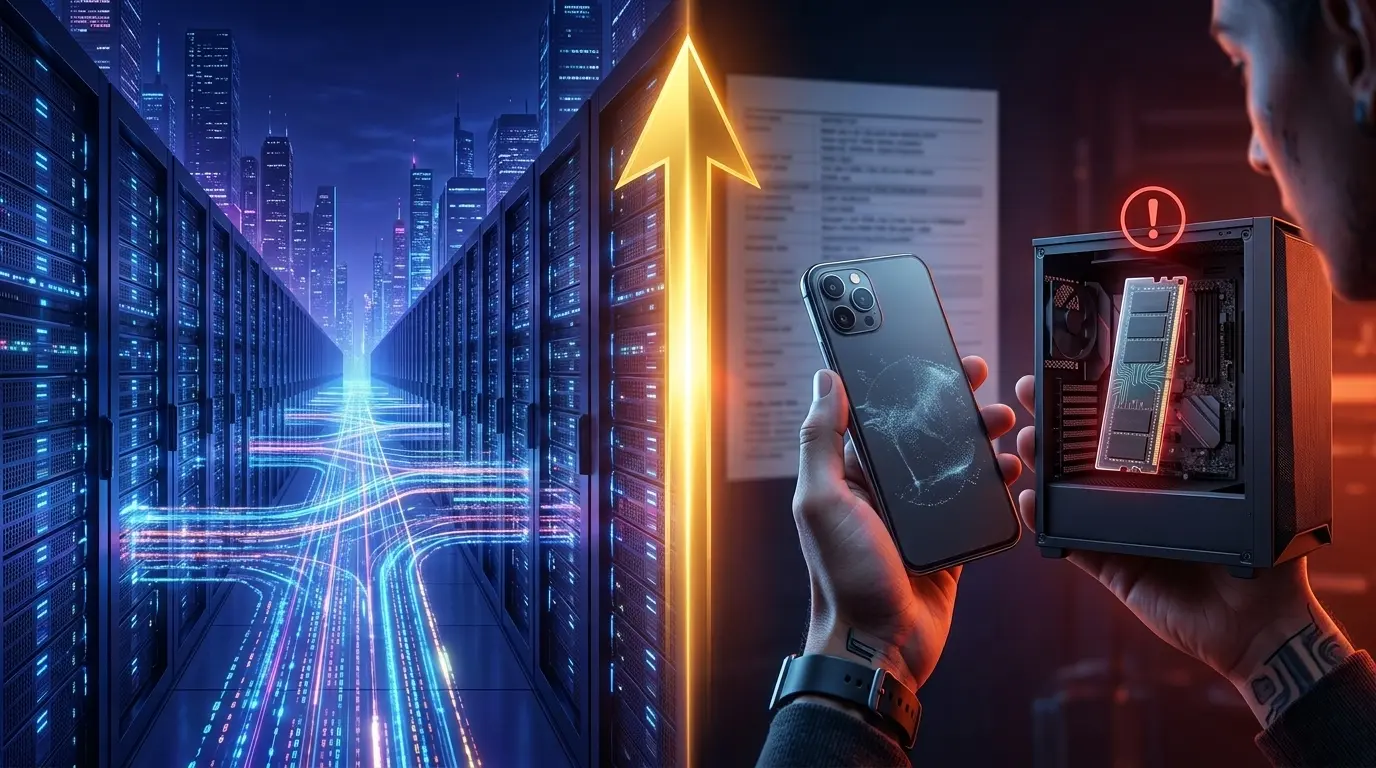
RAM prices have become, in 2026, the single most decisive factor in the cost of a computer or a smartphone. In just a few quarters, memory has gone from being a mundane component to a scarce commodity, fought over at premium rates by the giants of artificial intelligence. The consequences are now visible on every shelf: memory configurations revised downwards, storage tiers dropped, price increases. Here are the explanations, with the figures to back them up.
Price increases without precedent in years
Let us start with the figures, because they speak for themselves. According to Taiwanese analyst firm TrendForce, a reference in the sector, DRAM industry revenue jumped 81% in a single quarter in the first quarter of 2026, driven almost entirely by soaring contract prices.
The movement continued afterwards. In the mobile segment, the average selling price of LPDDR5X solutions — the memory found in high-end smartphones — climbed 78 to 83% in the second quarter of 2026, again quarter on quarter.
For the current third quarter, TrendForce anticipates a more moderate rise of around 13 to 18%. The deceleration is real, but it must be read correctly: it applies to an already very high base. The firm attributes this slowdown to a worrying phenomenon — customers from consumer markets, PCs and smartphones chief among them, are simply reaching the limit of what they can afford.

A technical term, briefly explained
DRAM (Dynamic Random Access Memory) is your device’s working memory, holding the data currently in use. LPDDR5X is its low-power variant intended for mobiles. HBM (High Bandwidth Memory) is a stacked, very-high-bandwidth variant essential to artificial intelligence accelerators. All of them come out of the same factories, and that is precisely the heart of the problem.
The cause: artificial intelligence has emptied the factories
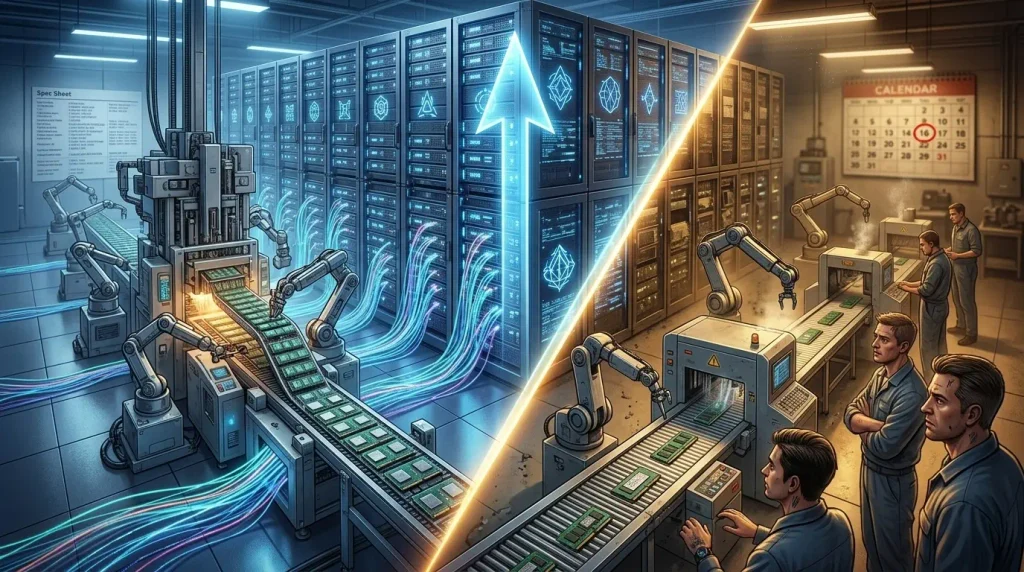
The mechanism is simple to grasp. Memory manufacturers have finite production capacity. Faced with explosive demand from data centres dedicated to artificial intelligence, they redirect that capacity towards HBM and server DRAM, where margins are considerably higher.
Hyperscalers — the large cloud providers — also hold two decisive advantages over a PC buyer. They agree to pay far more, and they lock in supply much further in advance. A memory manufacturer has no economic reason to favour the consumer market over them.
The result: what is left for the DDR5 modules in your gaming tower or for your phone’s memory is both scarcer and more expensive.
And the calendar offers little comfort. TrendForce estimates that significant capacity expansion is unlikely before late 2027, or even 2028. Micron, one of the sector’s three global players, expects supply and demand conditions for both DRAM and NAND flash to remain tight beyond calendar 2026.
The concrete effects on the products you buy
This is where the crisis stops being a market abstraction and becomes a shelf reality.
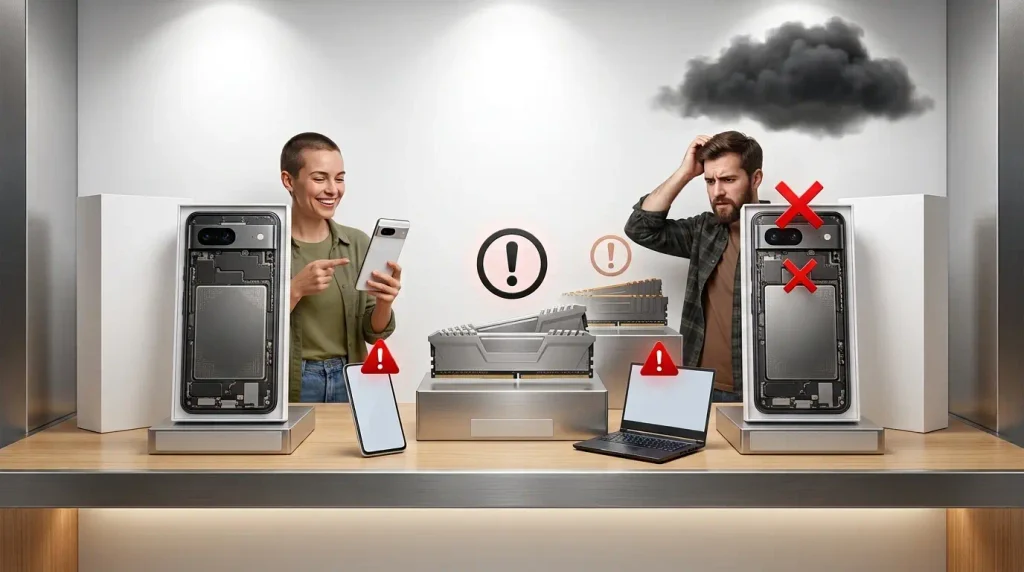
On smartphones. The case of the Google Pixel 11 Pro, which went on sale this week, is especially telling. Google held its French prices at equivalent storage, but made two quiet adjustments: dropping the 128 GB tier on the Pixel 11 and Pixel 11 Pro, and moving the base Pro model from 16 GB to 12 GB of RAM, whereas every Pixel 10 Pro variant carried 16 GB. The Pro XL and Pro Fold models, meanwhile, rise by 100 euros. The English-language specialist press has found a word for this period: RAMageddon.
On desktop PCs. The picture is starker still, because the component is bought separately. A Corsair Vengeance DDR5 32 GB kit clocked at 6,000 MHz is selling for around 339.99 euros on Amazon in August 2026. Not long ago, that figure was associated with high-performance 64 GB kits.
On consoles and laptops. The whole market is affected, since all these products draw on the same memory pool.
What you can actually do
There is no miracle solution to a supply crisis. There are, however, decisions that are more rational than others.
- Size for what you need, not for headroom. The old reflex of buying double the memory just in case is expensive today. For office and multimedia use, 16 GB remains perfectly comfortable. For gaming and creative work, 32 GB is the sweet spot in 2026.
- Check before you replace. If your current machine is simply slow, memory is not always the culprit. Swapping a mechanical hard drive for an SSD, or trimming your startup programs, often delivers a sharper gain for a fraction of the cost.
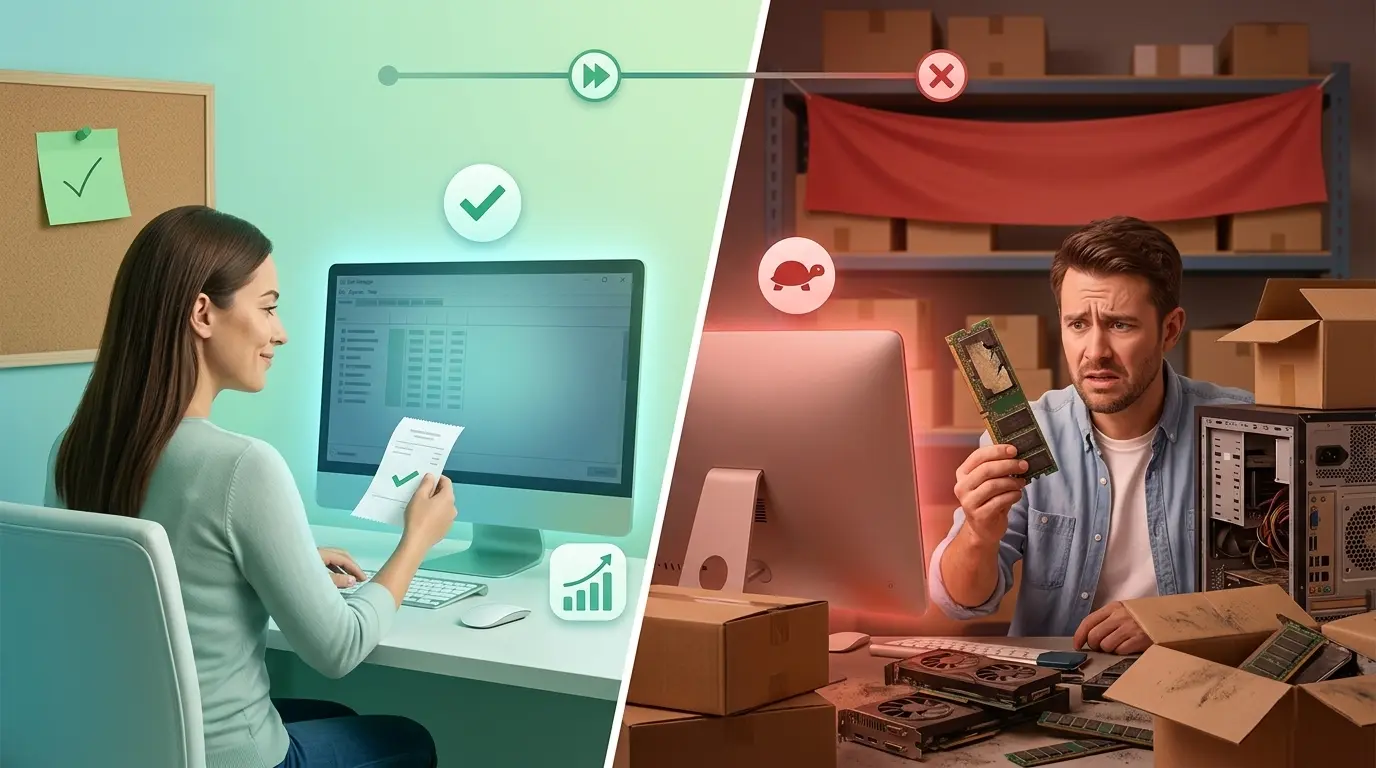
- Beware the false bargain. Shortages bring out refurbished modules sold as new and parts of dubious origin. Buy from an established retailer and keep your receipt.
- Do not put it off indefinitely. This is the least comfortable advice, but forecasts point to no relief before late 2027 at the earliest. If your machine can no longer keep up with your work, waiting two years carries a cost of its own.
Check the Corsair Vengeance DDR5 32 GB kit price on Amazon
As an Amazon Associate, Wanda-techs earns from qualifying purchases. This affects neither our independent analysis nor the price you pay.
How to check your machine’s memory
Before buying anything, take thirty seconds to find out what you actually have.
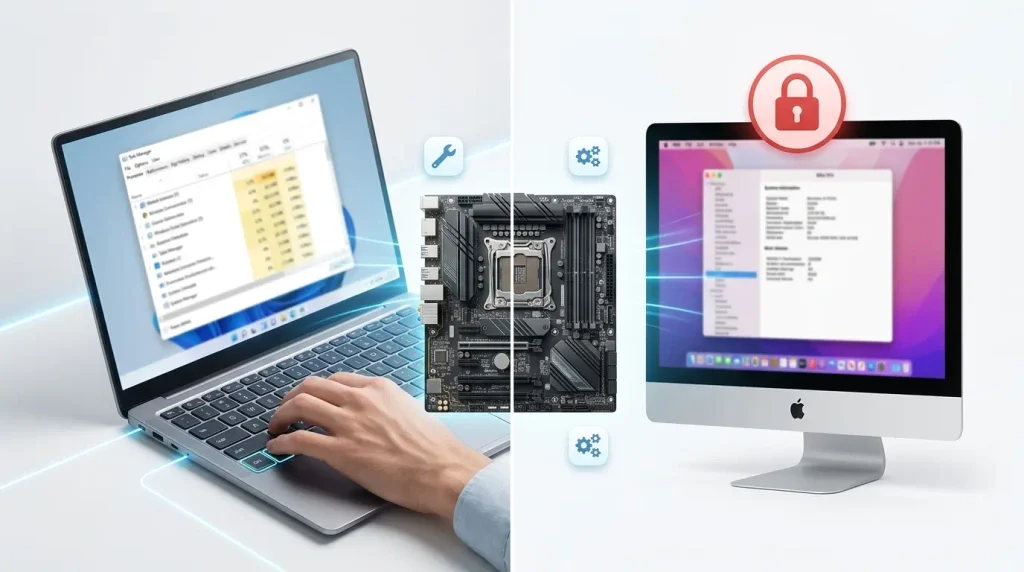
On Windows, open Task Manager with Ctrl + Shift + Esc, then go to the Performance tab and select Memory. You will see total capacity, memory type, frequency and the number of slots in use.
You can also use the command prompt:
wmic memorychip get capacity, speed, manufacturer, devicelocatorOn macOS, open the Apple menu, then About This Mac. One caveat, though: on Macs with Apple Silicon, memory is integrated into the processor and cannot be replaced. The decision is made at purchase.
Where to buy at the best price
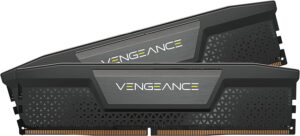
Corsair Vengeance DDR5 32 Go (2 x 16 Go) 6000 MHz
Kit de mémoire DDR5 CL30 pour PC de bureau, compatible Intel XMP 3.0 et AMD.
- AmazonSee at Amazon
- CdiscountSee at Cdiscount
- FnacSee at Fnac
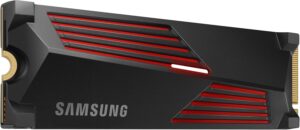
Samsung 990 PRO 2 To (avec dissipateur)
SSD NVMe M.2 PCIe 4.0, jusqu’à 7 450 Mo/s en lecture, dissipateur adapté à la PS5.
- AmazonSee at Amazon
- CdiscountSee at Cdiscount
- FnacSee at Fnac
Conclusion
The surge in RAM prices is not a passing accident that will resolve itself in the coming months. It is the result of a durable industrial trade-off in favour of artificial intelligence, and one to live with for at least two years. For you, it comes down to a simple rule: buy the amount of memory you genuinely need, from a reliable seller, and be wary of spec sheets that look too generous for the price on the label.
Have you noticed this increase on your latest purchase? Share your observations in the comments, and find all our hardware guides on Wanda-techs.com.
Share this content: