
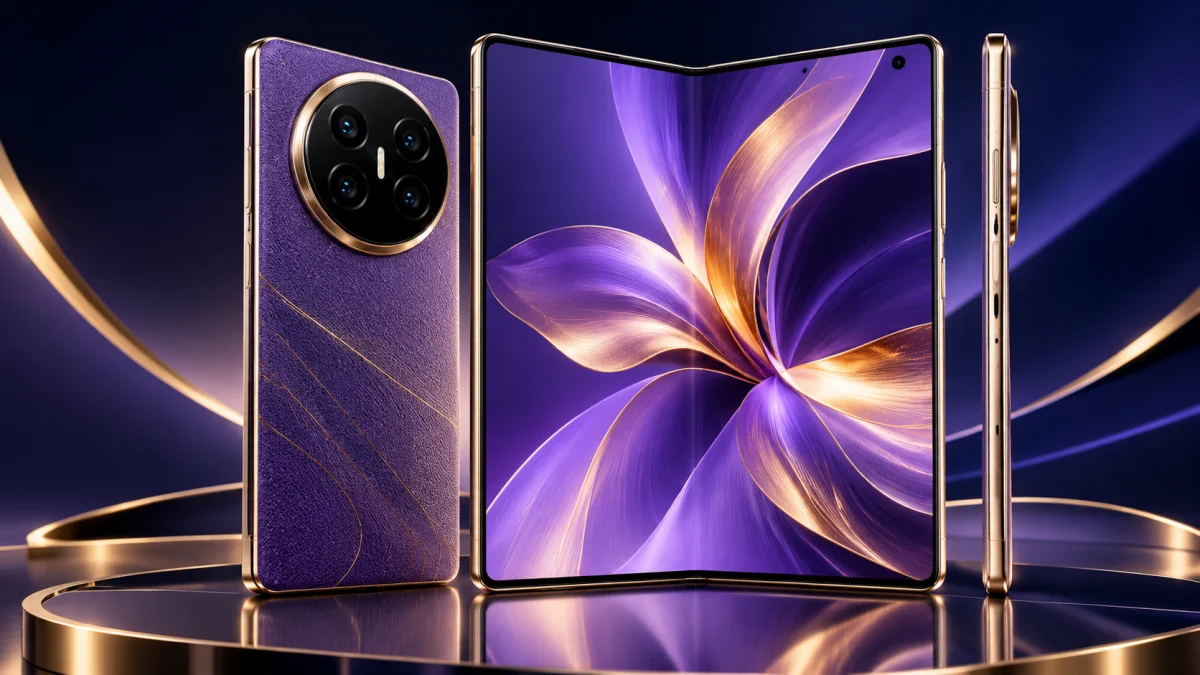
Huawei made the Mate X8 official on November 24, 2026 in China. Unfolded, the company’s new foldable is just 4.2 mm thick. Inside sits a 6,200 mAh battery, the biggest Huawei has ever put in a single-fold foldable, and a magnetic hinge meant to make the crease almost disappear. The Huawei Mate X8 starts at 12,999 yuan, exactly what the Mate X7 cost at launch. Pre-orders are open in China and sales start on December 4. As for an international release, nothing has been announced yet.
Huawei Mate X8: full specifications
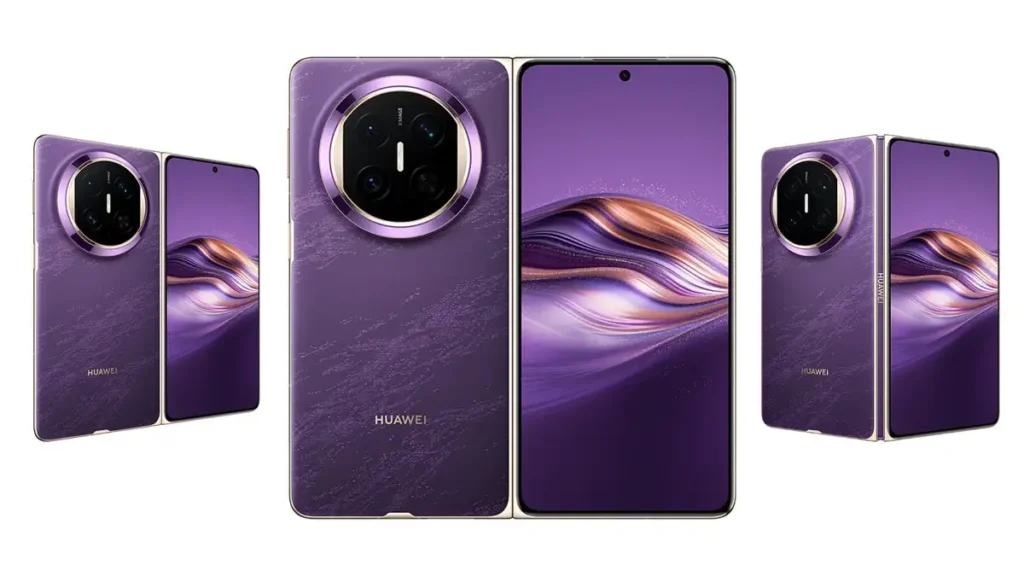
We cross-checked the specs against several specialist sources (The Gadgeteer, Beebom, Gizchina, iGeekPhone):
- Inner display: 8.2 inches, LTPO OLED, 2424 x 2340 pixel resolution, near-square aspect ratio, 1 to 120 Hz refresh rate, brightness from 1 to 8,000 nits peak.
- Cover display: 6.54 inches, dual-layer OLED, 2444 x 1132 pixels, 19.4:9 aspect ratio, LTPO from 1 to 120 Hz, up to 12,000 nits peak.
- Processor: Kirin 9050 Pro, the same chip found in the Mate XT 2 tri-fold.
- Memory and storage: 12 GB of RAM with 256 or 512 GB, or 16 GB of RAM with 512 GB, 1 TB or 2 TB.
- Cameras: 50 MP main sensor with variable aperture and optical image stabilization, 40 MP ultra-wide, 50 MP periscope telephoto (3.5x optical zoom), and a third-generation multispectral color sensor.
- Battery: 6,200 mAh. Huawei hasn’t shared wired or wireless charging speeds.
- Dimensions: 4.2 mm unfolded, 8.95 mm folded. Weight: 239 g according to Gizchina.
- Durability: IP58 and IP59 certification.
- Software: HarmonyOS 7.
- Colors: five colorways, including three “brocade” finishes with a woven pattern.
Huawei Mate X8 price and availability
There are two versions: the standard Mate X8 and a Collector edition. Here’s what they cost in China:
- 12 GB + 256 GB (standard): 12,999 yuan;
- 12 GB + 512 GB (standard): 13,999 yuan;
- 16 GB + 512 GB (Collector): 15,999 yuan;
- 16 GB + 1 TB (Collector): 16,999 yuan;
- 16 GB + 2 TB (Collector): 20,999 yuan.
Gizchina reckons the entry model works out to around 1,950 dollars. Pre-orders are already live in China, and the phone goes on sale on December 4, 2026. If you want the 2 TB Collector version, a capacity new to the lineup this year, you’ll have to wait until December 20.
Outside China, Huawei hasn’t said a word. No date, no price. Gizchina notes that the Mate X7 showed up in Dubai about a month after its Chinese launch, but there’s no telling whether the Mate X8 will do the same. No official European release has been announced.
A magnetic hinge to erase the crease
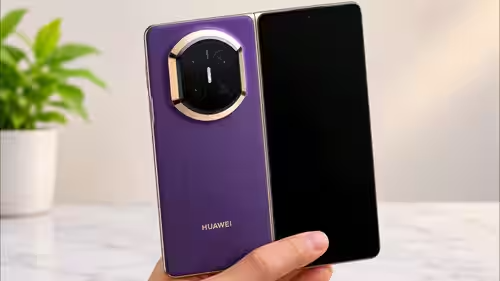
On any foldable, the crease down the middle of the screen is the thing people complain about most. Huawei’s answer is a magnetic smoothing system. It pairs a 0.1 mm magnetic composite layer with an aerospace-grade steel laminate, and Beebom says there’s also a filling process working at the 5-micron scale.
Huawei claims the height difference at the crease is down to 15 microns, with flatness error cut by 90%. Beebom also reports a panel that is 140% stiffer and recovers 99.9% of its shape after every fold. The Gadgeteer adds a nine-layer anti-reflective coating with a reflectance of 0.9%. All of these numbers come from Huawei, though, and independent testing will have to back them up.
Thinner and longer-lasting than the Mate X7
From the outside, the Mate X8 looks a lot like the model it replaces. The camera module is now a perfect circle and the back gets a new pattern. The meaningful changes are on the spec sheet.
Folded, it measures 8.95 mm, compared with 9.5 mm for the Mate X7 according to Gizchina’s figures. That’s a little over half a millimeter shaved off. The battery grows by roughly 600 to 700 mAh, since sources put the Mate X7 at either 5,500 or 5,600 mAh. Fitting 6,200 mAh into something this thin is remarkable.
The Kirin 9050 Pro should also bring a real performance jump. Huawei claims a 31% overall gain, 40% for graphics and 140% for the dedicated artificial intelligence unit. Those are manufacturer figures, published without any testing conditions, so we’ll need the first reviews to verify them. And the starting price hasn’t moved, which you don’t see that often at the high end.
Cameras: an optional module with a 1-inch sensor
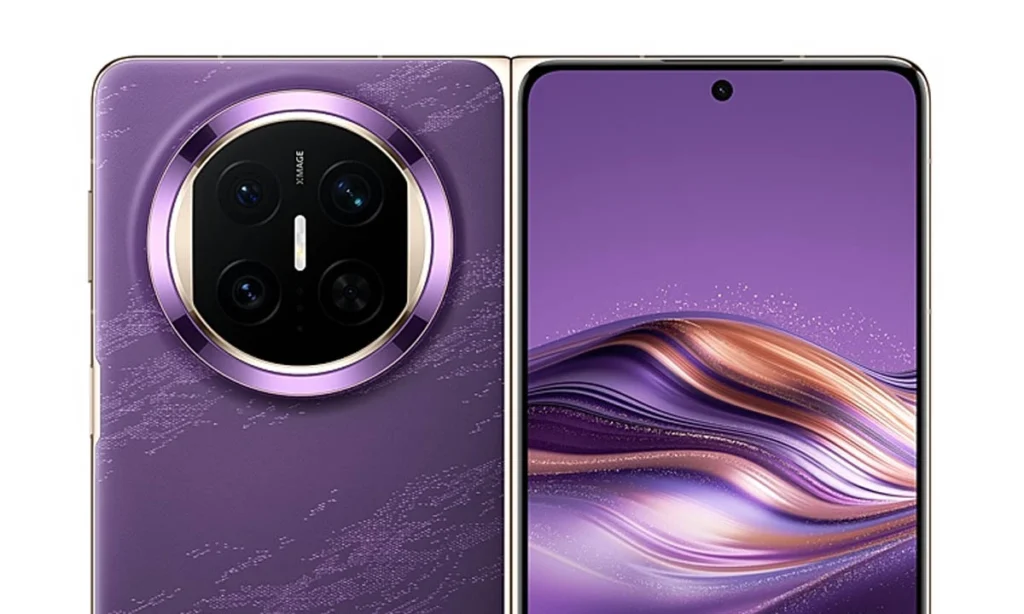
The cameras are solid, but nothing revolutionary. The 50 MP main sensor measures 1/1.56 inch on the standard version and 1/1.28 inch on the Collector edition. Gizchina says it uses LOFIC technology, which handles highlights better, along with an RYYB array, a Huawei specialty for pulling in more light.
The more interesting part is an accessory: the Ruiying Z10. It’s an external module with a 1-inch sensor that attaches to the phone through a system called HyperClick. iGeekPhone says it covers a 24 to 240 mm focal range, with up to 10x continuous optical zoom, an f/2.0 to f/4.5 aperture and direct image transfer to the smartphone. Every Mate X8 model is compatible. So if you see headlines crediting the phone itself with 10x zoom, be careful: that’s the accessory, and it’s sold separately.
What the Mate X8 changes in the foldable market
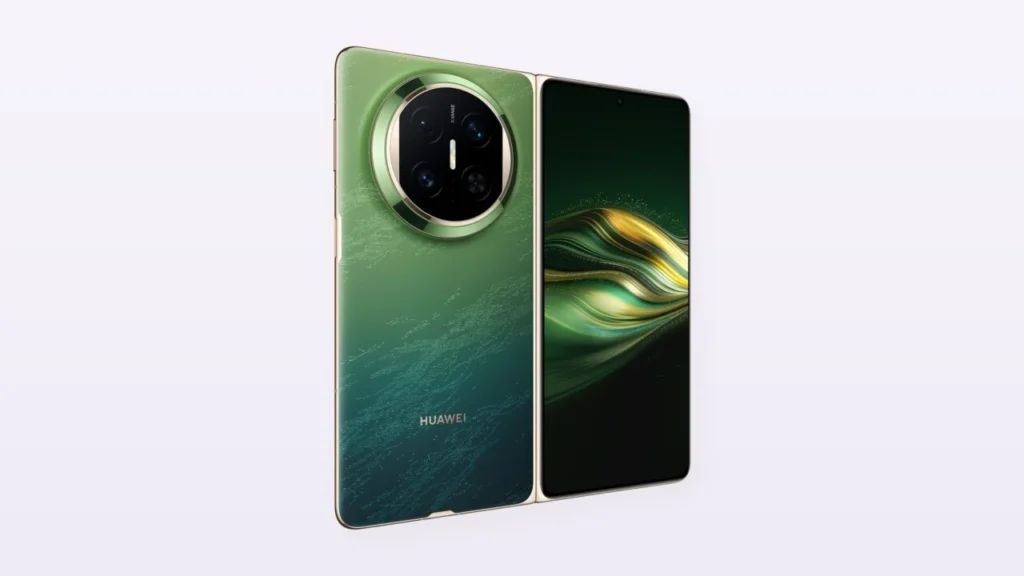
A 4.2 mm unfolded profile, a 6,200 mAh battery, a crease you can barely see: Huawei sets the bar very high for Samsung, Honor, Vivo and Oppo. The brand shows it’s still at the cutting edge of foldable hardware, even with US sanctions cutting it off from some Western components and services.
For European buyers, the main sticking point hasn’t changed. HarmonyOS 7 doesn’t give you Google services, and the Mate X8 has no official European release announced. If you’re after a foldable you can actually buy here, our Galaxy Z Fold 8 specs sheet is a good point of comparison.
In summary
The Huawei Mate X8 is one of the most polished foldables of 2026. It’s thinner than the Mate X7, lasts longer, handles the crease better, and keeps the same 12,999 yuan starting price. For now, it’s a China-only phone, going on sale on December 4. Will Huawei bring it elsewhere, the way its predecessor reached Dubai? That’s still an open question.
Does the Huawei Mate X8 tempt you, even without Google services? Tell us in the comments.
Share this content: