

Apple has obviously not made anything official, but by late 2025 the leaks around the iPhone 18 lineup are already taking shape: a potentially “two-wave” release schedule, production tests earlier than usual, a major camera upgrade… and above all the idea of under-display Face ID that would (almost) make the Dynamic Island disappear.
In this article, I sort through solid rumors, hallway chatter, and counter-rumors.
What to remember in 30 seconds
- Some sources mention a “trial production” phase as early as January 2026, followed by a ramp-up before Lunar New Year (mid-February).
- Apple could split the launches: iPhone 18 Pro / Pro Max in September 2026, then iPhone 18 “standard” (and iPhone 18e) around March 2027.
- The iPhone 18 Pro models could feature an A20 Pro chip built on a 2 nm process (TSMC), with a real leap in performance/efficiency… but also higher manufacturing costs.
- On the camera side: rumors of a variable aperture on the main sensor, and a Samsung sensor manufactured in the U.S. (Texas), breaking with Sony’s long-standing exclusivity.
- Under-display Face ID: considered very likely by some sources, but disputed by other leakers (so caution is advised).
1) iPhone 18 release date: a 2026/2027 “two-step” calendar?
Several media outlets and analysts are converging on a split launch scenario:
- September 2026: iPhone 18 Pro + iPhone 18 Pro Max (and possibly a foldable iPhone).
- March / Spring 2027: iPhone 18 “standard” + iPhone 18e (a more affordable model).
Why would Apple do this? The most commonly cited hypotheses:
- Smoothing demand over multiple quarters,
- Better handling industrial constraints (costly new technologies like 2 nm),
- Giving more marketing space to Pro models.
2) Production: why are we already talking about early 2026 tests?
A Weibo leak picked up by several outlets mentions:
- Trial production just after New Year (early January 2026),
- Then mass production before Lunar New Year (starting mid-February 2026).
What is “trial production” for?
- These are not iPhones intended for sale,
- It’s a phase to validate production lines, yields, logistics, and avoid later surprises.
3) Design: less revolution… but one big “what if” on the front
In terms of overall aesthetics, several sources say the Pro models could stay close to the previous generation (notably the camera platform and triple-sensor setup).
The real question is the front:
Option A (the most exciting): under-display Face ID → Dynamic Island almost gone
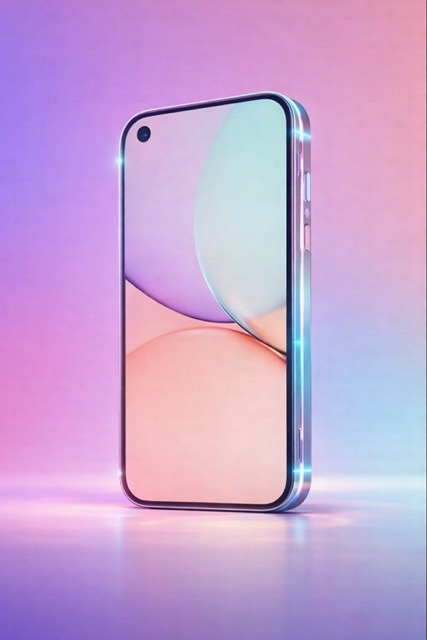
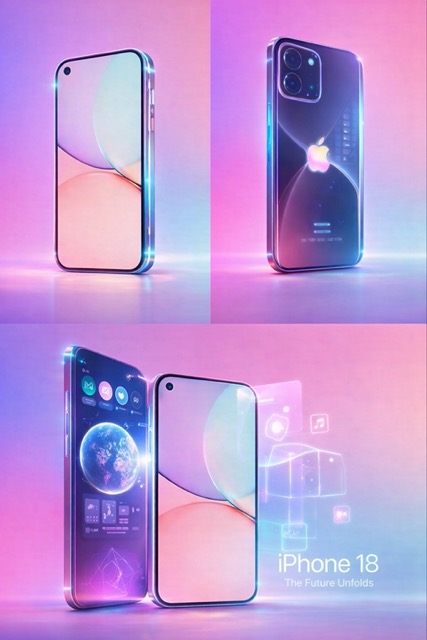
According to reports, Face ID (or part of its sensors) could move under the display, leaving only a small punch hole for the selfie camera (placed top left according to some leaks).
Option B (the counter-rumor): no under-display Face ID, just a smaller Dynamic Island
Other reports cite a leaker who disputes under-display Face ID and instead mentions a slightly narrower “pill.”
Our advice: keep this rumor open. Until multiple independent sources align, it’s basically 50/50.
4) Camera: variable aperture + Samsung sensors (Made in USA?)
Variable aperture: what is it really for?
The idea of a variable aperture on the main sensor keeps coming up. Concretely, it could help to:
- Better manage light (open wider in low light, close down in bright daylight),
- Improve depth-of-field control (more natural bokeh depending on the scene).
Samsung as a supplier: a symbolic and technical shift
Several reports (citing The Elec) suggest Samsung could prepare CMOS sensor production for Apple in Austin, Texas, with a potential start around March 2026 and significant investments.
This would be a major shift, marking at least a partial end to Sony’s long-standing exclusivity over iPhone camera sensors.
On the tech side, there’s also talk of a multi-layer “three-stack” architecture aimed at:
- Better low-light performance,
- Faster readout speeds,
- Improved dynamic range.
5) A20 / A20 Pro chip in 2 nm: what it could change (and the price risk)
Reports mention two chips:
- A20 on the standard iPhone 18
- A20 Pro on iPhone 18 Pro / Pro Max (and on the foldable iPhone)
Moving to 2 nm generally means:
- Performance gains,
- Better energy efficiency (potentially improved battery life at similar performance levels).
But there’s a catch: 2 nm manufacturing could cost up to 50% more than 3 nm, according to some reports. That could push Apple to reserve certain improvements for Pro models… or increase prices.
6) Battery, finishes, colors: small tweaks that matter
Some reports mention:
- A slightly thicker chassis to fit a larger battery,
- The end of the “two-tone” look (in favor of a more uniform back),
- Potential colors: burgundy, brown, purple.
Connectivity: in-house Wi-Fi/Bluetooth chip + new modem + “more useful” satellite?
According to several sources, Apple could push:
- A new in-house Wi-Fi/Bluetooth chip,
- An internal 5G modem (C2 mentioned),
- More ambitious satellite connectivity (up to “web browsing” according to some rumors).
Take this with caution: “satellite web access” would depend heavily on carrier agreements, regions, and regulatory constraints.
Should you wait for the iPhone 18 Pro?
It depends on your profile:
- You want the best possible camera: yes, variable aperture + new sensors could be among the biggest changes.
- You upgrade every 3–4 years: waiting could make sense, especially if 2 nm delivers on its promises.
- You need a phone now: rumors are still just rumors (and the base model could arrive later).
FAQ – Quick recap of the news
Will the iPhone 18 Pro be released in 2026?
That’s the most cited scenario: Pro models in September 2026, standard models in 2027.
Will Apple remove the Dynamic Island?
Possibly if Face ID moves under the display, but some sources dispute this evolution.
What is variable aperture on iPhone?
A system that adjusts the lens aperture depending on lighting, to improve exposure and depth of field.
Will Samsung really supply iPhone camera sensors?
Reports cite Samsung as a future supplier (production in Texas), which would end Sony’s exclusivity.
Will 2 nm improve battery life?
In theory yes (better efficiency), but it will depend on Apple’s design choices and real-world usage.
Why would Apple launch the iPhone 18 in two waves?
To smooth demand and better manage costs and production, especially if 2 nm is more expensive.
Another thing: If you have a PS5, here’s how to get a refund for a game.
Share this content: